52s adrift: Where McLaren is lacking the most
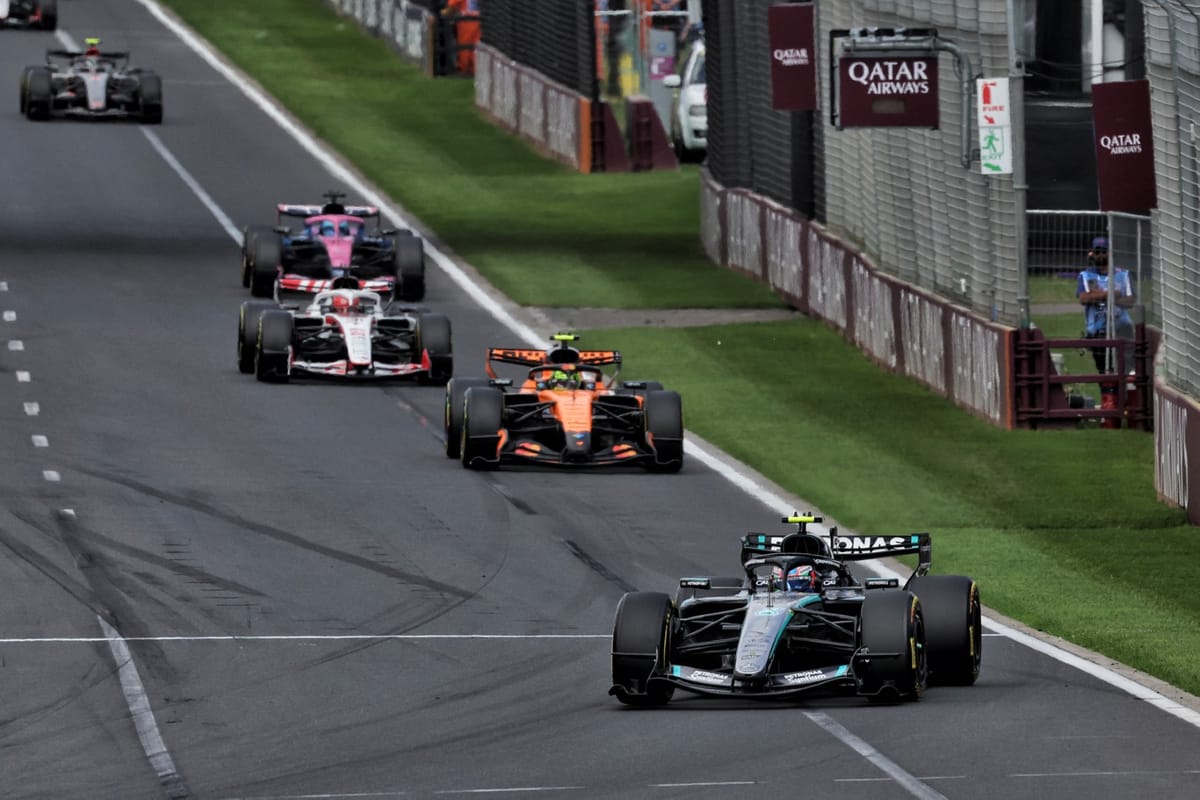
McLaren's admission to being "a little puzzled" about why it was so much slower on the straights in Australia than the works Mercedes team has fuelled talk of a new reality for customer teams.
We have just come off a rules era in which McLaren showed you could still win Formula 1 titles by buying an engine off somebody else.
As downforce levels, ride control and tyre temperature management defined the pecking order, McLaren's mastery in these areas helped it win the constructors' crown in 2024 and the championship double last year.
Things have changed now though.
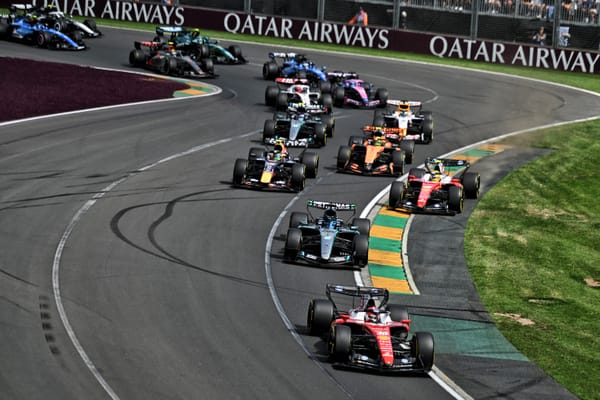
In the wake of F1 2026's rules revolution, McLaren is on the hunt for answers as to why in Australia it was 0.8 seconds off Mercedes in qualifying and finished the race more than 50 seconds behind.
Mercedes and customers in Australian GP
1 George Russell (Mercedes)
2 Kimi Antonelli (Mercedes) +2.974s
--
5 Lando Norris (McLaren) +51.741s
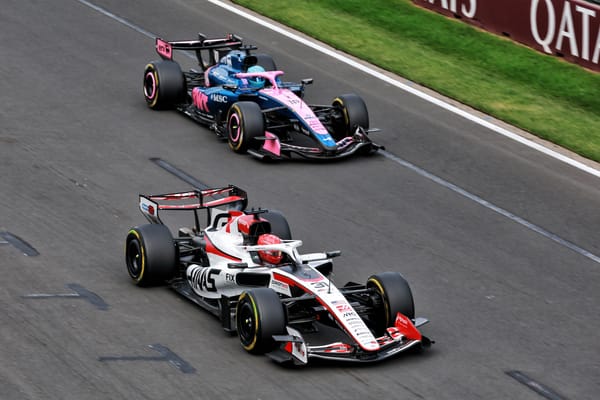
10 Pierre Gasly (Alpine) +1 lap
12 Alex Albon (Williams) +1 lap
14 Franco Colapinto (Alpine) +2 laps
15 Carlos Sainz (Williams) +2 laps
Part of the explanation comes from the car, as the McLaren was not the best through the corners - and the front graining that was a problem at times in the past appears to be back.
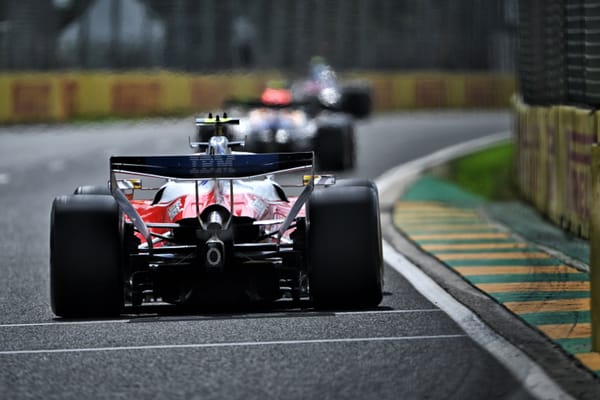
But it has not gone amiss that GPS data showed a big chunk of the time it lost was coming on the straights - where the works Mercedes squad appeared to be able to deploy more power.
And, with identical engines, there is no obvious explanation for that discrepancy.
Shifted priority
What is understood already with the 2026 rules is that the power unit is king.
But it is not just about having the most powerful engine. It is also about how it is used: where and how energy is harvested, and where and how it is deployed.
As McLaren team principal Andrea Stella said: "In a way, this is a new language and also a new way of thinking."
What this new paradigm has produced is a ruleset where knowledge of what the power unit wants and needs to optimise laptime has become an ultra-powerful tool.
As teams found out last weekend when they dug into the data to try to get to grips with what Mercedes was doing, getting the tiniest of details right makes a massive difference on track now.
For the sensitivities in play are like nothing F1 has ever experienced before.
For example, having a battery charged at 100% going into Turn 6 at Albert Park, rather than 99% or 98%, may seem to be a tiny difference from the outside. But that extra 2% of deployment could be worth tenths of a second on the following run to Turn 9.
But hitting that 100% level exactly, without going over the peak to risk a derate, means nailing not only the corner sequence before so the systems are perfectly calibrated, but also perhaps even turns half a lap prior.
Get your lift-and-coast calculation wrong on the entry to Turn 1 and there is a ripple effect that can leave you losing the battery five metres earlier on a straight later around the lap.
Even a singular wild moment, which forces a driver to lift off, can be enough to switch an MGU-K from deployment to harvesting for a split second, and throw an entire lap's calculations out the window.
The knowledge game
What became clear over the Australian GP was that the Mercedes works team's knowledge of such details, and its optimisation of energy management, was at a level far beyond where its customer teams had got to.
That realisation, enabled by the GPS data of qualifying laps, is what triggered Williams team principal James Vowles's suggestions that he had been caught "off-guard" by what Mercedes had unleashed.
His claims that there was not an "open door" of information about getting the most out of the power units were fascinating.
While there is no suggestion that Mercedes is deliberately blocking the best information to hold back its customers, equally it is not handing everything out on a platter to what are ultimately competitors on track.
Is it really in its interest to let others copy its homework to then go get the best marks?
Works team advantage?
For McLaren, which 12 months ago won the Australian GP and this time around was more than 50 seconds adrift at the chequered flag, the knowledge gap has triggered questions about works teams now holding a clear advantage over customers.
This does not come from the manufacturers keeping the best power units for themselves, because the rules dictate that customers have to get the same specification of everything.
Article 1.4 of Appendix 4 of the technical regulations states: "Only the fuel specification, the engine oil specification and power unit wirings may differ between competitors."
The rulebook also lays down that software settings have to be identical, too, and that all power units must be "operated in the same way", "run with identical software for PU control" and be "capable of being operated in precisely the same way".
But what has become obvious with these current power units is that just because the hardware and software are the same, it does not mean that the way they are being run is identical.
So the works team that has intricate knowledge of what its power units wants and needs, and how best to exploit the software it has created, is going to be at an advantage over a customer that does not have that background understanding.
One source likened it to a situation where the works team and customers are all using the same AI tool that deep within it has the right answers as to what will unlock the best performance.
It is well-known that the quality of AI-generated answers is directly proportional to the quality of the questions asked - with clear, detailed and specific inputs resulting in significantly better outputs.
So if you know the right questions to ask, you get the best answer back.
And right now, the manufacturers are the only ones that know the right prompts for the power units - so the customers are a little bit blind to things.
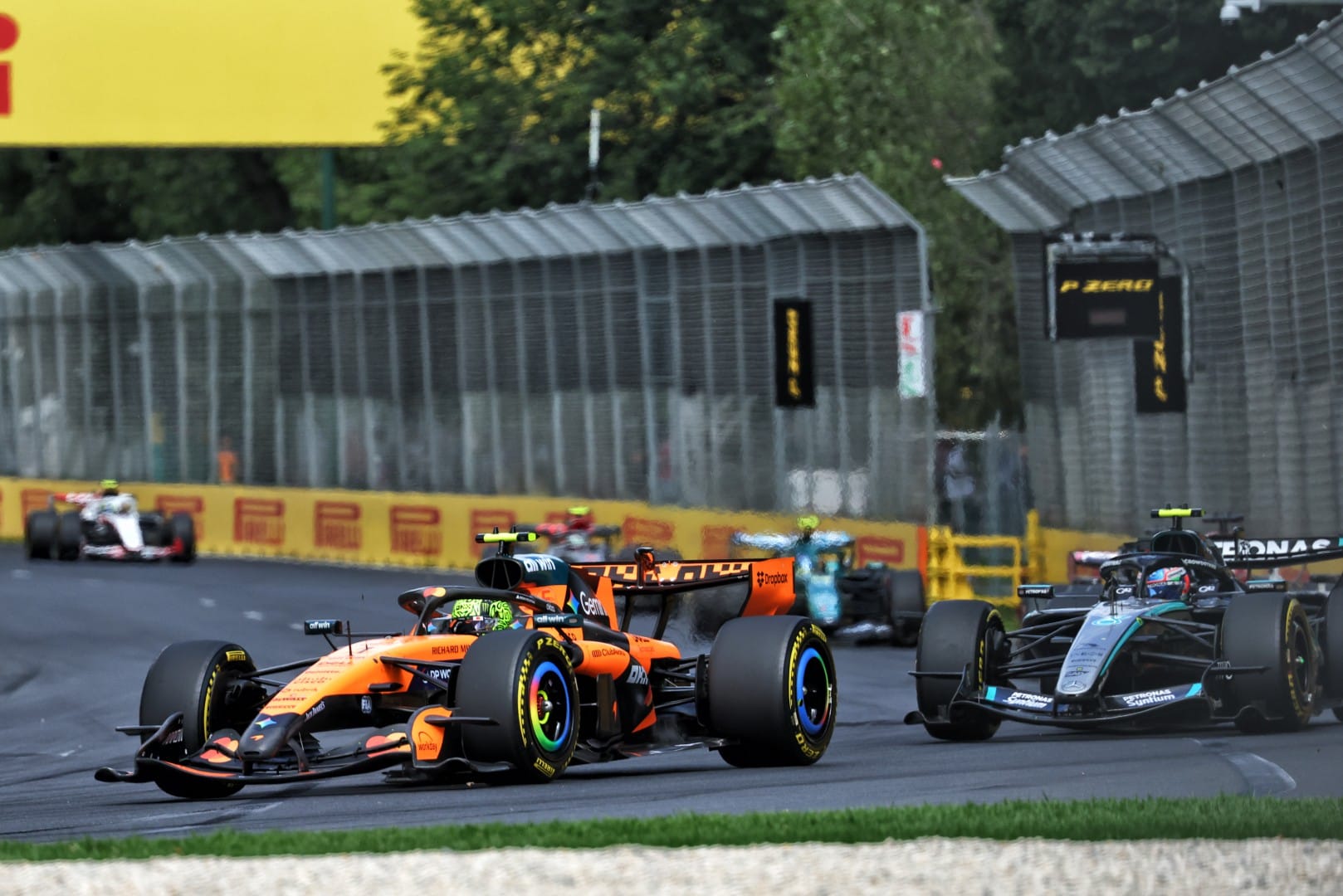
Stella confessed that as early as testing the first unease about not being on the front foot with the understanding of the new power units had struck home.
Asked by The Race about the flow of information, he said: "We were pretty much going on track, running the car, looking at the data, [and going] 'Oh, that's what we have: now we react to what we have'. That's not how you work in Formula 1.
"What happens on track is you simulate, you know what is happening, you know what you're programming, you know how the car is going to behave and you also have your plans as to how you evolve it that you have figured out before, because you know what you are expecting from the car."
It is a situation that has left Stella suspecting that being a customer team is no longer a level playing field to being a works outfit.
"Since we are a customer team, this is the first time that we feel we are on the back foot - even when it comes to the ability to predict how the car will behave and the ability to anticipate how we can improve the car," he said.
Plotting a way out
McLaren accepts that the deficit to Mercedes right now is not just down to how it is using its engines - because in chassis terms it needs to lift its game, too.
As Lando Norris said: "We're nowhere near where we need to be with the car and we've got to improve that."
Stella said that a development plan was in place, but improvements would not be coming through the system for a while.
"This will take a few races in terms of seeing some major upgrades that can allow us to change with the category for which we compete," he said.
In the meantime, the focus will be on gains to come from doing a better job with harvesting and deployment tactics.
And to lift its game there, McLaren knows that there is no other option than to sit down with its designated Mercedes engineers and try to understand things better.
Stella said: "We have work to do to exploit the potential of the power unit, which, once I see the potential that HPP [Mercedes' High Performance Powertrains division] is extracting, it looks like there's more that is available.
"But it's not obvious how you do that.
"We are on a journey that is [in an] earlier [phase] than the works team. The works team and HPP have worked together for a long time. So they will have collaborated, and talked about how to use the power unit. That's fair enough."
But the final destination of this journey McLaren is now on is not clear.
At the back of Stella's mind is the prospect that, with the 2026 rules, customers may end up in a spot where destiny is not in their own hands.
"We will definitely intensify the collaboration with HPP because our understanding is that there is some low-hanging fruit that we should be able to cash in," he said.
"I think we will need some more analysis to understand whether this is only about parameters that we can control or driver's input that we can control, or if there are some other factors more systemic that not necessarily a customer team can control."
Aiming to be fair
From Mercedes' perspective, though, there is no indication it seems its own approach as anything unusual.
It is fulfilling its contracts in supplying the exact same specifications of hardware and software to its customers.
It also knows that, at such an early stage of the rules cycles, it is up to individual teams to get to the bottom of things themselves.
There is also a reality in F1 that it is not up to manufacturers to give customers on track any more of a helping hand than needed.
Team boss Toto Wolff said: "It's clear when you roll out new regulations, there's so much to learn.
"Whether you have a customer that's on your gearbox or suspension, and in the same way on the power units, the development slope is very steep.
"You can never deploy things to make everybody happy. But I think most important is we're trying to provide a good service and that's always our aim."