Is McLaren really only F1 2026's fourth-fastest team?
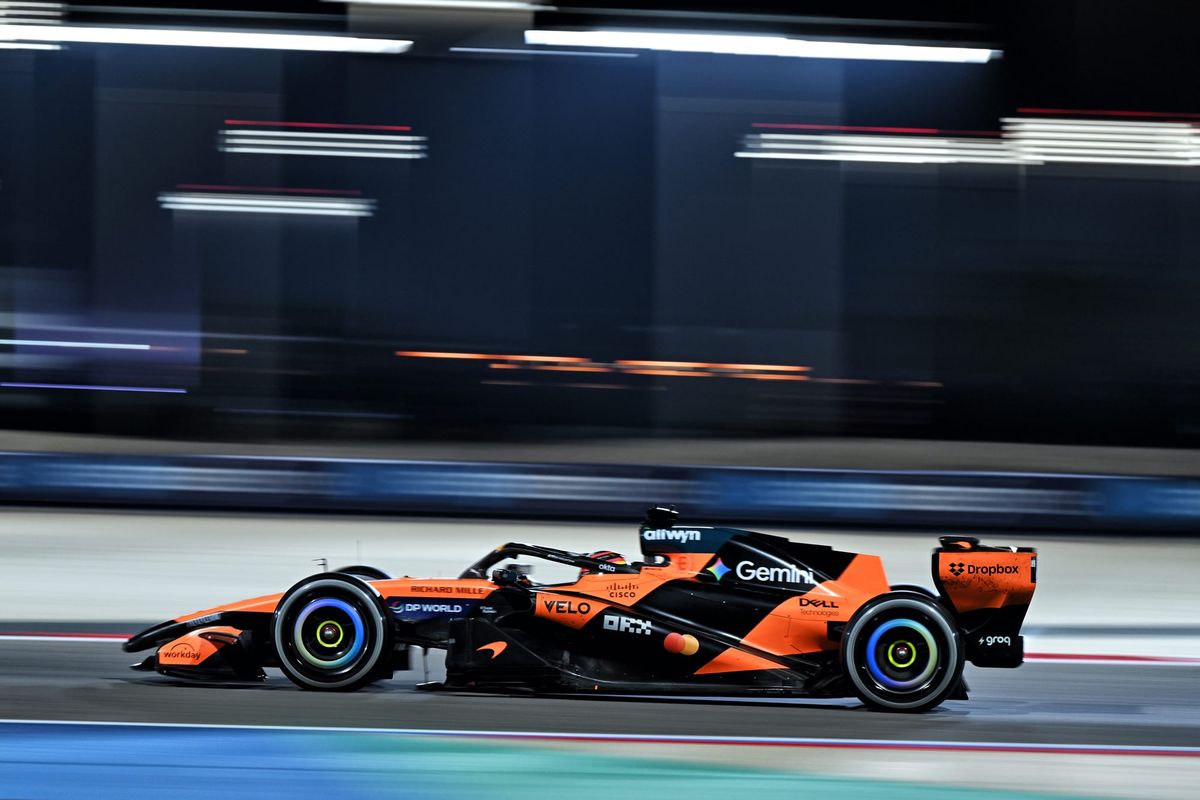
While Formula 1's top four teams have been playing pass the parcel when it comes to who they think is on top right now, there is one thing they do at least all agree upon.
Amid all their varied opinions about who is in front, nobody is putting McLaren at the head of the pack.
Mercedes thinks Red Bull is the benchmark; Red Bull believes it is in fourth behind Ferrari, Mercedes and McLaren; Ferrari puts Mercedes and Red Bull slightly in front; and McLaren itself has singled out Ferrari and Mercedes as the ones leading the charge.
So, is the reigning champion team genuinely behind the others at the start of the new rules era?
Or has it simply pulled off a blinder in keeping a low profile at a time when nobody seems to want their head above the parapet?
Right now, there is no definitive answer to that, as untangling the picture from testing of relative team form is more complicated than ever, thanks to the huge variations that come from energy management tactics.
But if you pull together the raw data of long runs, which is still the best indicator of form, allied to the messaging from McLaren itself, a picture is emerging of it certainly not being as strong as it would perhaps like to be.
However, what is true right now may not necessarily remain the case by the start of the season, as McLaren seems to be playing catch-up in one key area.
The pace story
What does seem to be consistent between long-run analysis and what McLaren has expressed itself is that it is not in the same comfortable position it was 12 months ago, when it had a car advantage early on.
Oscar Piastri is sure that there will not be a repeat of the season starting with McLaren as the squad to beat, as it was in 2025.
"We're certainly not going to come out and have the performance we had in Melbourne last year," he said.
Long-run data from some race simulations run at similar times on the final day of last week's Bahrain test explains why this conclusion has been reached.
Here is how three comparative race simulations from Friday evening played out to highlight McLaren not looking as comfortable.
Kimi Antonelli (Mercedes)
Start: Friday 5.37pm
Stint 1: Soft, 16 laps (1m40.128s avg)
Stint 2: Hard, 12 laps* (1m38.547s avg)
Stint 3: No data
Lewis Hamilton (Ferrari)
Start: Friday 5.14pm
Stint 1: Soft, 17 laps (1m40.280s avg)
Stint 2: Hard, 17 laps (1m38.929s avg)
Stint 3: Medium, 6 laps* (1m37.461s avg)
Oscar Piastri (McLaren)
Start: Friday 4.57pm
Stint 1: Soft, 11 laps (1m40.947s avg)
Stint 2: Medium, 20 laps (1m39.604s avg)
Stint 3: Hard, 18 laps* (1m38.472s avg)
* denotes stints with laps lost to timing issues
McLaren team principal Andrea Stella reckoned those three runs offered a picture of where those squads stacked up.
"I can confirm that the race pace of Ferrari looks pretty competitive in the simulation that [Lewis] Hamilton did," he said at the conclusion of testing. "I think Antonelli and Hamilton were quicker than us."
But to simply extrapolate a single reference of race runs to conclude that McLaren needs to find around 20 seconds over a grand prix distance would be incorrect.
What seems to have become apparent throughout the testing period is that, while there are differences in the performance of the various packages, there is perhaps a bigger spread when it comes to those who have and have not fully got on top of the rules and unlocked the full potential of each car.
As Stella quite specifically mentioned: "Early indications from a competitiveness point of view, I think, definitely put Ferrari and Mercedes at the top of the list in terms of those that seem to be ready from a performance point of view."
McLaren's pace is, like with every team, shrouded by uncertainty over run plans - for example, Norris's single best lap on day two came at the start of a stint in which he had at least 16 laps of fuel in the car, and was on medium tyres.
A generous adjustment of that laptime could net 1.2s and put Norris bang level with pacesetter Kimi Antonelli, but there are many other variables.
Where McLaren is playing catch-up
This reference to Ferrari and Mercedes being 'ready' seems to reflect a viewpoint that has emerged over the first tests about how far down the road different teams are when it comes to understanding the new regulations.
And the impression is of the established works teams - Mercedes and Ferrari in particular - having simply hit the ground running when it comes to knowing what strings to pull when it comes to extracting laptime.
With their own engine departments having worked for years on the power unit concepts - and developed things in step with their own chassis teams - it is not hard to understand why the works teams may hold a bit of a knowledge advantage right now.
So even if customer teams such as McLaren, Williams and Alpine are given the exact same equipment and software tools as the works squad, there is still an element of them needing to catch up in terms of hitting a baseline of understanding with the power units.
This is why even on day one in Bahrain, McLaren chief designer Rob Marshall said McLaren was still in a phase of "trying to understand the characteristics of the car without trying to dial it in".
Asked by The Race if what we were seeing was the works squads shining because they had a knowledge advantage, Marshall said: "There might be a bit of that.
"With the power unit manufacturers, the first person they turn to when they need some advice or help with the simulation will be the works team. It's only natural that happens.
"So I think, yes, there is an advantage in doing so. But equally, there's downsides in being a works team as well. So it's swings and roundabouts."
Piastri reckoned the performance differences between teams that have nailed the management, and those that have not, are huge so will be having a big impact on the overall competitive picture.
And that is what is making it so hard to work out what the order of the top four is.
"There's so many things now that all the teams need to still sort out," explained Piastri.
"The difference between getting these things right and wrong is not a few hundredths of a second, or even a few tenths of a second. It's a lot.
"It's upwards of half a second sometimes if it goes really wrong. So I think everyone's got a lot of things to sort out.
"I think we probably don't even know what our true pace is, because we don't know what problems are just inherent that we can't fix.
"We don't know what problems we can fix tomorrow. We don't know what problems we can fix for race one - and I think 11 teams will be having similar thoughts."
Right now, it certainly appears that McLaren may be at the back of the big-four pack at the front.
But with three more days of running to get further answers about how to get the most out of these 2026 cars, what is true today may not be correct this time next week.
And Marshall for one was convinced that the knowledge gap between the works teams and the customers is going to close very quickly.
"A lot of the early work was based on aero numbers that were a complete guess," he said. "And then later work would have been based on aero numbers which were more evolved but still not proven.
"Now, the maps that we'll be sending for simulations that will be used to hone the power unit will be different tomorrow than they were yesterday. So everything evolves.
"I think now we will get to the stage where everyone catches up quickly, because everyone actually has got the real data from the real cars.
"So drag levels, downforce levels, any quirks the cars have. They're all those little things are coming to life."