

Up Next

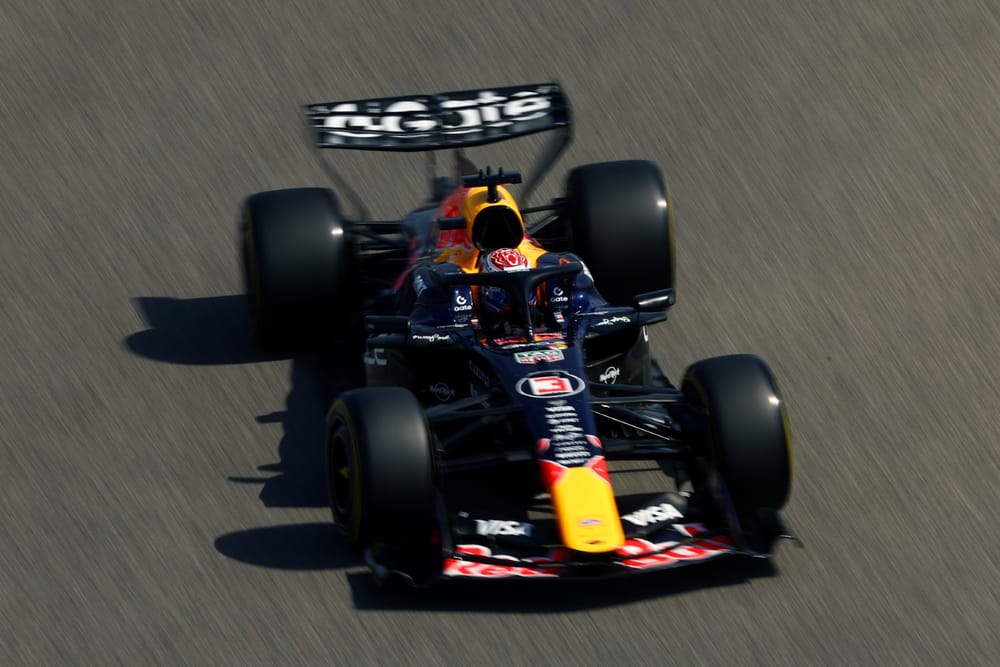
Max Verstappen's description of the new Formula 1 cars as "Formula E on steroids" has elicited varying reactions from the electric championship's paddock - including sympathy.
Verstappen and fellow F1 champion Lewis Hamilton were both vocal in their frustration with the new, complicated F1 powertrains, which require constantly recharging the battery via extreme levels of lifting-and-coasting, aggressive downshifting and gear selection tactics.
The specifics of how to maximise lift-and-coast techniques in F1 and Formula E are now closer than ever, due to the increase in the electric element of the packages in the 2026 F1 cars where around half the power is generated from the battery.
Energy deployment strategies and pre-event simulation tools have been enhanced within F1 teams as a result. This has included some teams head-hunting Formula E performance engineers, who have intimate knowledge of electric management strategies.
Recent examples include several former McLaren Formula E engineers taking up positions at Haas (Christopher Vrettos and Daniela Klausser), Cadillac F1 (Christopher Brown and Stephen Lane) and McLaren's own F1 team (Andreas Zetterlund).
Additionally, Williams recruited former Jaguar and Nissan performance and data science engineer Cristina Mañas Fernández last summer to work with Carlos Sainz this season.
Also, Formula E drivers Sebastien Buemi (Red Bull), Stoffel Vandoorne (Aston Martin), Norman Nato (Ferrari), Nyck de Vries and Jake Hughes (McLaren) have all been hunkered down in F1 simulators, as they're all intimately familiar with the art of lift and coast and other techniques of managing electrical elements of the powertrain.
The Formula E driver with the most recent F1 experience, de Vries, told The Race: "You need to define certain criteria to judge, Formula E is designed to be a championship around energy management, electric cars, software, no aerodynamics, so of course that’s what our racing is about.
“I think our engineering teams deserve credit for that because they do a great job. In terms of software development, all [FE] teams are on a very high level.
"It’s something I wouldn’t say we’ve mastered, but it’s very important. It’s definitely an area where all teams put an emphasis and focus on energy and systems.”
De Vries’ former Mercedes EQ team-mate and fellow Formula E world champion Vandoorne, who is now a reserve and development driver at Jaguar as well as his long-term role as a reserve at Aston Martin's F1 team, opined that Verstappen will adapt quickly to the new challenges and demands.
“It’s a different type of racing, and I think the clever guys in F1, which Max clearly belongs to, are going to get on top of that,” Vandoorne told The Race.
“They're going to exploit the regulations and better understand them than some others. It's becoming more of a thinking series rather than a pace-and-tyre thing. There's a whole lot more things that come to it now.”
One of the key areas that is challenging F1 teams and drivers at present is that, unlike Formula E, the battery has an energy allocation per lap rather than a race total - although finding a way to most effectively set that up is similar to the all-electric world championship.
“The difference is that if you over-consume or under-consume, it's only impacting the lap itself [in F1] and it doesn't impact the whole race [like in FE],” said Vandoorne.
“That makes it complicated because, first of all, the teams don't have a lot of experience with it, but also for drivers it's quite complex because there's a lot of new rules that the FIA have implemented on what they're allowed to do, what they're not allowed to do and where they can press the overtaking button.
“There's a certain element of it where the driver has an influence on where they deploy the energy. Of course, that will be simulated beforehand to optimise where they should deploy it, but it’s still a manually-operated aspect of it."
F1 drivers who have transitioned to Formula E in the past, such as champions Jean-Eric Vergne, Buemi and Pascal Wehrlein, have previously detailed how cerebral races in Formula E have become.
Formula E drivers will spend approximately double the amount of time in simulators than F1 race drivers because of the nuanced nature of techniques and mastering control systems to manage their overall races.
“We heard Lewis say that you need a degree to understand these cars and that's true in a sense," Vandoorne added.
"F1 used to be much more simple in that regard in the past, as it was more about simpler engines and just pushing flat out with tyre management in the race.
“Now there's a whole new dynamic to it - which, I think, in Formula E you almost need a degree to race. We have the energy side but we also have all the systems on top of that as well.”
Another driver who has been working with an F1 team is Nick Cassidy.
The Citroen driver wouldn’t confirm which team he has been assisting, although The Race understands it has been Mercedes throughout the last nine months, at least.
The Kiwi said he believed the F1 challenge is now “still pretty simple compared to FE” and that “I feel like in F1 you're very limited with the current regulation compared to Formula E still".
“It's not like if you save [energy for] five laps in a row, it gives you another five laps on top of the [other] guy, it's kind of optimising every lap," Cassidy added.
“It's going to be interesting to see if that actually improves their racing product. I'm not sure if it will. In something like FE, where you're building up a strategy for a long time and can make a difference in the second half of the race, that's where I think the driver has more influence."
One of Formula E’s most passionate advocates, Lucas di Grassi, put his opinion forward via social media, saying that the upcoming "Formula E cars Gen 4.5 [the possible evolution of the upcoming Gen4 car] & [Gen]5 will be way faster than current F1 cars".
Di Grassi added "you (Verstappen) can come and drive the fastest cars on the planet in a few years” with a smiley face emoji at the end.
Formula E cars Gen 4.5 & 5 will be way faster than current F1 cars.
— Lucas Di Grassi (@LucasdiGrassi) February 12, 2026
You can come and drive the fastest cars on the planet in a few years
😄 https://t.co/0RLJ7MbxKY
The Formula E regular who agrees with Verstappen
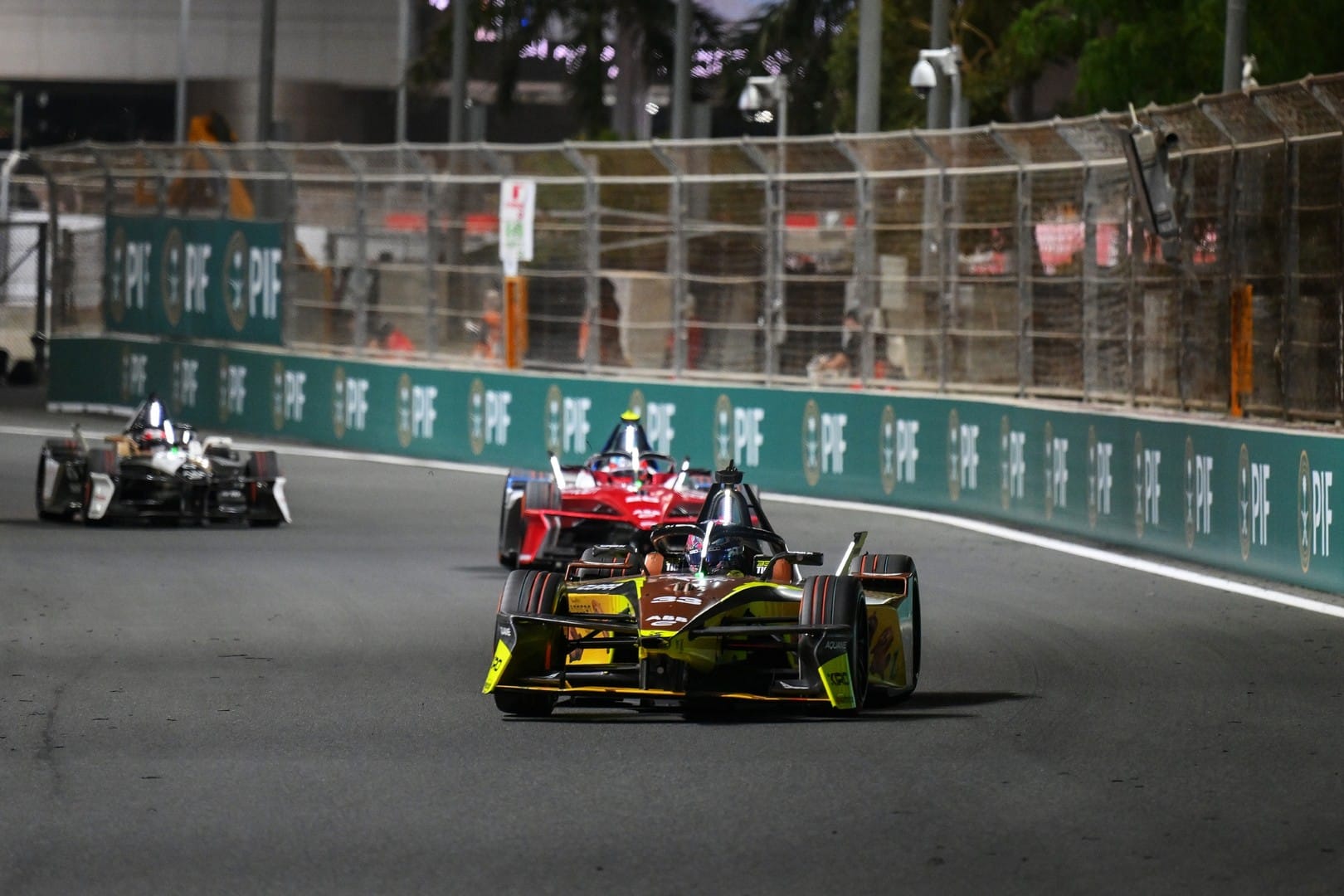
There are plenty of self-admitted "purists" in Formula E too, just as there are in F1 - and it will come as no surprise that Dan Ticktum is one.
The Cupra Kiro driver was briefly on the cusp of a possible F1 breakthrough with Red Bull back in 2020 and then, to a much lesser extent, with Williams in 2022.
When neither of those possibilities worked out he moved into a Formula E career instead, which has so far delivered a single victory in Jakarta last June.
But from a racing-ideological point of view Ticktum admits he is more in-line with Verstappen's views, particularly for F1.
“I'm just more of a purist and I think it's a shame that F1 are in that boat now,” he told The Race.
“I think a sport like F1, which is purely based on spectacle, should be screaming V8s, V12s, it shouldn't be doing all this lift-and-coasting.
“I see them and they're reaching terminal velocity like halfway down the straight and they're just saving. I mean, come on! That is a sport about petrolheads and it should be proper.
“We're obviously in a bit of a crossover period and no one likes half-arsed stuff, you're either one or the other - so F1, yeah, I think them having lifting-and-coasting and 200 kilos of battery crap in the car, it's just not right for that sport.
“Yes, use sustainable fuels wherever you can but that sport is never going to be sustainable because it’s so enormous, the circus, flying everything around, blah, blah, blah.
"Just forget all that. It's a sport, so let's make it good to watch, let's make the noise good, let’s make the cars good.”
