The former weakness key to Red Bull's sudden supremacy
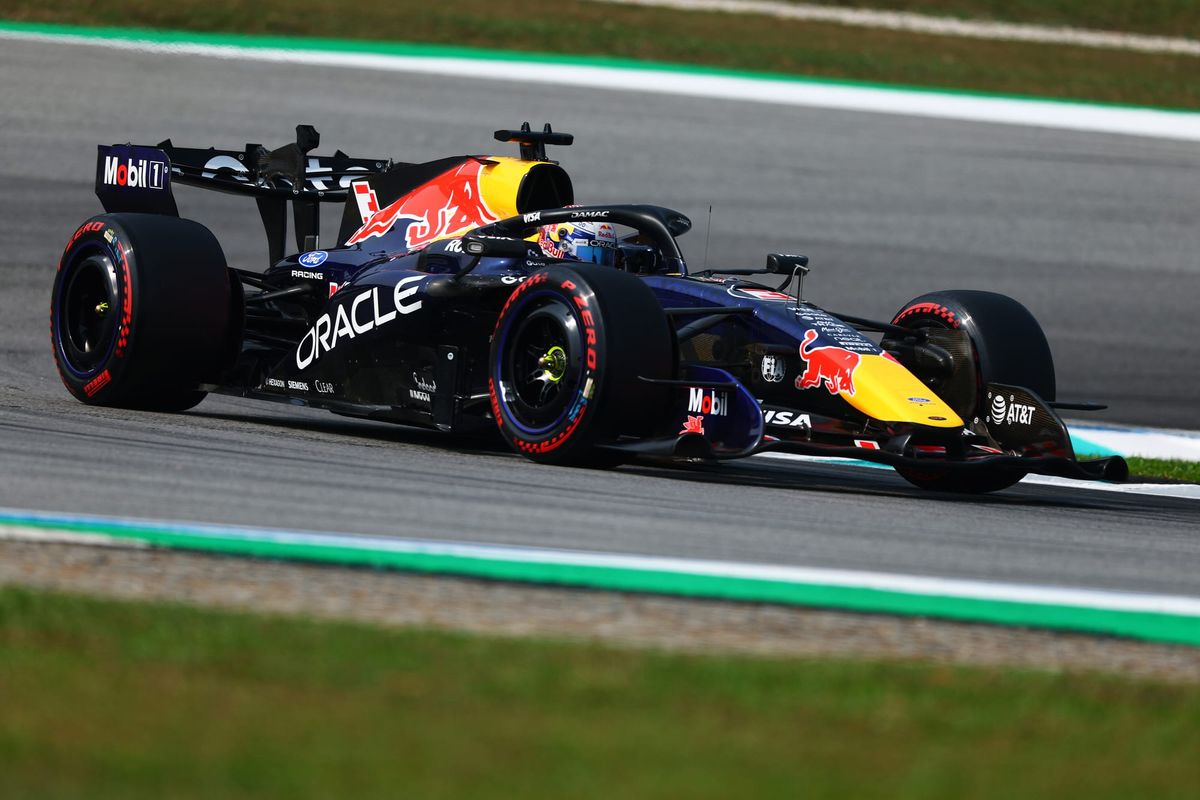
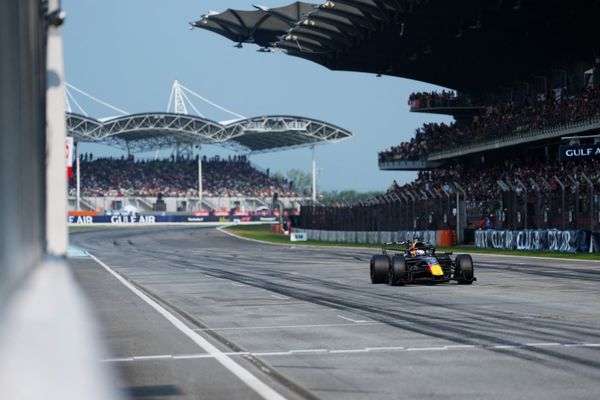
While Mercedes’ troubled upgrade removed it as a factor, Red Bull’s rivals see signs in its maiden pole position as an engine manufacturer of a proper shuffle in Formula 1's competitive order.
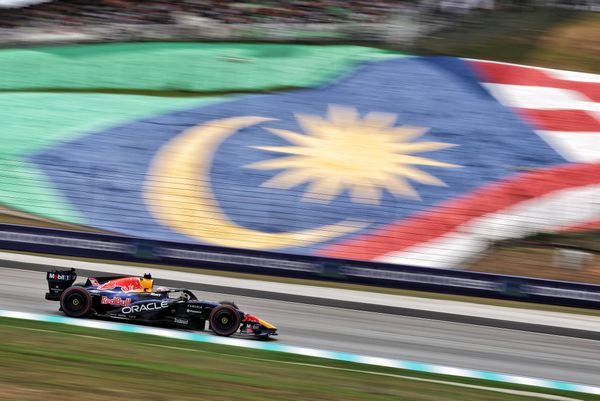
Max Verstappen’s first pole since last year’s title-deciding Abu Dhabi Grand Prix certainly owed nothing to good fortune. He was quickest in all three qualifying segments. Proof of the RB22’s pace was made firm with Isack Hadjar ending up third on the timesheets.
But it is not the Red Bull result that has surprised the opposition. Instead, it is how it was achieved.
A deep dive into the telemetry data of where the pace has come from suggests a reset in the performance profile of the top squads – with areas where teams had previously been strong no longer true this weekend.
As detailed below, on the Sepang straights Verstappen was super strong, while in the high-speed and medium-speed corners where Red Bull was being murdered by the other frontrunners earlier in the year, it was now right up there.
This points to Red Bull having addressed the key weaknesses that had held it back.
It has got more out of its all-new 2026 power units and, rivals suspect, its Baku upgrade unleashed far more potential from the car in areas where it was lagging that had been on show in Azerbaijan.
There is no single magic bullet in F1 that ever leapfrogs a team forward, and observing Red Bull’s form over the season points to it having just steadily chipped away.
Miami and Austria upgrades addressed some of its high- and medium-speed corner deficit. So, with more getting unleashed from better energy management too, by Madrid – a track with a good mixture of high, medium and low speed corners, it was within touching distance of pole as Verstappen missed out there by 0.140 seconds.
Its Baku upgrade had not shown itself to be a game-changing last weekend, especially with Verstappen having been slowed by power unit problems.
But the layout of the circuit there is all about low speed and straights – and the pace on Sunday showed how close it was.
So it was only in Malaysia, where there is a much better combination of high- and medium-speed corners, that the true potential of that upgrade has perhaps emerged.
McLaren boss Andrea Stella certainly thinks that there has been a change of trend here, which he hints may have come from a "significant step" Red Bull’s Baku upgrade gave it.
Asked by The Race about whether he had seen a change in the performance profile of the top squads, he said: “It's interesting here in Malaysia to see that the straightline speed advantage that Mercedes had in Baku, we don't see it. It's kind of disappeared.
“The best performance in a straightline seems to be, by a decent margin, Red Bull. The best cornering performance is Ferrari. And we, McLaren…are also puzzled a little bit by the fact that in high speed, we are no longer the best car, like we seemed to be in Madrid, or we seemed to be in Zandvoort.”
Verstappen himself concurred that Red Bull’s recent upgrades had “pushed some of the weaknesses out of the car” as he suggested this result was simply down to the team having understood its car a lot better.
With increased downforce comes more grip and a better balance – and a virtuous circle with the gains that then come from the tyres.
Plus, added Verstappen: “on a track probably where it’s all very hot and you want a stable balance or connected balance, then that’s very important. And that’s, I think, what we have found a little bit more over the last weekends".
It was interesting to hear Hadjar talk about how, when he returned to the car in Baku, it felt different to when he had last raced before the summer break.
“I definitely feel like I jumped in a car that’s way better than when I left it in Budapest,” he said. “Definitely, when you step out actually for three races and you come back, you actually notice a bigger difference.”
Yet despite what everyone has seen of Red Bull this weekend, there remain a few caveats before suggesting this is the start of a new chapter in the F1 2026 season.
Mercedes falling back may be a one-off, plus Malaysia’s heat and rough surface make it an outlier – both in terms of tyre management and set-up and aero characteristics that include cooling compromises.
So the proof of where things stand up may have to wait until Singapore next weekend.
How Verstappen beat Hamilton to pole
Edd Straw
What really stood out about Verstappen’s pole position lap was the level of confidence visible from the onboard footage. I can’t remember an occasion in 2026 when he’s looked so at one with the car, so it was no surprise that he referred to its “connected balance”.
He could brake late, turn in decisively, and on the few occasions when the car required any corrective action, he was able to do it quickly and with the minimum of fuss.
That said, it wasn’t in the corners that Verstappen built his decisive advantage. There, it was about getting the most out of a package that is significantly improved but still usually not market-leading in turns. Where he could make hay was on the straights and in the braking zones.
Although Verstappen’s pole position margin was three-tenths of a second over Hamilton, the battle for pole position only swung decisively in his favour in the final sector. There, he was a mighty 0.464s quicker than closest rival Lewis Hamilton.
The strong straightline speed of the RB22 showed immediately at the start of the lap, gaining around a tenth over Hamilton (with a similar margin over the McLaren of Lando Norris and Kimi Antonelli’s Mercedes) by the first corner based on when all were at 100% throttle. Relative to Hamilton, he emerged from Turn 2 with a similar advantage and by the end of the first sector, 145 metres before Turn 4, he had a 0.138s edge over Hamilton - and just over three-tenths over both Antonelli and Norris.
Sector 2 was the weak point for the Red Bull, the fast, flowing section bookended by slow corners where the battle swung towards Hamilton - who generally registered a similar or higher minimum speed in this section and took 0.304s out of Verstappen - putting him 0.166s up entering the final sector.
Much of the final sector is at full throttle, and it was here that Verstappen demolished Hamilton by 0.464s on his pole lap - although it should be noted that Leclerc was actually the faster Ferrari driver through here with a deficit to the Red Bull of only 0.2s.
Although Hamilton was a little quicker in the Turn 11 right-hander than Verstappen, this sector was mainly Red Bull territory.
This all added up to an emphatic pole position after a performance that was all about Verstappen being at his brilliant best in the corners in an improved car that gave him the balance he needed and cashing in on the straights.