How F1 teams broke the ground effect era
Formula 1’s ground effect regulations of 2022 to 2025 were the most thoroughly researched, systematically-written and well-conceived in the history of grand prix racing.
But the cars it created ultimately became exactly what the rules set out to avoid, extremely difficult to race thanks to how difficult it became to follow.
They produced enormous levels of downforce and were seriously fast, and were challenging to drive even if they did take a big physical toll on the drivers. But they struggled to follow closely and created processional races.
The headline aim of the rules, and the primary driver of the decision to reduce the reliance on top-body aerodynamics in favour of generating downforce using powerful ground-effect venturi-tunnels in the underfloor, was to make it easier to follow.
So what went wrong?
The short answer is that the teams did everything they could to ‘break’ the regulations in their relentless pursuit of performance and race wins.
In 2022, the first year of the new regulations, it was significantly easier to follow. The FIA’s analysis that fed into the new rules found that in 2019, at 10 metres behind a rival the following car dropped to 55% of its downforce level. At 20 metres, it was 65%.
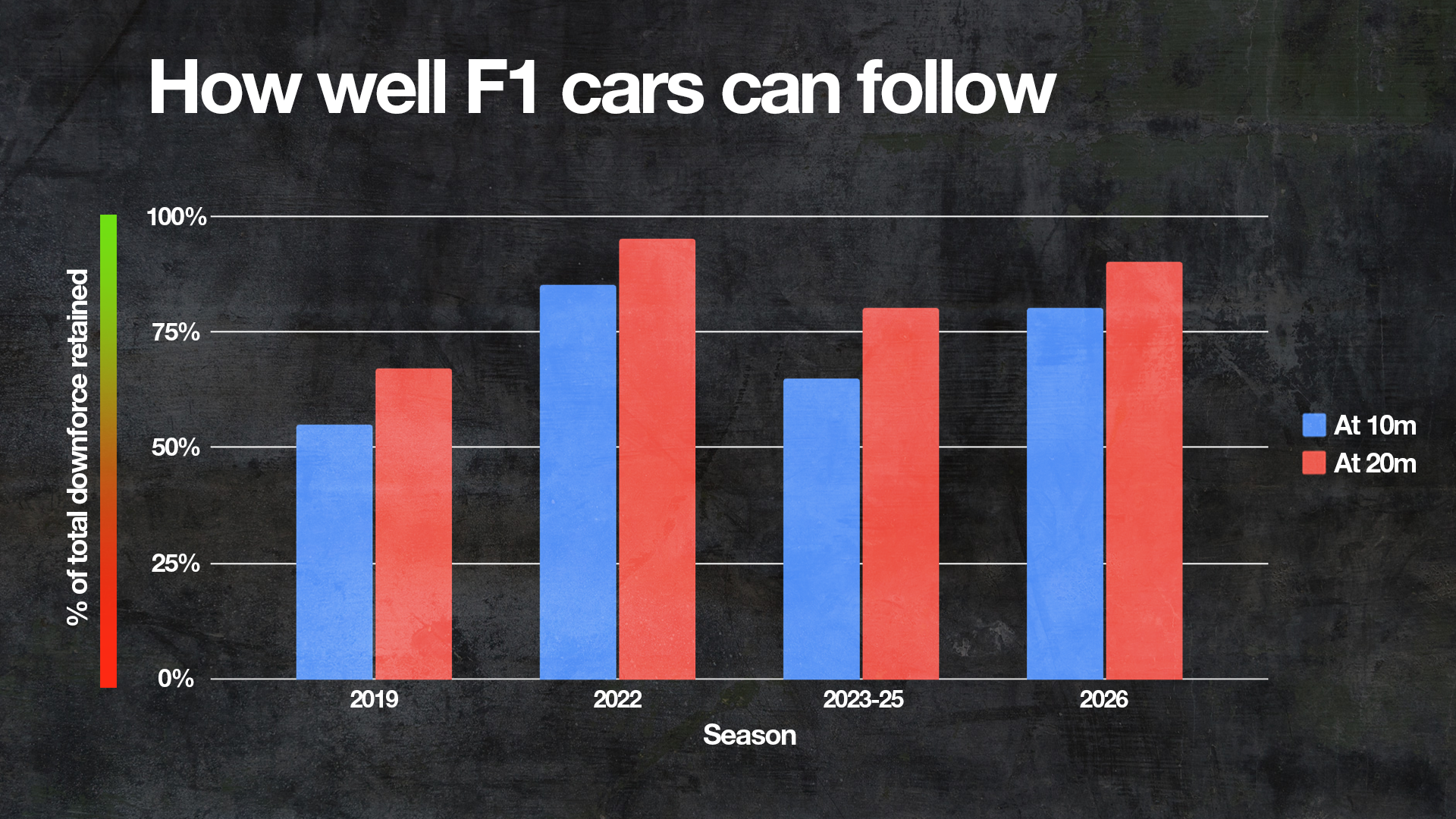
But in 2022, those figures improved to 85% at 10 metres and 95% at 20 metres. By 2025, that had degraded to 65% at 10 metres and 80% at 20 metres. Still an improvement, but it led to increasing complaints about how difficult it was to follow from drivers and the difficulty of overtaking.
And that was the opposite of what the rules were supposed to deliver.
The quest for 'raceability'
One word was inescapable when F1’s ground effect regulations were being talked up before the start of 2022 - raceability.
The meaning is straightforward enough, as in being able to race. But in real terms it meant the objective was to control the aerodynamic wake of the cars to minimise the turbulence encountered by a following car.
While ground effect aero was reckoned to be fundamentally more robust anyway, it’s that wake management that was critical. The FIA and F1 itself did plenty of research on this phenomenon, and understood the key means to achieve this was minimising aerodynamic outwash.
Outwash is important for performance because it pushes the aerodynamic airflow outward - especially that generated by the rotating front wheels. Effectively, you want to direct as much of the turbulent air outwards while keeping as much of the clean airflow as you can within the extremities of the car to generate downforce.
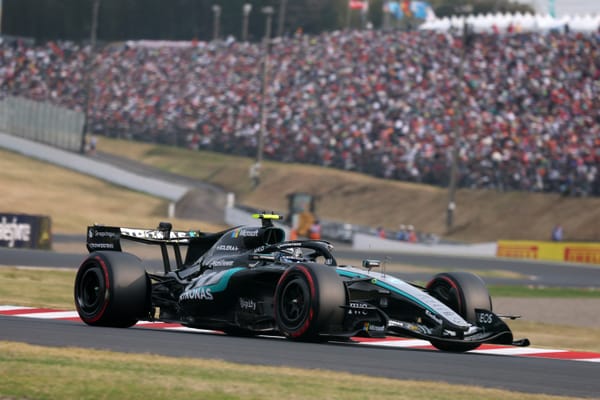
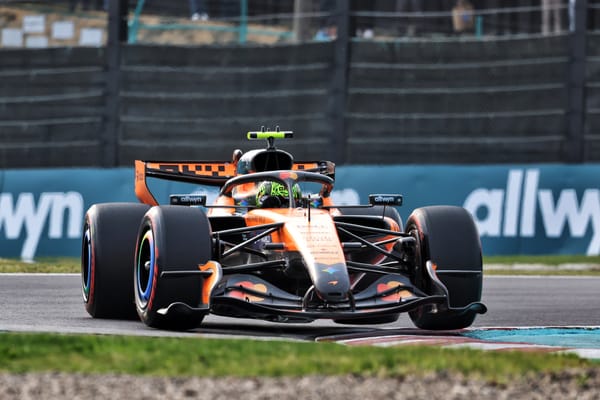
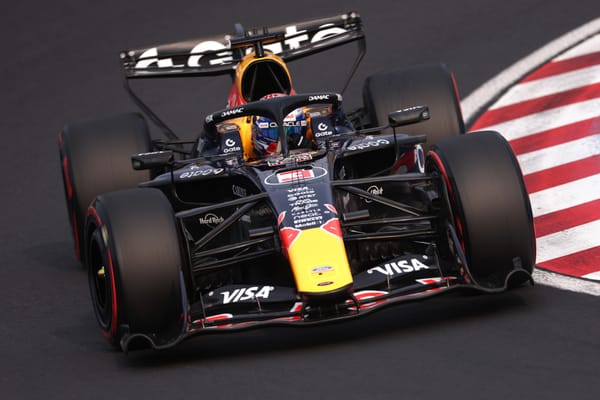
The permitted geometries of the 2022 ground effect cars were conceived to achieve this - notably simplified endplates to both the front and rear wings. The trouble is, F1 teams like outwash and continued to work towards it.
And so they should. As Ross Brawn, then boss of F1, said in 2022, “with the best will in the world, the teams won’t have traceability as a priority”.
This led to innovations such as the Mercedes endplate design that appeared early in 2022 that created unwanted - by the rulemakers - gaps that could channel outwash airflow. This loophole was closed, but Mercedes and others simply found another way to achieve this.
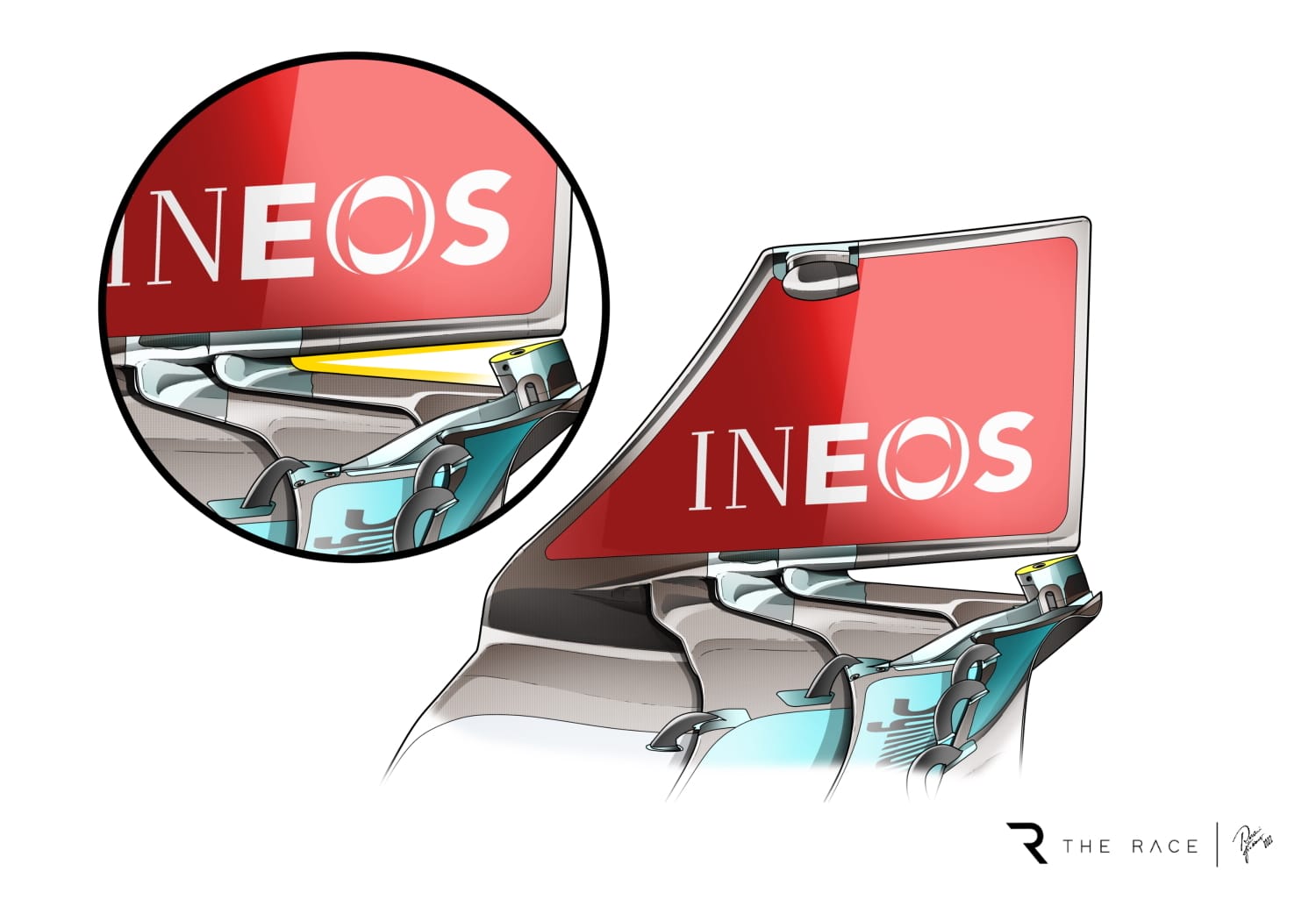
The FIA points to three areas as making following harder than expected - the front wing endplates, the floor edges, and the complex brake duct winglet arrays inside the front wheels. As Tombazis admits, there was too much freedom simply because the extent of the problem wasn’t foreseen.
“There were certainly some areas of the regulations where they were a bit too permissive in some areas and they enabled teams to adopt solutions which create, outwash, aerodynamically speaking, and therefore went on to compromise some of the very good work on the overtaking,” said Tombazis.
“So that's why we saw, in the very early days of '22 everyone was saying how closely they can follow and everyone was really happy, and nowadays it is quite difficult.
“So in that respect, we didn't manage to keep that parameter as well under control as we would have liked.”
While there were other problems with the regulations, such as the unexpected porpoising and bouncing, the never-ending controversies about flexi-wings and trouble with underfloor skid designs, aerodynamic outwash was the key factor that made the raceability gradually get worse during the ground effect era.
Pushback on 2025 tweaks
The intention of the regulations was always to allow the FIA to push back on evolutionary directions that went against the ethos of those rules. For the first time in F1 history, this was codified in the regs.
Article 3.2 of the 2022 technical regulations expressly stated that “an important objective is to enable cars to race closely, by ensuring that the aerodynamic performance loss of a car following another car is kept to a minimum”.
This could be checked through the FIA’s access to design details of the cars and there was the scope to make rule changes to ensure the cars didn’t subvert this intention.
The FIA had worked on possible tweaks for 2025 to prevent the problem of following getting worse with changes to the front-wing endplates, floor edges and the brake-duct area. However, F1’s governance processes required team support - and as Tombazis says “we didn’t have enough support among the teams”.
These areas have been tackled as part of the all-new 2026 regulations package, which is also expect to make following easier through the cars not running as low.
Competitive convergence
Another key objective for the rules, one the teams didn’t undermine, was to make the championship closer and more unpredictable.
Whether or not that’s a success depends on how you measure it. Only once did the drivers’ championship fight go down to the wire, in 2025 with Lando Norris, Max Verstappen and Oscar Piastri all in contention - although the constructors’ battle between McLaren and Ferrari was also not decided until the last race the year before.
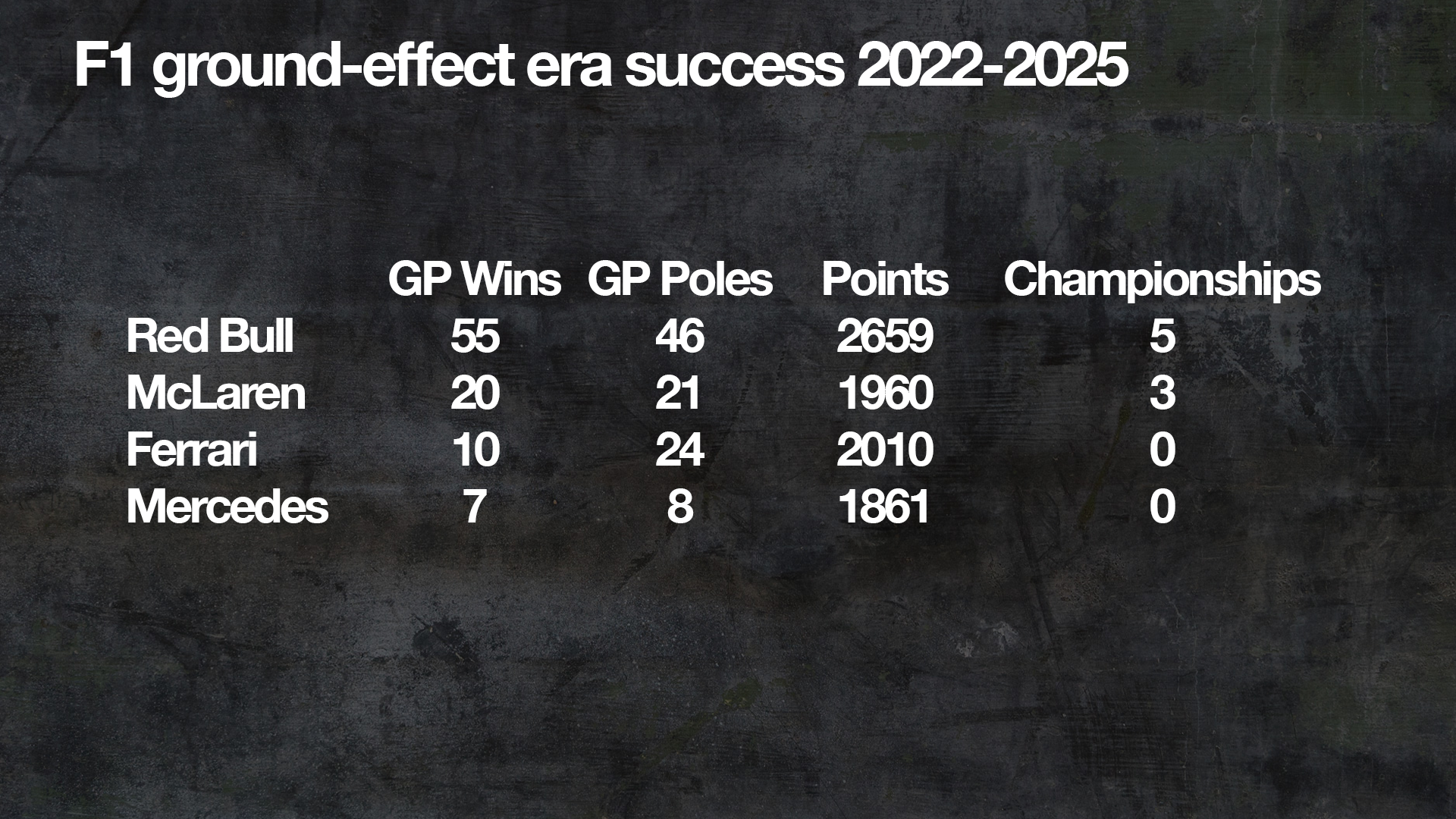
This cycle also produced arguably the most dominant season in F1 history with Red Bull winning 21 out of 22 races in 2023 and Max Verstappen the runaway champion. And the big four teams - Red Bull, McLaren, Ferrari and Mercedes, did all the winning.
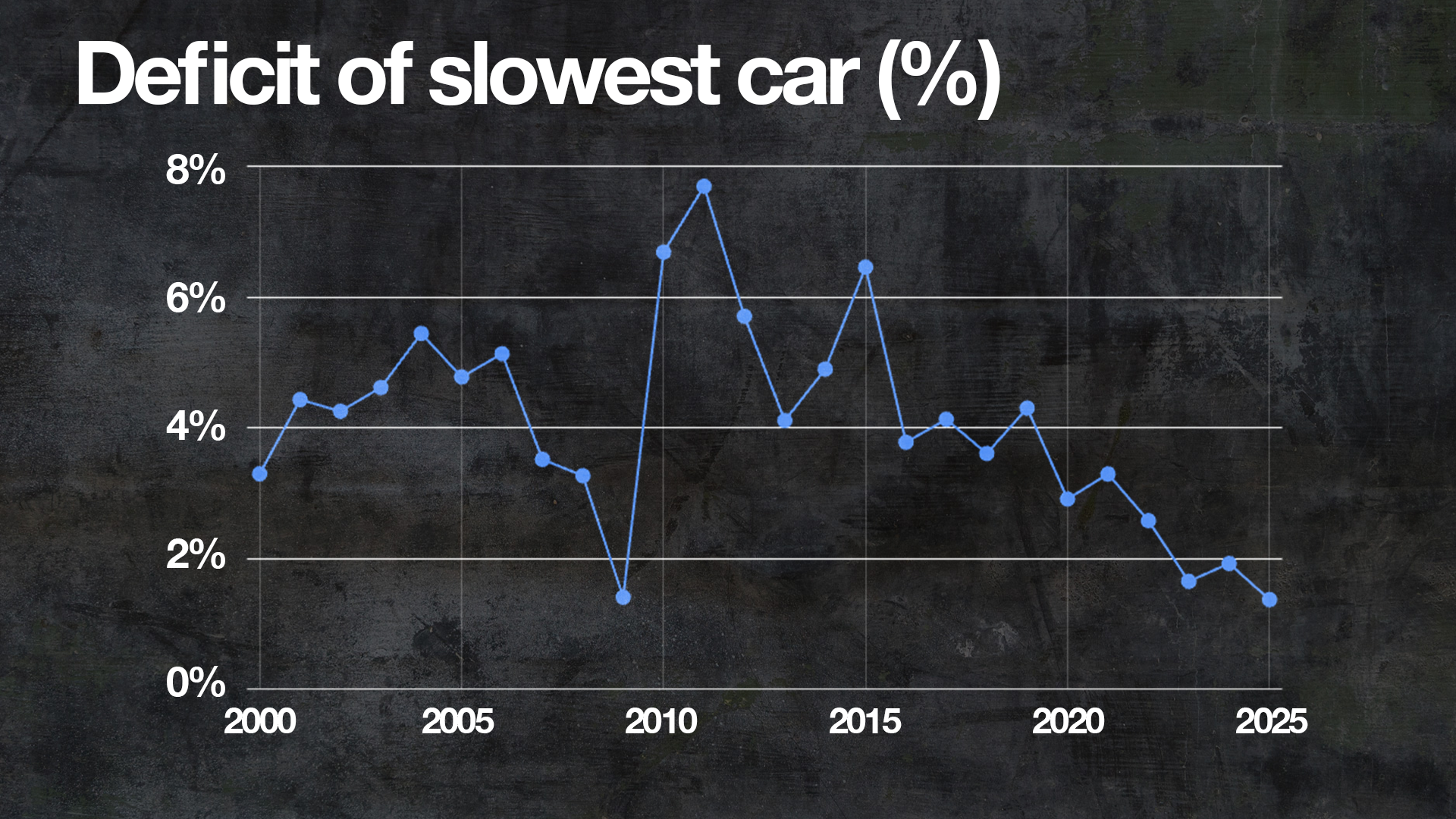
But the picture is a little more complicated than that. These rules did succeed in making the competitive spread much narrower. The average single-lap pace deficit of the slowest team in 2025 - Alpine - is just 1.369%. That’s the smallest of the 21st century, with only 2009 getting close.
So what caused this? Partly it’s down to how prescriptive the regulations were in terms of car design. There was also the increased number of spec parts - known as standard supply components - such as wheelrims and some of the fuel-pump system - as well as the open-source components teams could come up with in-house but with the designs having to be shared with rivals - for example pedals and the steering column.
The suspension was also simplified, with inerters banned, hydraulic systems not permitted and exotic geometries curbed. There were also restrictions on gearbox designs and changes, along with regulations demanding that power unit specifications and functions should be the same for works and customer teams.
But that’s not the only reason things got so close on track.
Spending and development limitations
There are two extremely important aspects of the 2022 rules package that are often overlooked but that have worked better than any other parts of it - the cost cap and the sliding scale of aerodynamic testing. They tend to get left out of appraisals of this rule set for the ostensibly logical reason that both of these measures were introduced in 2021.
However, they were integral to the 2022 rules revolution. It’s just that while the car regulations were deferred by a year because of the impact of the COVID-19 pandemic, both the cost cap and the aerodynamic testing regulations (or ATR) stayed on schedule and kicked in for 2021.
These measures were critical because as then-F1 CEO Chase Carey said in 2019, the aim was not only to improve the action on track but also make F1 “a healthier and [more] attractive business for all”.
The cost cap actually became more restrictive thanks to COVID. Originally, the baseline figure for 2021 was 175 million dollars. The word baseline is used because to that figure adjustments are made for various things that makes the final number a little higher.
During F1’s COVID-enforced hiatus, with no racing taking place from March through to the end of June in 2020, that figure was revised downwards to 145 million dollars. This then dropped to 140 million in 2022 then 135 million for 2023 through 2025. The revamped cost cap baseline leaps to 215 million in 2026, partly to reflect the costs of the all-new cars, but also as part of an extensive revision that means more costs are included, such as staff sick pay and certain depreciation values, and various other adjustment mechanisms are modified.
This served to bring to an end the risk of a developmental arms race based on brute-force spending. Combined with the ATR, which gives more windtunnel and CFD resources to teams ranked lower in the championship, this has played a big part in how tight the competitive spread became in 2025 in particular.
And looking purely at the business side, it has made teams profitable and contributed to the skyrocketing value of those entities. Toto Wolff recently sold a slice of his stake in the Mercedes F1 team to CrowdStrike CEO and founder George Kurtz which values the entire team at six billion dollars.
Teams have stress-tested the cost cap and it has required constant tweaks to keep it effective. But it has held firm and, as Brawn put it, the teams “need saving from themselves” financially - particularly through controlling the competitive drive to overspend in pursuit of victory - and more teams are now competitive as a result.
That might prove to be the great legacy of these regulations. The ground-effect rules didn’t deliver on the best hopes for improving the racing - although given how difficult that is to achieve they can be considered partially effective. And it's important to note that certain other parameters, such as the Pirelli rubber, also played a part in the racing not improving as much as hoped.
“I think we made a significant step in the right direction on most of these aims, but I certainly wouldn't claim total success, or I wouldn't give us an A star,” said Tombazis. “I would give us a B or a C or something like that. But I think we moved in the right direction.
However, in terms of the health and stability of the teams and F1 as a whole, they will go down in history as a resounding success.