Haas adds version of Ferrari wing innovation for China
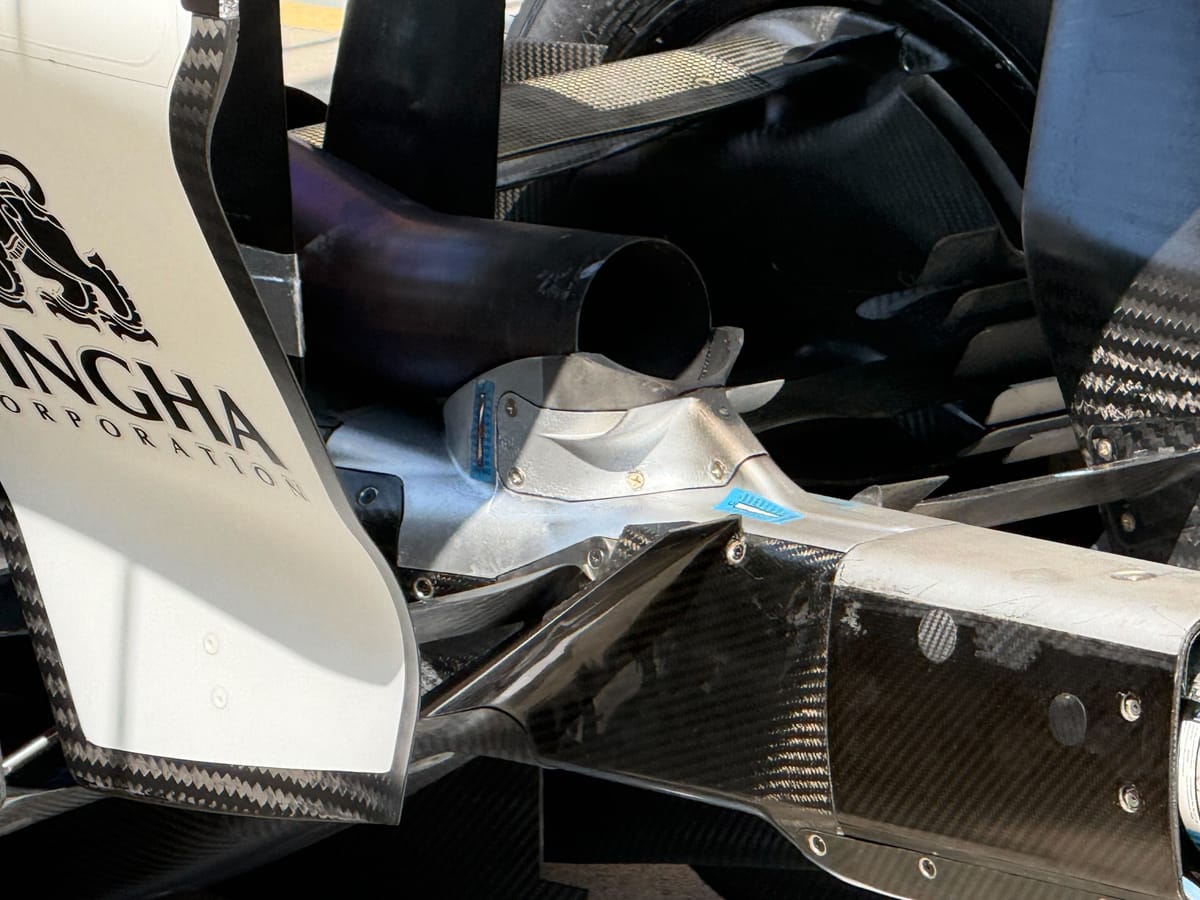
The Haas Formula 1 team has followed Ferrari's lead in fitting an innovative exhaust wing from this weekend's Chinese Grand Prix.
Ferrari raised some eyebrows in the final pre-season test in Bahrain when its SF-26 ran with a unique wing at the rear of the tail pipe, which makes use of exhaust flow to deliver a downforce boost in this area of the car.
Mounted on top of the rear crash structure to capture the exhaust flow, the wing's primary advantage lies in cleaning up the airflow exiting the diffuser from the hot (and less dense) turbulent exhaust gases.
The small wing connects with the walls that extend from the diffuser and surround the tail structure (where the rain light is located).
Ferrari was able to introduce the wing because of design decisions it took in relation to the crash structure and gearbox location which opens a legality box where it can fit it.
Other teams are unable to copy it because of different choices they made in terms of that relationship between the crash structure and gearbox.
Haas, which takes Ferrari's gearbox and other car components, does have similar freedoms to do something here – and for the Shanghai weekend it has adopted its own version of the exhaust wing.
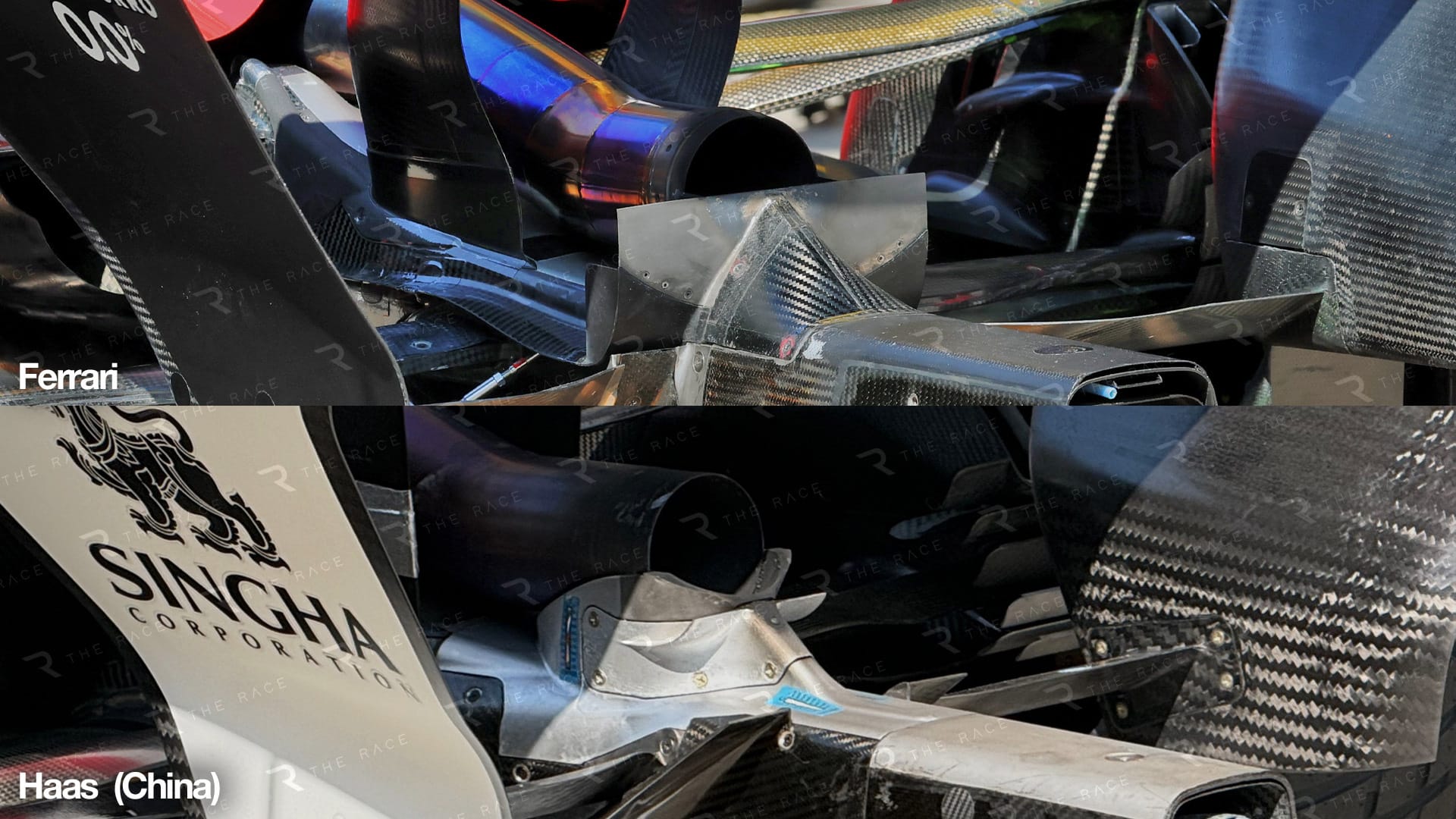
The Haas version is not as aggressive in scooping up as much airflow as the Ferrari, but it will have been honed around the demands of its diffuser.
Haas explained that the wing's shape is designed to promote upwash, which "improves the local aerodynamic characteristics and results in a corresponding increase in load".
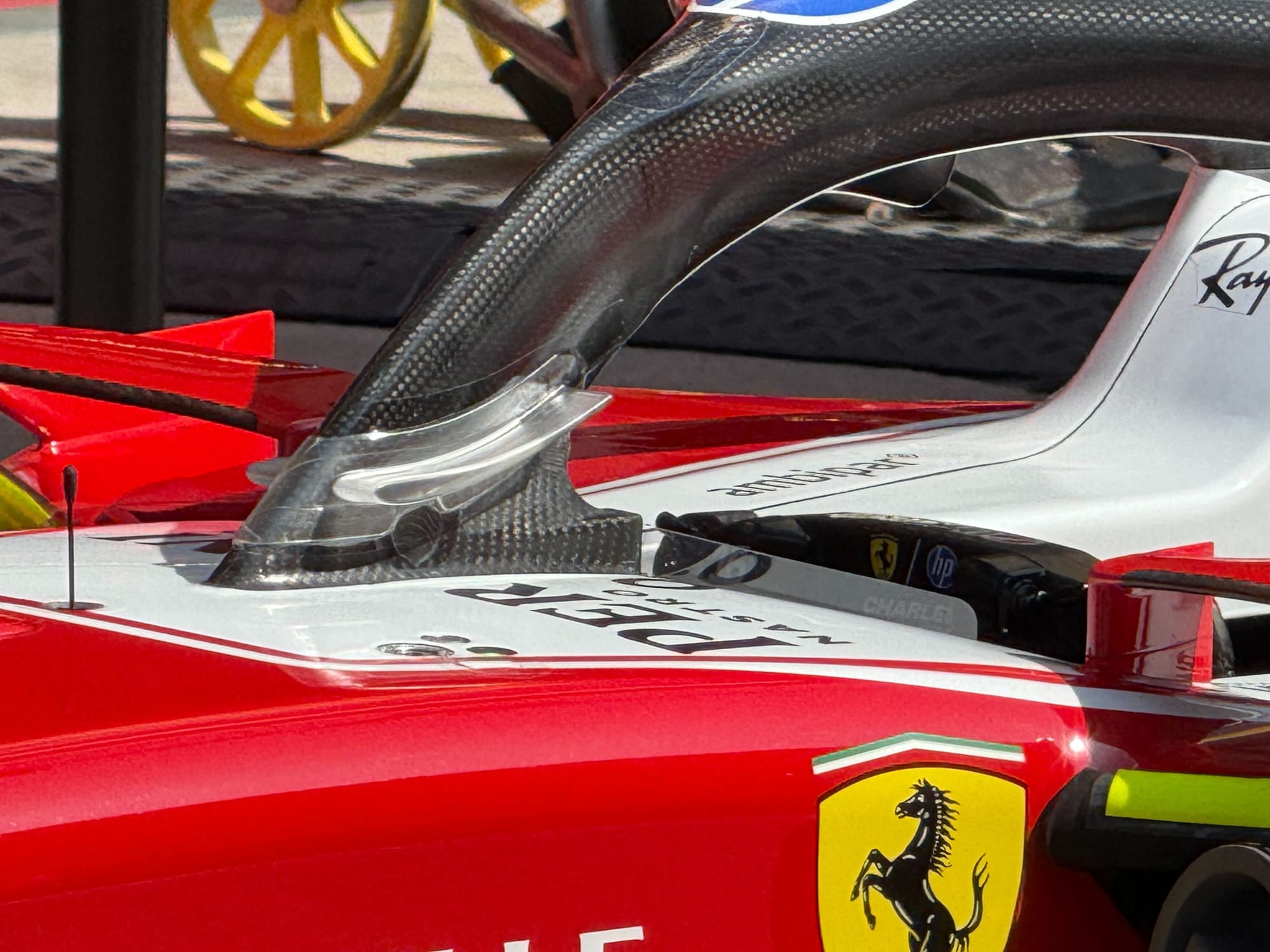
Ferrari has continued its innovations in China beyond bringing its much talked-about upside down rear wing to a race for the first time.
The SF-26 has appeared with two mini wings on the central pillar of the halo, which will be aimed at optimising airflow around the cockpit.
Ferrari's design submission said that the winglets return "a small aerodynamic load benefit".
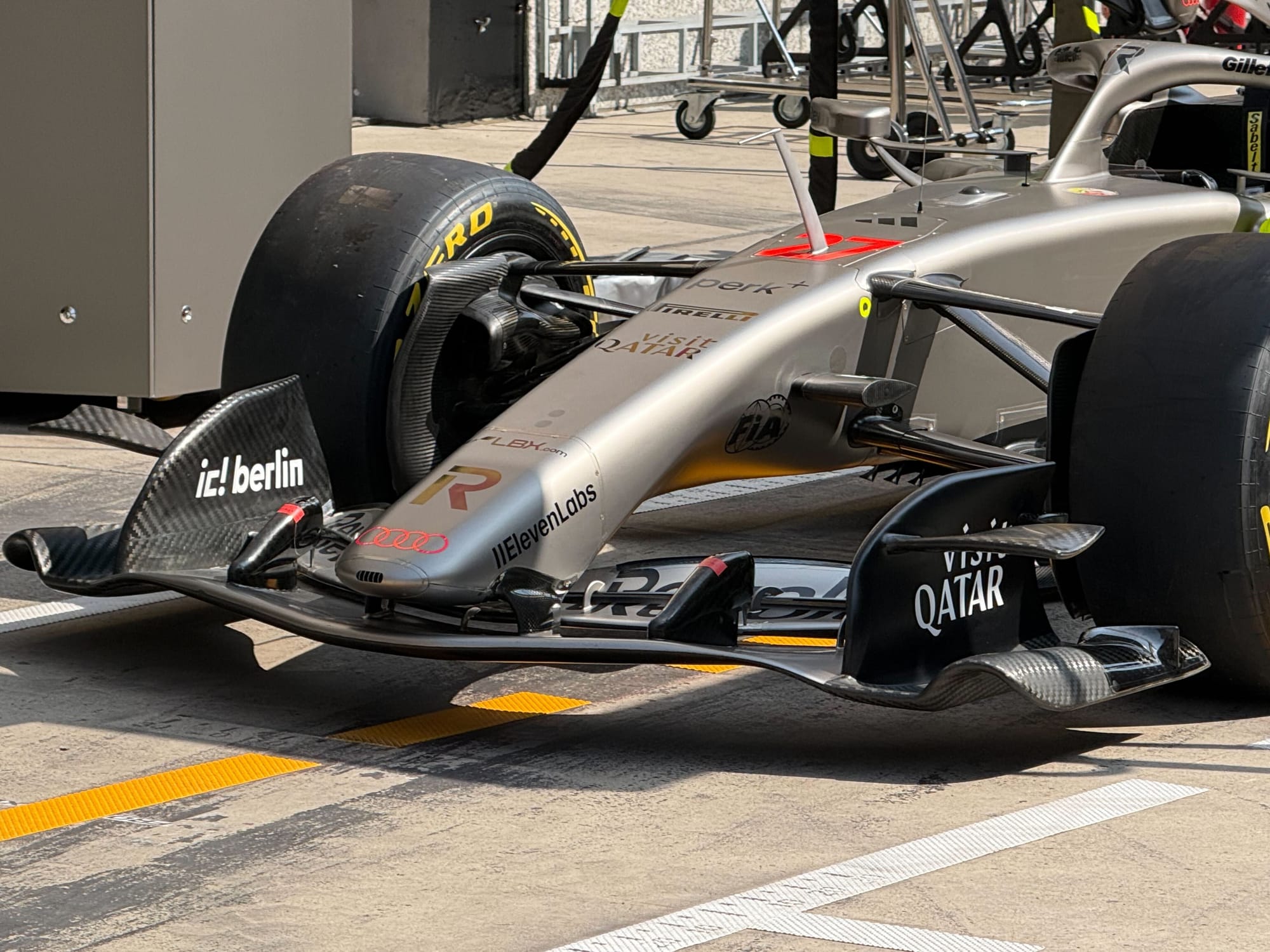
Audi has also brought an aerodynamic update to the Chinese Grand Prix with a new front wing endplate and nose.
The endplate geometry has been revised to improve flow characteristics travelling further downstream on the car, with the new nose allowing a more efficient load across its entire slope.