Gary Anderson's verdict on the real 2026 Racing Bulls
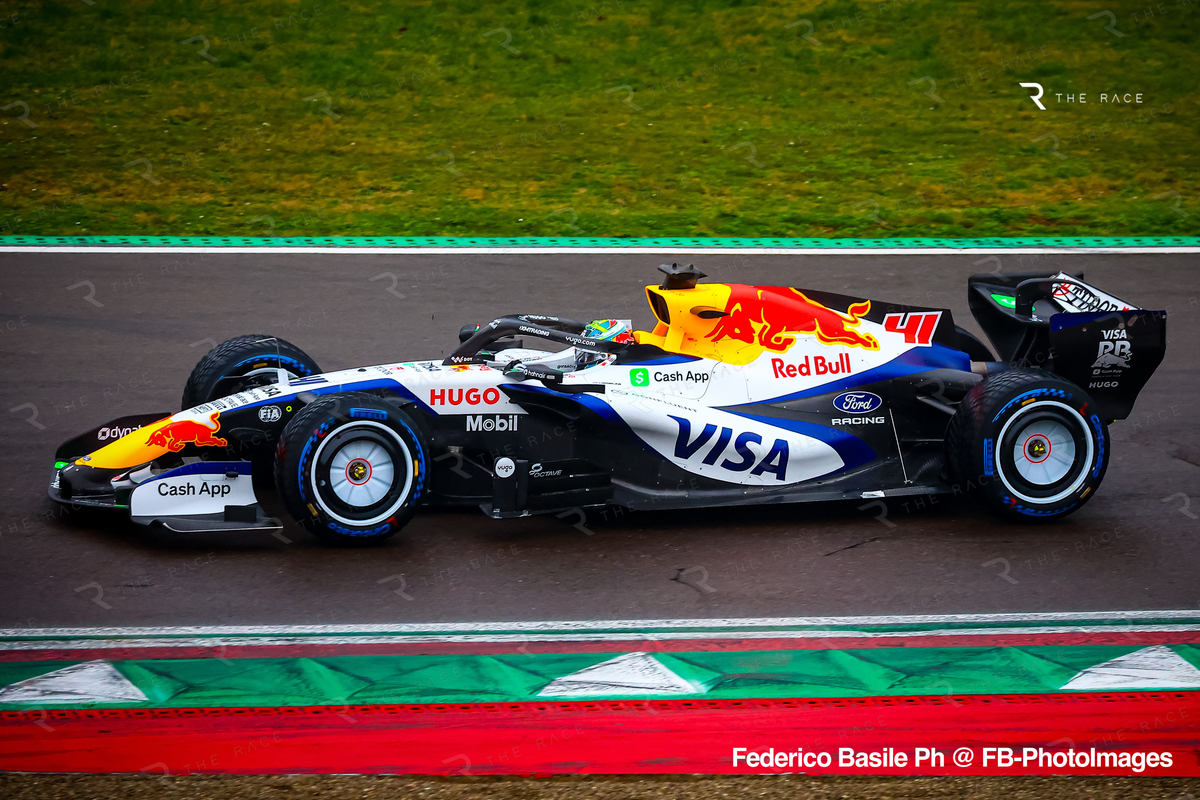
It’s great that we are getting to see real 2026 Formula 1 cars running on track, with Racing Bulls the latest to appear. It was only a shakedown, but less is now hidden and we can start to get into more definitive technical analysis. (Shakedown images courtesy of Federico Basile)
Racing Bulls has taken a step back this year towards being a Red Bull junior driver stepping-stone again. It was where Sebastian Vettel and Max Verstappen cut their teeth and Isack Hadjar is the latest to graduate from it, so it’s a team that can be used to progress drivers along their learning curve.
Verstappen has been regularly linked to a move away, so Red Bull needs to be prepared and Liam Lawson and Arvid Lindblad need the VCARB 03 to be a car good enough to make their case for a promotion. That also makes this car important for Red Bull as a whole.
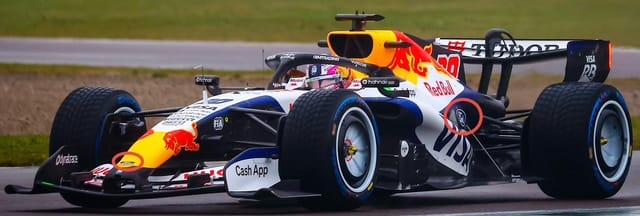
Tuesday’s running at Imola is the first time the DM01 power unit, designed and built in-house by Red Bull Powertrains, has run on track. We can see a very small Ford logo (red ellipse) on the nose and the sidepod just above the body stay. I’m pretty sure that is, in reality, about the size of Ford’s technical involvement in this project!
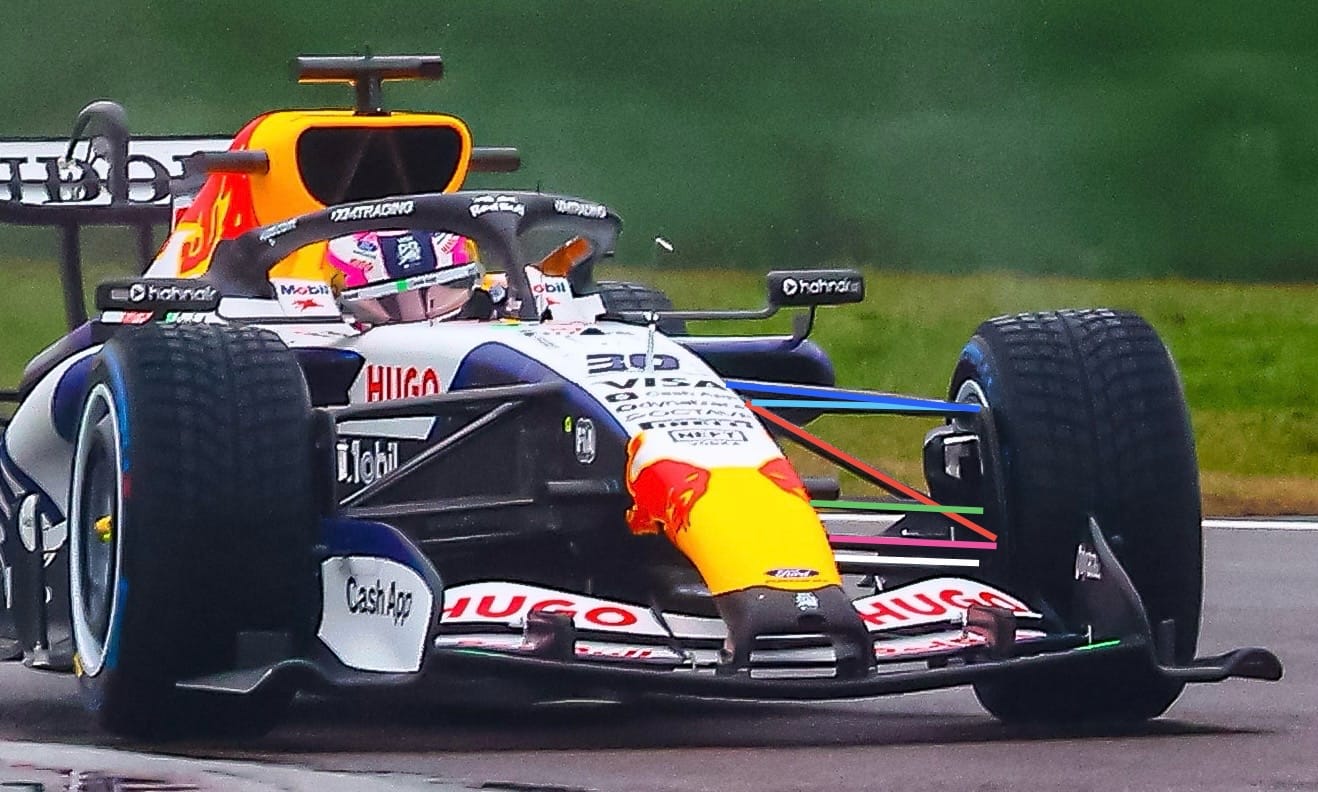
Starting with a look at the front suspension, it’s pushrod operated (red highlight above). The top wishbone (forward leg dark blue, rearward leg light blue) has a lot less anti-dive than used last year.
The reasoning for this is likely that it is in line with the increased ride height, and more importantly rake. For these reduced ground effect cars with their reduced underfloor tunnels and smaller diffusers, it looks like we are stepping back in time to the car concepts from pre-2022. More rake basically means the whole car attitude works to accelerate the airflow underneath the underfloor from the front to the rear.
If rake generates increased underfloor downforce, then increased rake under braking will again increase the downforce. That might be a bit simplistic, but it’s an early overview.
There is also a suspension link (highlighted in white above) that I’m not sure of. A multi-link suspension system as opposed to simple A-frame wishbones can generate massive differences in kingpin and camber angles with varying steering lock, so I wouldn’t be surprised to see this being exploited to optimise the tyre contact patch.
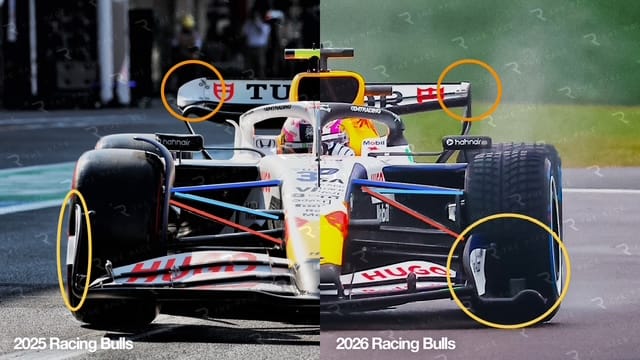
A quick comparison of the 2025 and 2026 Racing Bulls cars’ front suspensions shows what I mean about the reduction in anti-dive and the change from pullrod to pushrod. The front wing endplates (highlighted with a yellow ellipse above) show how the vertical part has moved inboard.
However, the lower tray section looks vulnerable. We also saw a wide upper horizontal blade on the Haas and Cadillac. I’m pretty sure we will see a few of those flying through the air this year after collisions.
With our launch and test content ramping up, get a 7-day free trial for The Race Members' Club. Experience The Race's unique content, ad-free listening, a chance to get involved in our podcasts and much, much more. Try it out, here
It also shows a reasonable comparison of the now-three-element front wing assembly. The mainplane is basically very similar with a flap height reduction. I’m unsure what mode this wing set-up is in, but with fewer slot gaps (i.e. two, instead of three) it will force the teams to run a reduced flap angle.
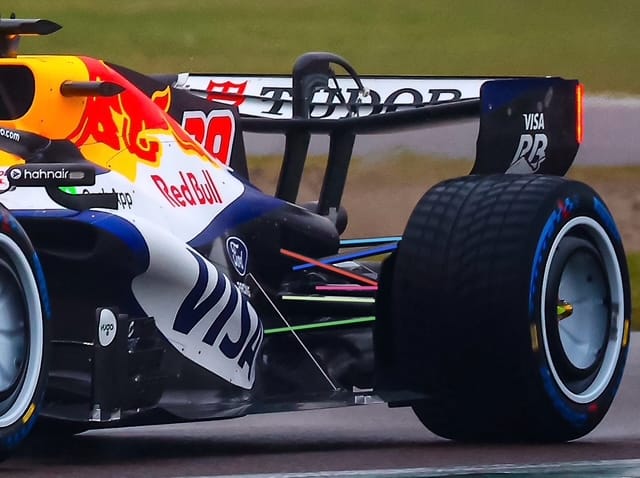
The rear suspension is also pushrod-operated (red highlight) inboard suspension. The rear top wishbone (front leg highlighted in dark blue, rearward leg in light blue) and lower wishbone (rear leg highlighted in dark green, rearward leg highlighted in light green) have retained a reasonable if not increased amount of rear anti-lift.
This would also match the high-rake philosophy. If you are running increased rake and the aerodynamic sealing system for the sides of the floor is working, the last thing you need is for the rake to increase further under braking and that sealing system to fail as a result. Then you would lose a load of rear downforce just when you need it.
You still need to seal the underfloor sides as well as possible, but instead of running the car low, you need to do it aerodynamically using the forward bargeboard assembly and whatever you can come up with that is legal on the floor edge surface.
Around the middle of the car, we can see a fair amount of change with a body stay (highlighted in red below) supporting that large flat area of underfloor. I expect this flat floor area will be one of the first areas where we will see developments flooding in.
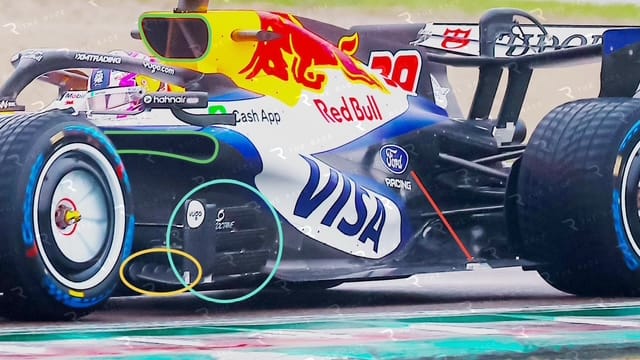
The splitters under the leading edge of the floor (yellow ellipse above) are in line with the height reduction on the leading edge of the floor itself. When we had the last ‘flat bottom’ era pre-2022, this area was defined as a simple radius. With these splitters there is more scope in the new regulations to get adventurous in this area.
The cooling inlets (plural) (green highlights above) in the sidepod are fairly similar to last year's concepts. There’s no overhang, but it’s early days. It is in line size-wise with what we saw on the Cadillac and much smaller than what we saw on the Haas renders. However, that inlet will be supplemented by the airflow above the driver’s headrest. Gone are the days of this area being a simple engine intake, it now feeds the turbo but will also feed airflow for some of the other cooling requirements.
This shows how much more important it is to optimise the airflow around the sidepod area, as it is the main potential downforce-producing area on the car.
If the intersection between the top surface of the headrest and the undersurface of the intake generates decent flow conditions coming off the driver’s helmet, then the area above that is not so critical.
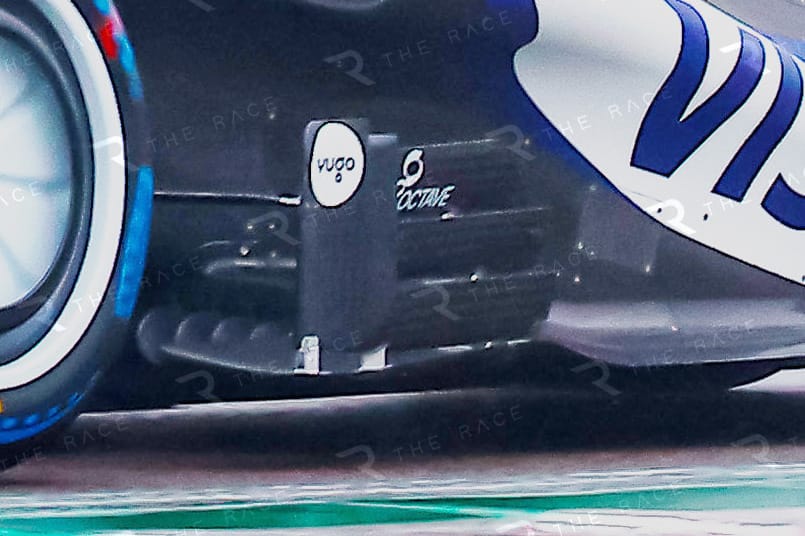
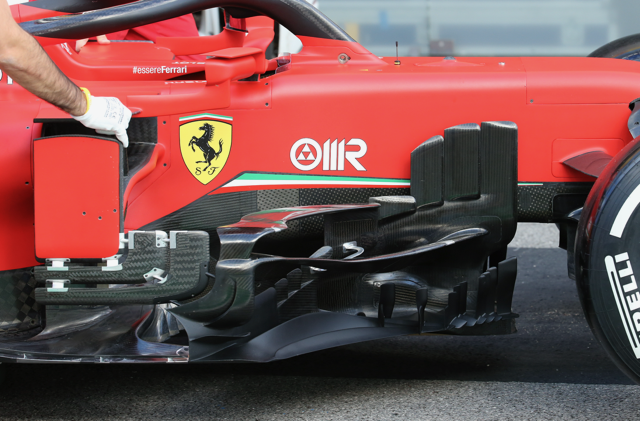
Now we come to the bargeboard area. We are seeing a return to the multi-element bargeboards pre-2022 - for comparison see the image below of a 2021 bargeboard. They are not quite as complicated yet, but give it time and I’m sure we will see some impressive vortex generating devices in that area to help seal the floor sides.
As for the rear wing assembly, this shows the twin-element rear flap. By way of comparison, I would love to see it switch between corner and straightline mode.
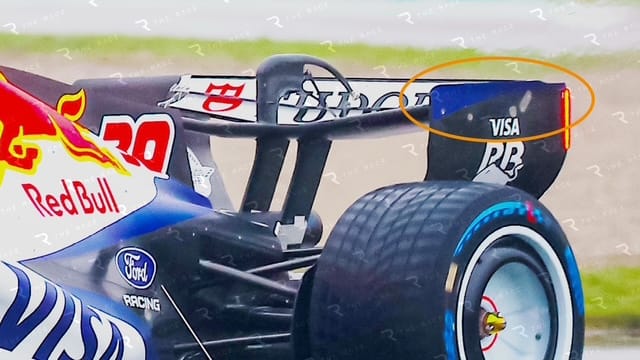
Gone is the integrated intersection between the outer end of the wing and the mainplane and flaps. I've highlighted that with the orange ellipse above, and taken the close-up crop of the 2025 and 2026 Racing Bulls comparison image below with orange ellipses on that element of the cars.
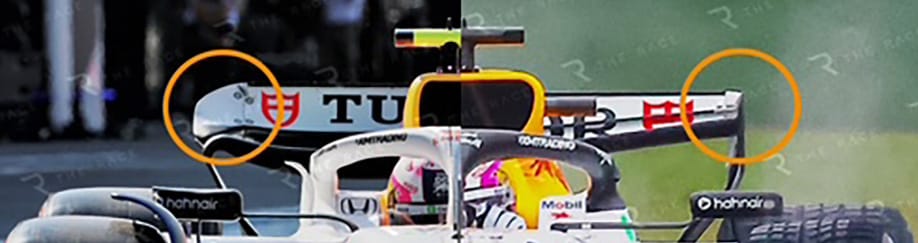
You could say that yesterday’s eureka moment is destined for today’s dustbin! I say this was a eureka moment because the objective with the 2022 rules was to reduce the vortices we often saw in wet or damp conditions. This vortex was towed along behind the offending car and, depending how far behind they were, anyone following had to suffer the consequences of that turbulent flow. I don’t think the laws of physics have changed over the last four years, so what’s going to be different now?
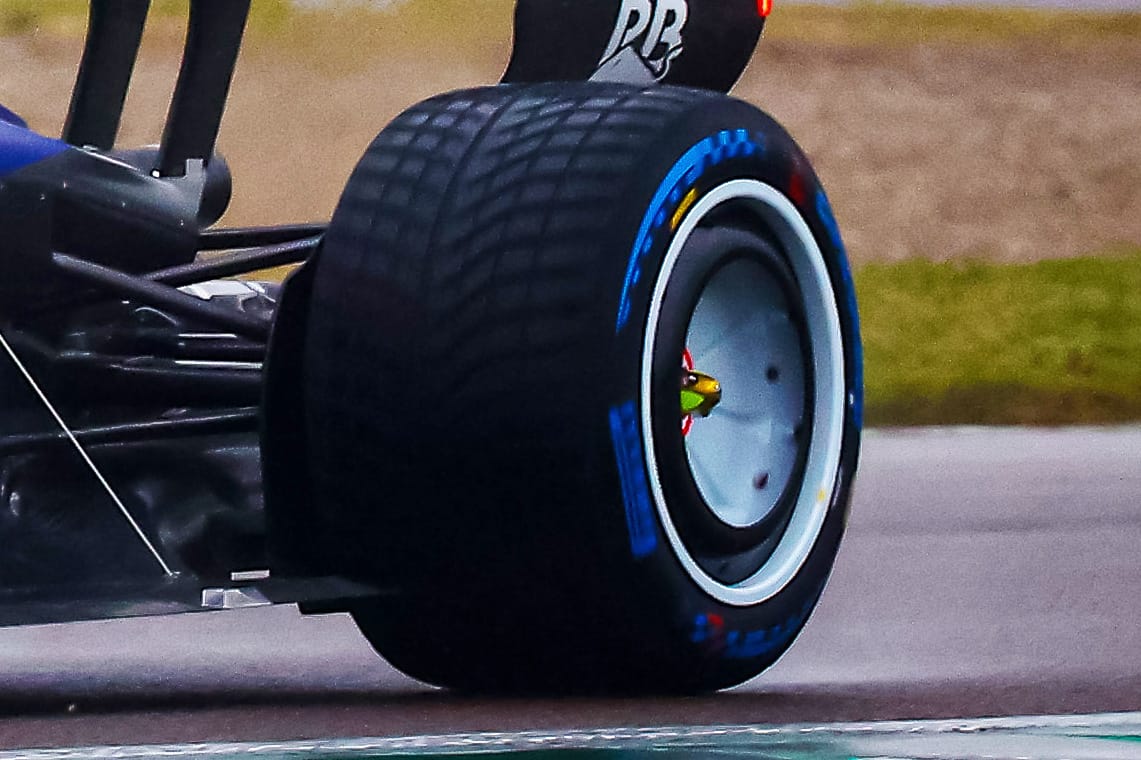
The shakedown also gave us a good look at the rear wheels. The standard hub caps were removed as part of the push to reduce weight, but now the teams can replace them with whatever they want to aid airflow through the wheel - adding that weight back on again.
Having now seen what we can call a first iteration of the 2026 regulations, the area I would question would be the front wing endplates. These regulations don’t need that silly horizontal tray, or at least not one the size that it currently is. The bargeboard area and the likely development that will go on around that area, or the rear wing endplate intersection to the mainplane and flaps. Why does anyone want to create more vortices and turbulence coming off that area?
The final question is whether, as Racing Bulls is the junior team, this car we’ve now seen for real is close to what Red Bull Racing will actually hit the track with?