Gary Anderson's take on Ferrari's basic 2026 F1 launch car
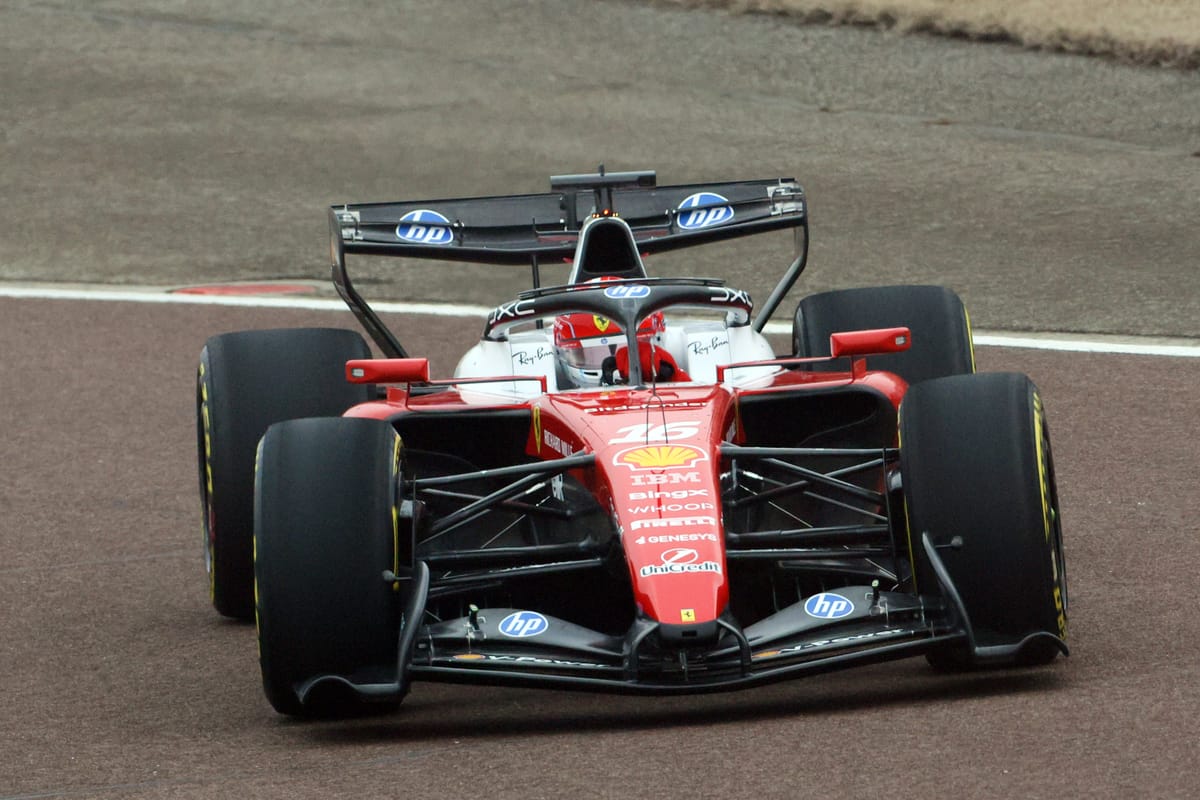
And then there was Ferrari! We have heard so much through the Italian tifosi during the winter that it sort of feels like we have seen the team’s 2026 Formula 1 design already, but here is the real thing. It’s a mixture of renders and the actual car that did Ferrari’s first few shakedown laps at Fiarano.
The team has already stated this first version of the 2026 car - which Ferrari calls its ‘spec A’ - is to allow it to build up data and reliability mileage, giving it time for more research and development, so this is not the final Australian Grand Prix race version of the car.
But anyway let’s see if Lewis Hamilton’s memos to Ferrari about what it needed to do to improve have been taken on board.
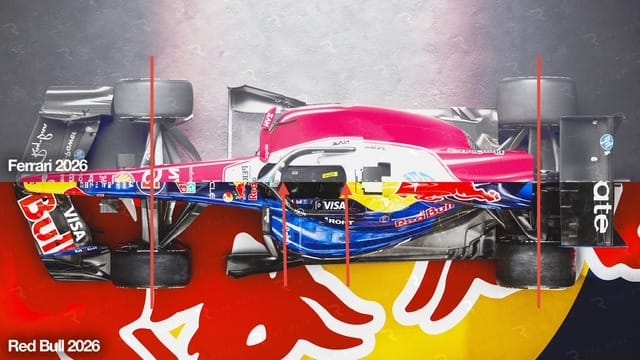
Compared to the Red Bull renders and referencing it to the front face of the headrest and the central section of the halo (red arrows) the wheelbase and its positioning doesn’t look much different.
This is all down to the scaling, but again as the rear wing overhang is the same and front wing overhang very similar, I don’t think we are seeing a significant difference.
Below is a comparison of the Ferrari and the Mercedes during their respective shakedowns, so both actual cars. Ferrari has stuck with a simple rollover bar inlet (green ellipse) whereas Mercedes has gone for the multipurpose inlet (engine air intake and cooling) that I think all others team bar Ferrari will also adopt. Doing this allows Mercedes to reduce the radiator sidepod inlets.
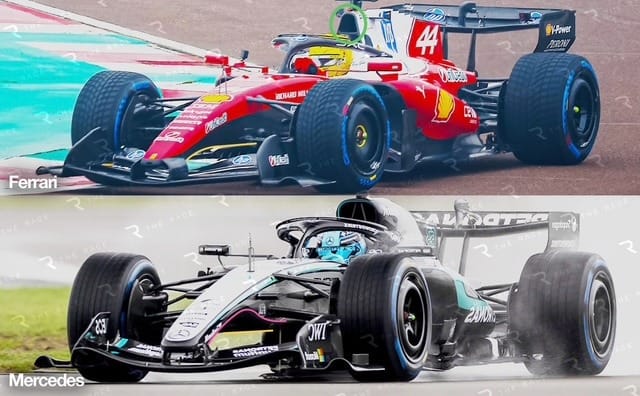
Also the underside of the nose detail is quite different. The main underside height (yellow highlight above) is very similar on both cars but the side undercut detail (magenta highlight) looks much more extreme on the Mercedes.
In reality this will increase the airflow to the underfloor and if that’s what you desire to generate more downforce then Ferrari will need to think again.
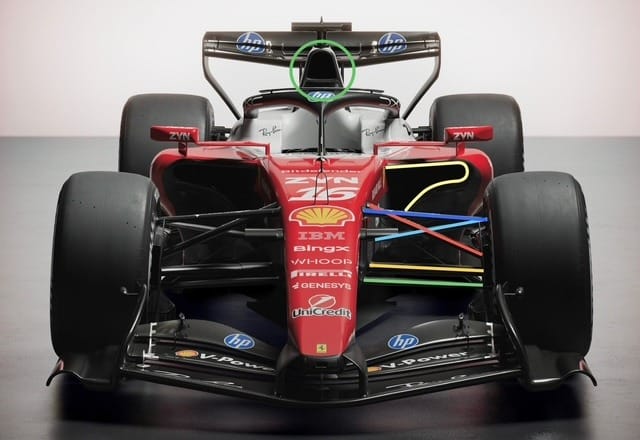
As was widely predicted, Ferrari has gone to a pushrod front suspension (red highlight above), which seems to be de rigueur for 2026.
To be honest, the difference between the two options is very small so I’m pretty sure it’s down to what you feel most comfortable with as a design package.
As for the geometry, Ferrari has retained the anti-dive seen in 2025 on the top wishbone (forward leg dark blue, rearward leg light blue) and perhaps even increased it.
The lower wishbone forward leg (green highlight) runs more or less parallel with what I believe is the track rod (yellow highlight).
The radiator inlet (yellow highlight) is very similar to the Mercedes version, but again we need to remember that Ferrari will have less cooling flow through the airbox intake (green ellipse). Time will tell who has enough cooling for those hot, 35C ambient temperature races.
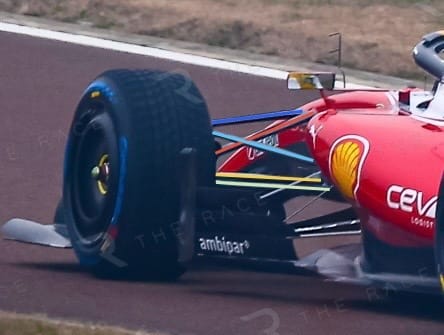
Turning to this picture from the shakedown (as opposed to the realised renders) it shows what I believe to be an increase in anti-dive on the top wishbone, (highlighted with dark blue forward leg, light blue rear leg). In my book this is a lot. The rear leg of the lower wishbone (light green highlight) shows it again runs fairly parallel to the track rod (yellow highlight) so there is not much influence on the dive characteristics under braking from that suspension member.
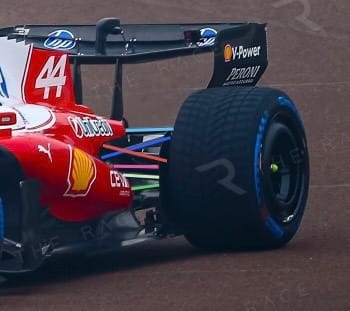
As for the rear suspension, again Ferrari has retained the pushrod (red highlight) operated system as last year. The anti-lift characteristics also look very similar to last season, if not (as with the front) slightly increased, see the top wishbone (forward leg dark blue, rearward leg light blue). As for the lower wishbone (forward leg dark green, rearward leg light green) it will also contribute to the overall anti-lift characteristics.
As I said in the Mercedes analysis, the braking loads on the rear suspension are very different this year - more electrical recharge is required, which generates a rearward horizontal load at axle height and coupled to that is the actual hydraulic braking load which produces a torque in the wishbone system.
It is to the combination of this horizontal load and this torque that these suspension pickup point positions have to react, so I’m pretty sure every team will have simulated the rear suspension characteristics many times before making rash decisions.
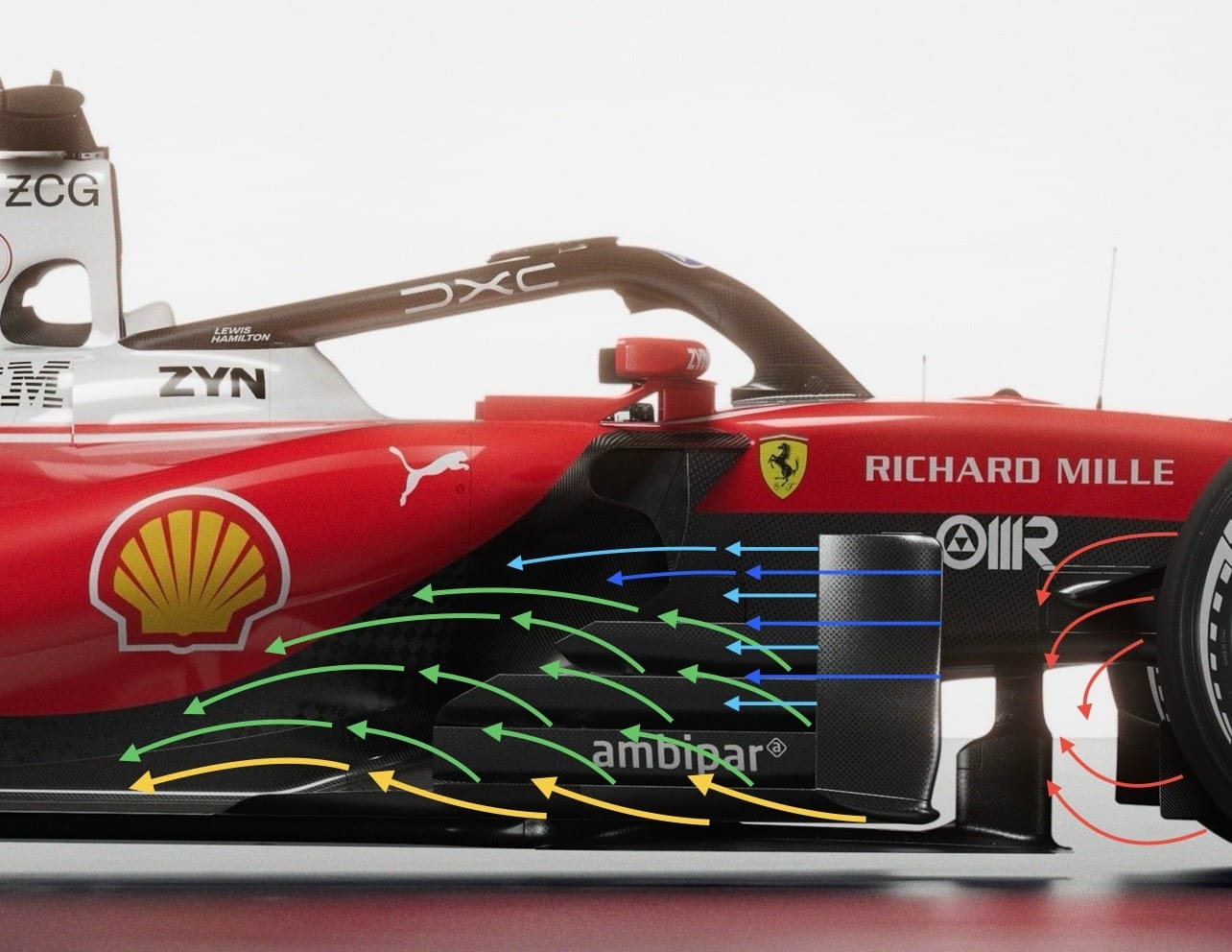
Now onto the bargeboard area. Again, with each car we are seeing reasonably different solutions to more or less the same problem - that problem is generated from the turbulence (red arrows) created as the void behind the front tyre tries to get back to some sort of normal pressure.
If this is allowed to go into the underfloor then you lose a bunch of downforce from the underfloor. These bargeboards, which I have added some highlight lines to, tidy up that flow and then allow it to be pulled around the car by the low pressure in the coke bottle area.
This flow all starts at that sidepod leading edge undercut.
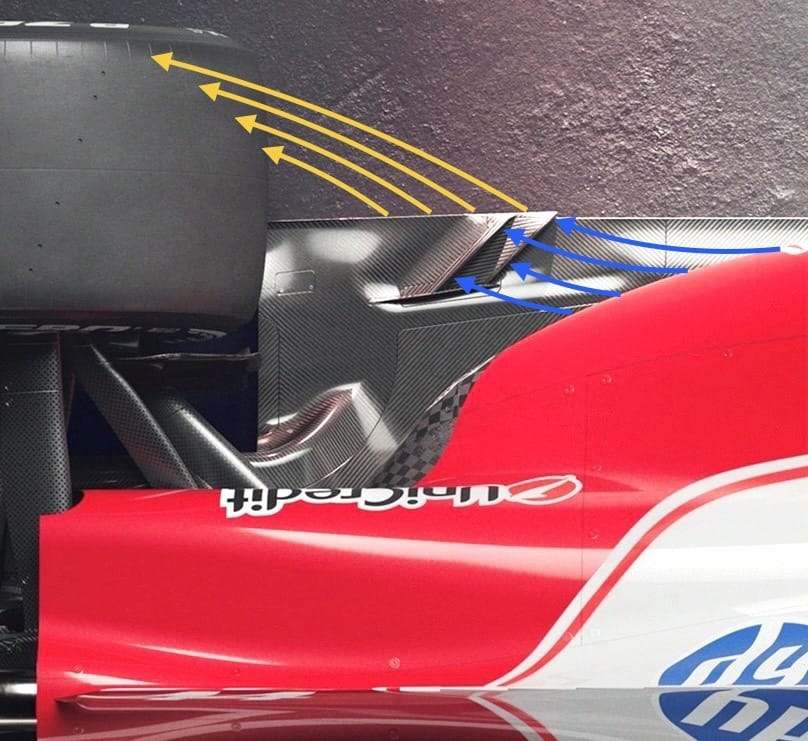
As that flow goes rearward some of it tries to go under the outer edge of the floor. Again, if that happens you will lose underfloor downforce so these small louvers try to connect what is called the tyre squirt - the airflow that is displaced when the tyre rotates onto the track surface - which is fairly high energy so pulls some of that flow into it.
Some teams seem to try to connect the flow on the top of the floor to the tyre squirt going inside the tyre. In Ferrari’s case it looks like it is trying to connect it to the tyre squirt going around the outside of the tyre.
I’m sure we will see many developments in this area so time will tell who is correct.
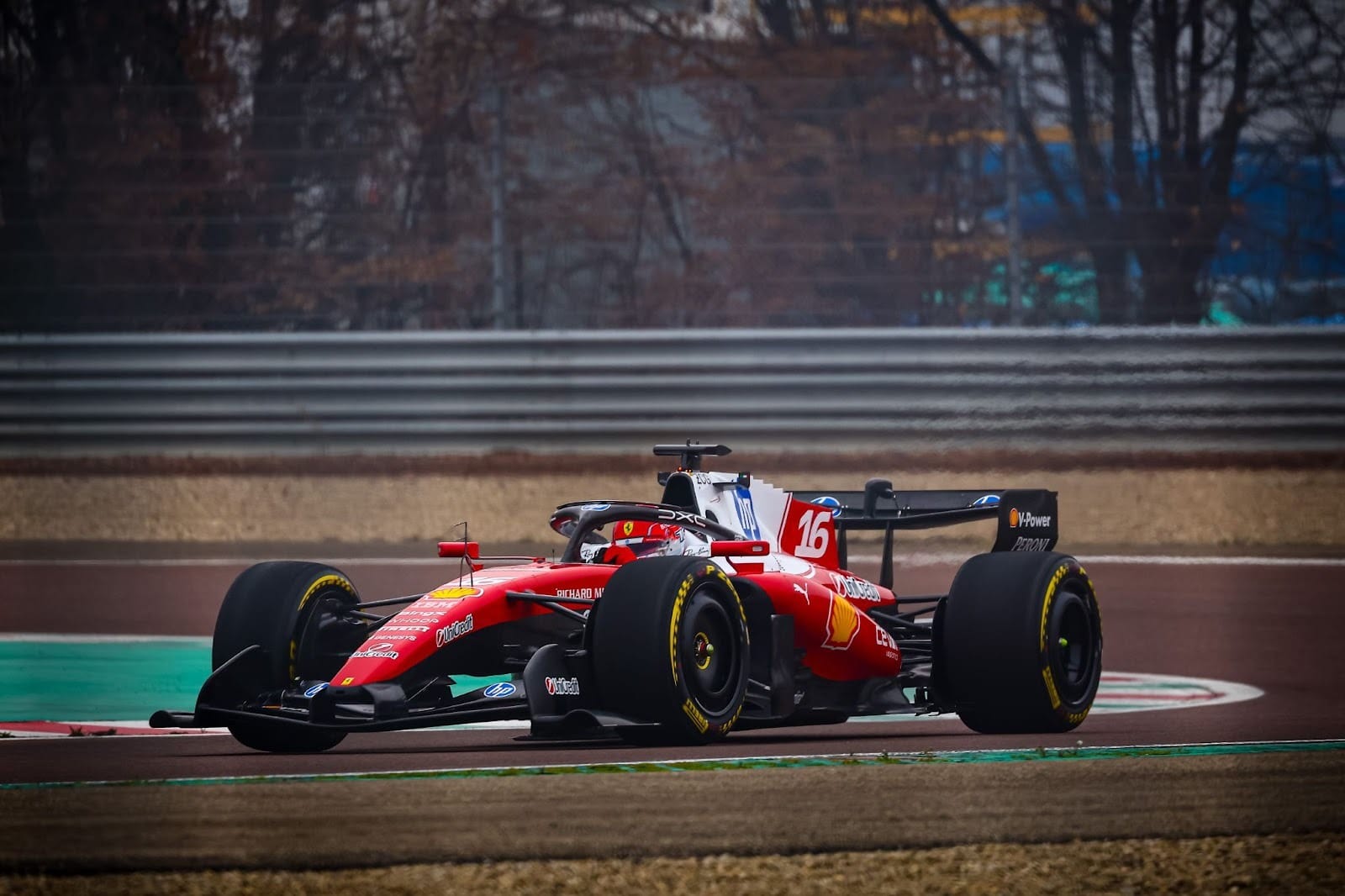
Overall I’m glad Ferrari itself said this was simply a test and reliability version of the car that was being released first. I’m not seeing that much that makes me wide eyed. That said, it’s neat and tidy so perhaps a decent base to start from - but developments will count and Ferrari will ultimately be judged on the success (or not) of those.