Gary Anderson: The true worth of Williams's weight-saving upgrade
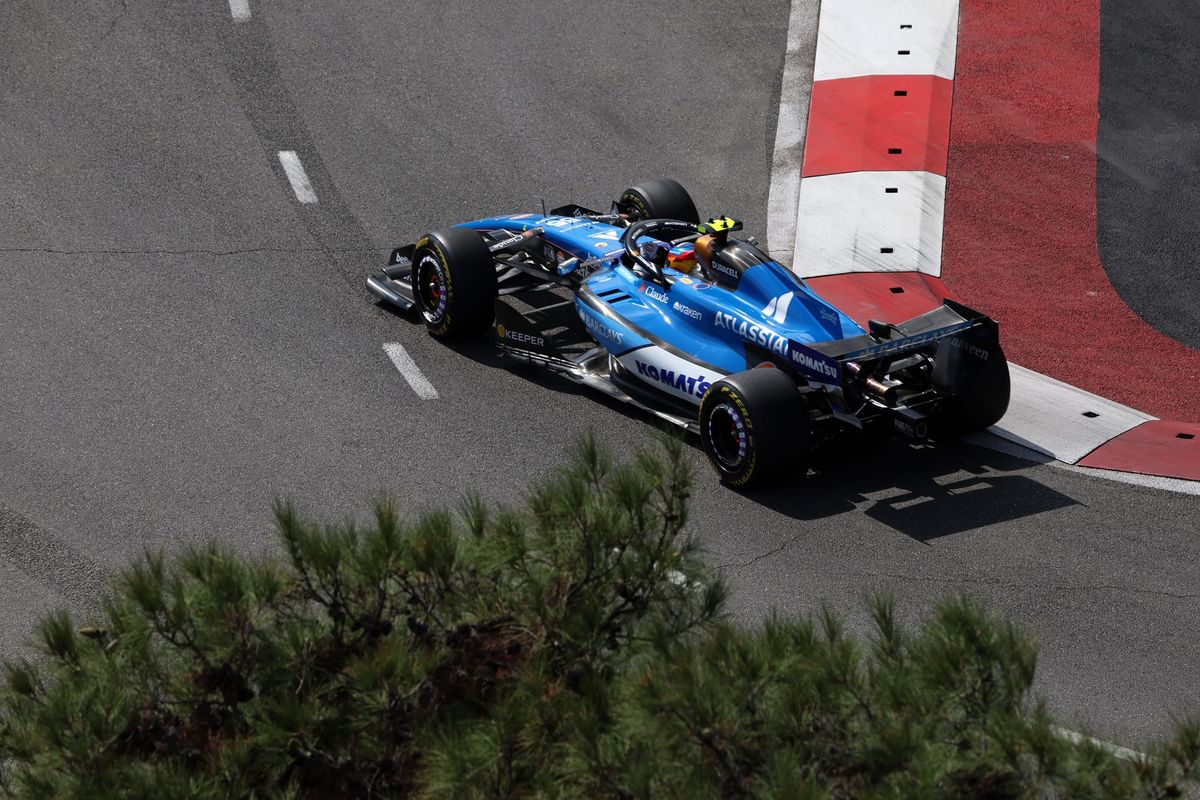
Williams’s long-awaited Azerbaijan Grand Prix upgrade produced almost its best qualifying performance of the 2026 Formula 1 season - with Carlos Sainz ninth-fastest before his grid penalty - and ended a points drought of almost three months.
But how big is the upgrade really, and how accurate a picture does Baku really give us?
It’s always difficult to assess if developments have moved a team forward, stood still or, in effect, gone backwards.
All we can do is look at each individual performance and, by converting the laptime into a percentage of the fastest for that given weekend, it gives us a number that is not dependent on the track length, or whether it's wet, dry, slippery, grippy, hot, cold or even windy.
So, looking at the position of the teams outside of the big four, we can build a comparison using performance in Baku and in the previous races.
It is based on the average performance over the season so far, so not individual races. However, the best and worst numbers, and at which circuit, are there for comparison. It’s the old saying: ‘one swallow doesn’t make a summer’.
Williams arrived in Baku with a major reduction in weight. I didn’t see very much aerodynamically that would have improved its performance, so taking the old 0.3+ seconds average loss in laptime for 10 kilos of extra weight, this is what we get as to the level of their weight reduction.
These percentages are compared to the fastest for each individual weekend but, as opposed to re-zeroing them, I am leaving them as they are, as this shows the gaps that separate the big four from the next five teams.

If we just take the Williams performance in Baku compared to the team's season average, it is 0.759% faster. Considering that, and the fact that Williams didn’t have much to talk about aero-wise, I would put that improvement down to 20kg of weight saving.
That’s a big step, but the reality is Williams shouldn’t have started the season overweight.
The only fly in the ointment is that Williams was actually just that little bit closer to the front of the pack, and with that the midfield bunch, in Miami back in May.
However, sixth-fastest team overall in Baku is a lot better than ninth fastest overall for the season so far.
The other interesting fact from this comparison, which I think proves that the power unit is more important than the chassis, is that four of those five teams compared had their best performance at Monza, a circuit we know is very power-dependent.
Looking at Alpine, it was the first to introduce a major upgrade after the August break at Zandvoort, so it has had more time to get on top of the required set-up to maximise its performance around it.
In the last few races, it has been closing the gap down to Racing Bulls fairly dramatically.
Another troubling fact is that Audi, with all its developments, went backwards in Baku. That’s something that should be worrying for it.
However, unlike Alpine it is Audi's first race with this new aerodynamic package, so perhaps the team wasn't able to get the best out of it in one weekend despite the belief within the team being that it was working well.
Yes, these assumptions are all based on just one race compared to the season average, but Baku — the windy city — is similar to Monza: PU-dependent, but because of those windy conditions in qualifying aerodynamic robustness over the complete car’s surfaces is critical to laptime.
For Williams, this is a step that at least means it can challenge for points again even though the race wasn't straightforward, with Alex Albon crashing out and Sainz having to fight his way back from as low as 18th place. And as Albon warned, "even without the upgrade this type of circuit would have favoured us".
This means it won't be until we’ve seen the improved Williams FW48 over a wider range of tracks that we will know if it can be a regular Q3 threat.