First look at movable front wing prototype on F1 2026 mule cars
Prototypes simulating the kind of the movable front wing system that will be used in Formula 1 next season are appearing at the post-season test in Abu Dhabi.
Next year the all-new 2026 cars will feature active aerodynamics on both the front and rear wings to reduce drag on the straights, which is being approximated on the 'mule cars' in Tuesday's test by only using wing levels that were raced at the Italian Grand Prix at Monza.
The drag reduction system on the rear wing that has been used since 2011 has usually only been usable on two or three parts of the track on the longest straights and in a race could only be activated within a second of the car in front.
But the nature of the 2026 cars means that from next year the front and rear wings will be ‘opened' whenever a car is in a part of the track designated by the FIA as not being traction limited.
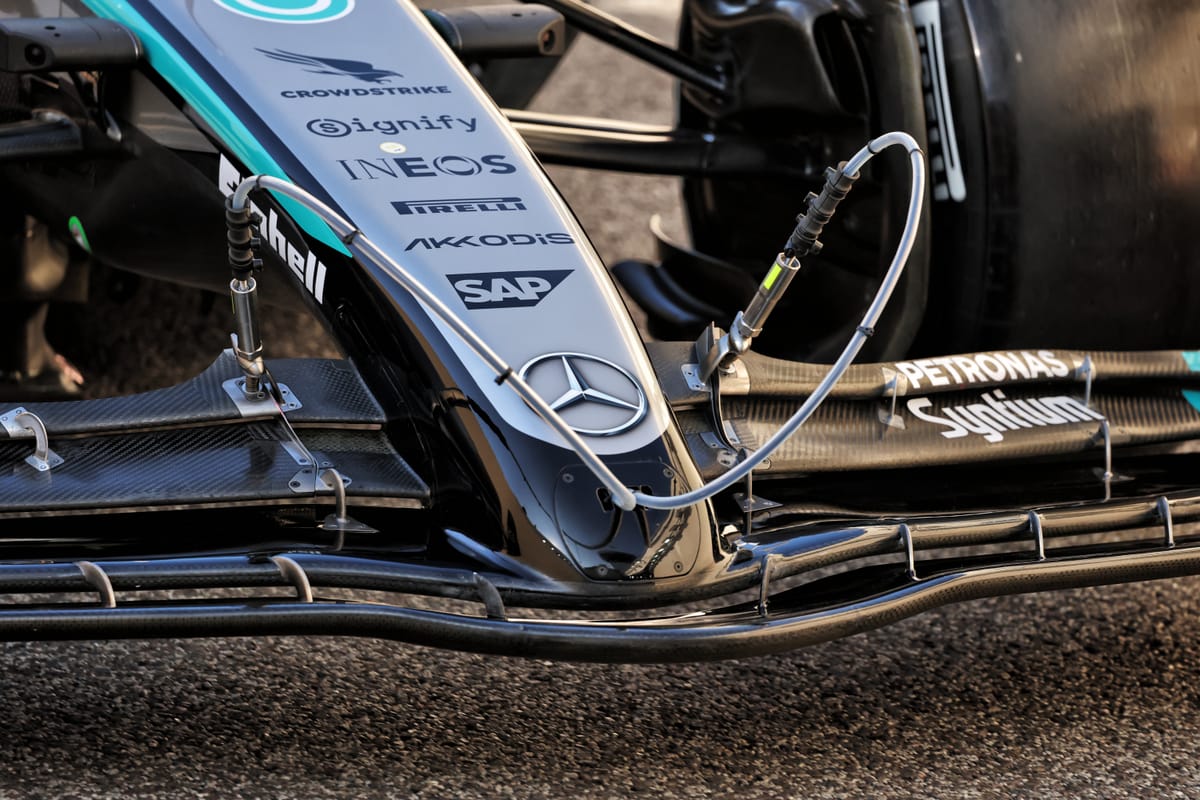
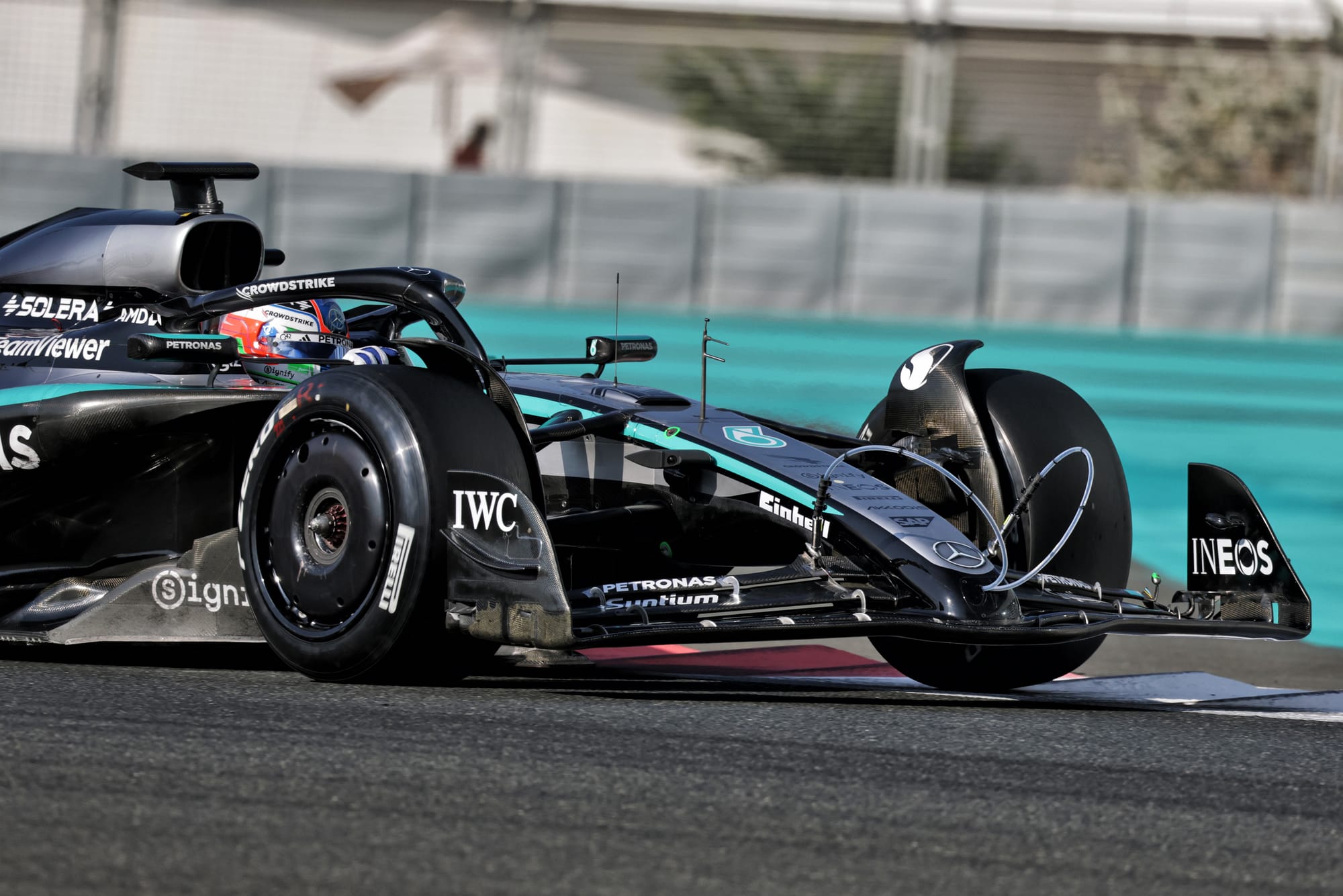
At the Abu Dhabi test on Tuesday, Mercedes ran a slightly crude design on Kimi Antonelli's mule car with an actuation system on the upper elements of the front wing connected via large tubing to an internal system housed within the nosecone.
Permission was given to teams to develop this kind of system and use it in this test if they wanted. It provides them, and Pirelli, with an initial estimate on the impact on drag levels and tyre load impacts and to compare it with the car in the normal mule car form.
This is the first visible example of such a system with the majority of Pirelli's 2026 testing with mule cars being done without active aerodynamics on the front wing.
However, The Race understands Ferrari has also developed a system that has been used in Pirelli's private mule car testing – and is set to be deployed again in Abu Dhabi as well.
It is likely the Ferrari system is more mature given it has already been used, and has been described as a less "invasive" design than Mercedes'.
Any mule car running such an experimental front wing design does not have to conform to the 300km/h (186mph) straightline speed limit that has been imposed on mule cars for this test.
That speed limit fits with Pirelli's method through the mule car programme of using the DRS on the rear wing on most straights and imposing speed limits to avoid the front of the car being overloaded.
It better simulates the aerodynamic loading of the 2026 cars as next year, when both front and rear wings will be ‘open', there will be less loading on both axles.
Another experimental element in the Abu Dhabi test relates to wheel rims.
While the mule car running has largely been conducted on adapted versions by the standard supplier, next year teams have more freedom with the designs, and in Abu Dhabi it is permitted to conduct a limited number of runs with a wheel rim similar to what they will use in 2026.
Gary Anderson says...
In an attempt to simulate the load reduction with the new active aerodynamics being introduced for 2026, Mercedes has come up with this rather 'crude' actuator system.
I can only assume it will lower the front wing flaps to a similar level of downforce that the current DRS achieves.
This will keep the balance of the car more stable for gathering data on the influence of the car during this low drag period. It will also allow Pirelli to get more relevant data on how a change in aerodynamic loads affects the tyre, and especially the change in temperatures when the car is in the low drag mode.
It is probably pneumatically operated from a pressure cylinder mounted somewhere in the car and the driver just has to press a button to activate it.