F1's new 'Rain Hazard' rule explained
The latest edition of Formula 1's rule book threw up some surprise late additions on the eve of the 2026 season – including a new 'Rain Hazard' element.
While of enough importance to get approved by teams and the FIA before the racing started, there has so far been little actual detail about it
This is because it falls into the realm of a growing trend for specifics of certain regulations to be 'off-book'.
Instead, elaboration comes in documents that circulate between the FIA and teams.
What the regs say
All the F1 rule book mentions about a Rain Hazard is that it will be declared if the official weather service "predicts that the probability of precipitation is greater than 40% at some point during the sprint or the race at a competition, or at the sole discretion of the race director".
There are specific timing elements – it needs to be declared no later than two hours before the start of sprint qualifying for sprint events, or main qualifying for the race.
But that is pretty much all that is said – beyond that if cars are in parc ferme when the Rain Hazard is declared then work described in 'FIA-F1-DOC080' may be carried out.
Parc ferme isn't gone
This reference to parc ferme triggered some suggestions that the Rain Hazard was a new way of stopping teams getting locked into the wrong set-ups on weekends when weather conditions change.
For many years now, when the weather has been changeable, teams have been forced to commit to either a dry or wet route for qualifying and then risk being in the wrong set-up for the weather that actually hits the race.
Parc ferme rules mean that once set-ups are finalised for qualifying, teams are stuck with whatever they have for the race or have to start from the pitlane if they want to make a change.
If parc ferme restrictions were lifted totally, teams could focus only on what was best for qualifying and then, if the weather changed, make alterations for the race.
But the Rain Hazard is not going as far as ditching the situation of forcing teams to commit to a set-up in qualifying and stick with it.
Instead, it relates entirely to the complicated quirks of the 2026 cars around active aero.
Protecting the plank
When the 2026 cars switch to straight mode, downforce comes off and the car is not being pushed as hard into the ground.
Teams calculate their ride height – so how high the clearance needs to be for the plank – with this in mind, focusing on ride heights that work when straight mode is activated at high speeds.
However, one unintended complication was what to do in events where straight mode is deactivated – either because of safety reasons or wet weather.
If the front wing stays in corner mode for maximum downforce when running at high speed down the straight, that pushes the car into the ground. This then scrapes away the plank enough to trigger a potential exclusion.
To head this problem off, an agreement was reached last year to allow for a new partial aero mode.
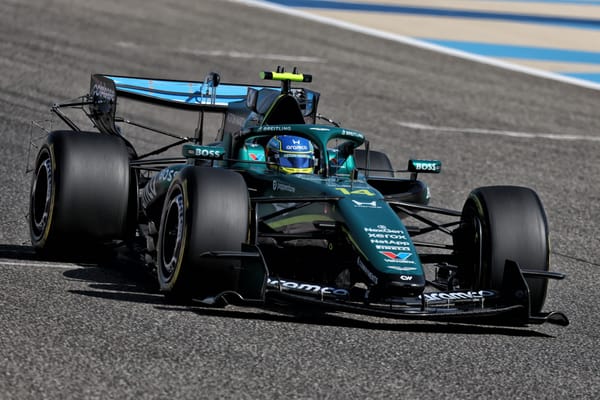
So in some straight mode zones, a shorter area comes into play where while the rear wing stays closed, the front wing is allowed to open up. This helps lift the front of the car off the ground to avoid the plank getting scraped away.
While the partial aero move was a help, it was felt that it perhaps did not do enough to totally alleviate the risk of plank trouble in all circumstances.
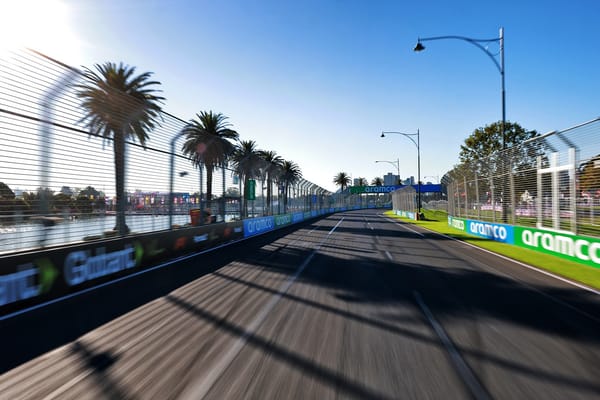
And this is especially true because some straight mode zones, like the run from Turn 8 to Turn 9 at Albert Park, do not feature a low-grip area where partial aero is allowed.
So if bad weather comes into play, even with partial activation allowed in some sections, there remains the risk of the plank being worn away in those zones where both wings still had to stay closed.
This is where the Rain Hazard rules come into play.
Two core changes
The Rain Hazard is designed for those occasions where teams have committed to a dry set-up but an unexpected change of weather means that there is potential for rain – which will throw all ride height calculations out the window.
So if a Rain Hazard is declared, to help teams protect the plank they will be allowed to change two key characteristics of the car.
First, they will be allowed to change the active front aero settings for their two states. This could help by not producing so much downforce, which pushes the car down, in corner mode.
Furthermore, teams will be allowed to adjust the ride height to ensure that there is more allowance to avoid the plank getting worn away.
The Race understands that the Rain Hazards rules in play now are to be evaluated over the first nine races of the season to check that they work as intended.
From the Austrian Grand Prix at the end of June, the FIA will then either keep things as they are or potentially go for a simpler solution of giving teams the options of switching between a specific dry and a wet setting depending on the weather.