Team/driver revolt forces FIA into late straight mode U-turn
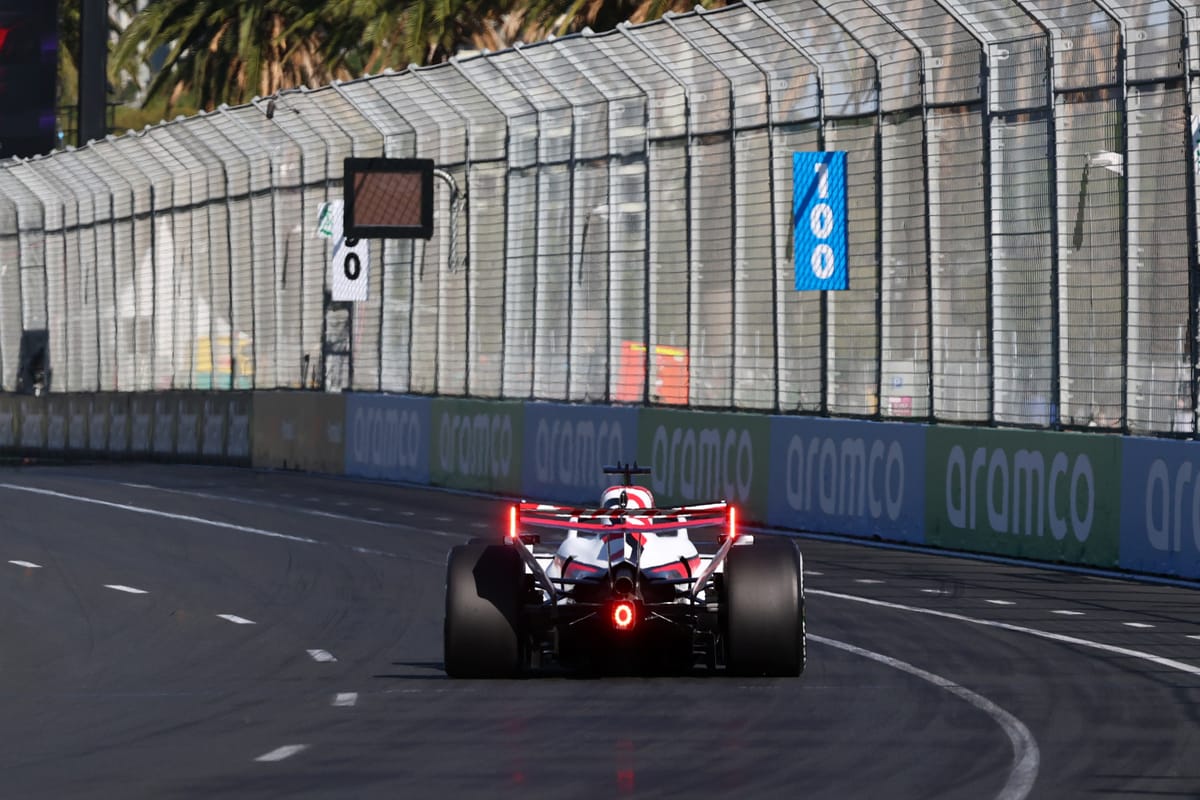
Pushback from Formula 1 teams and drivers over the FIA's controversial plan to remove one of Albert Park's active aero zones has resulted in a dramatic U-turn by the governing body.
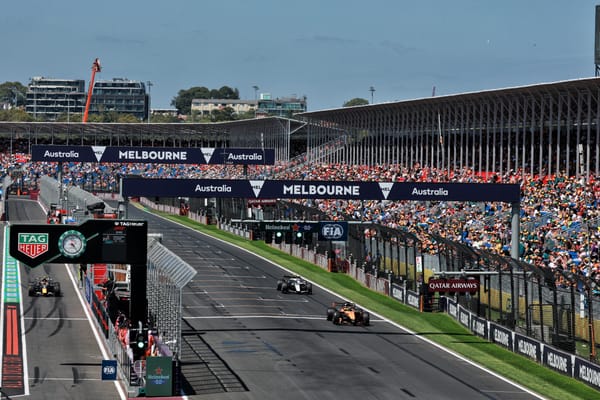
Teams were angered on Saturday morning when the FIA notified them just hours before final practice that it was going to remove the straight mode zone at the Australian Grand Prix venue that runs to the Turn 9 left-hand kink.
The FIA made that call because of safety concerns expressed by some drivers in their regular Friday night briefing that the lack of downforce there posed an increased risk of crashing.
The Race understands that this was first mentioned by Audi driver Gabriel Bortoleto.
The Brazilian said he could barely make it through that section flat-out when running alone so it could become a problem in the race when following other cars.
Sources suggest a few other drivers backed him up, but none were particularly fearful - with teams leaving the meeting unaware that the topic was anything that would move on in such a dramatic fashion.
But the decision by the FIA to take on board those complaints and respond with the removal of the straight mode activation zone triggered an instant revolt in the paddock on Saturday morning, as teams and drivers came together to push back against it.
One source described the move by the FIA as "nonsense".
That was because the impact of the removal of the active aero zone brought with it such dramatic implications that teams would have needed to sort out all-new set-ups in the final hour of practice.
Several elements relating to car performance would have needed to have been redone.
Leaving cars in corner mode for such a long straight would have meant a totally different energy management strategy, as the high drag would drain the battery more.
It would also result in the cars experiencing more downforce, which would push them into the ground more and risk increased plank wear and more forces on the tyres.
To mitigate this risk, teams would have had to completely change their ride heights, suspension settings, tyre pressures and energy-management settings.
One team boss suggested that they would effectively be throwing away all the preparation work they had done in both the weeks building-up to the event and on Friday to start again from scratch.
The impact of no straight mode zone on the long run to Turn 9 would have also been bad for the spectacle, as cars would have had their top speed reduced dramatically because of the high drag and zero extra power available.
One source suggested that initial simulation data of how things would play out predicted the 2026 cars being 50km/h slower than even Formula 3 cars on the entry to Turn 9.
It was the scale of these problems being forced on teams at the last minute that triggered pushback on Saturday morning in the Albert Park paddock, with competitors and drivers coming together to give their feedback to the FIA that the removal of the straight mode was not necessary.
It is understood that as well as teams individually lobbying the FIA, that drivers came together to offer a unified response that adopted the same stance.
In response to the petitioning by teams and drivers, the FIA changed its mind with less than one hour to go before final practice.
A statement issued by the governing body said: "Following the feedback received in the last hour from teams and drivers, and additional analysis contributed by teams, the decision to remove straight mode zone 4 for Albert Park is rescinded.
"For the avoidance of doubt, this amendment is effective immediately, and straight mode activation zone 4 will be in used in FP3.
"Further evaluation will take place during and after FP3."
As well as the extra set-up work that would be required as a result of the straight mode change, there was also an element of annoyance from some teams that the FIA had responded in such a manner because of complaints from a minority of drivers.
"There will have been a process of acquiring information by the FIA, which is good thing because the FIA needs to take all the input on board," McLaren team principal Andrea Stella told Sky Sports F1.
"They have assessed the situation, probably there might have been bit of misunderstanding as to the severity of the matter or the number of people, teams and drivers that were supporting the change because actually there wasn't much support.
"So I think we are back in a reasonable place and now we get going."
Many squads and drivers experienced no problem in that activation zone, and the level of downforce that gets dropped when switching active aero modes is down to individual team choices.
So if a driver finds that too much downforce is shed to make it comfortable going through a corner, then there is the option to either adjust the wing settings to reduce less downforce or even back off.
The FIA's single-seater technical director Nikolas Tombazis suggested that only four teams had got their downforce levels right through that section so as not to have a problem.
Asked about those struggling, he said: "I think it's about seven of the 11 teams. For a big proportion, the downforce they had on the front wheels...was less than we had anticipated and made what looked like a safe choice transpired to be unsafe."
Tombazis accepted that the FIA could have requested those teams that were struggling to adjust downforce levels on their cars, but felt that this would not have been realistic to do in the timeframes available.
"This effect is not the same for all cars, but we couldn't just act on a few cars and say, 'Well, you need to change your set-up' and not on others," he said.
"We wouldn't have a robust enough criterion at short notice to do that. So that's why we felt it had to be an action for all cars, not for some cars, of course."