The data that busts F1 2025 stewarding myths
The decision-making process of Formula 1’s stewards has been back in the spotlight over recent days following the meeting between the drivers and the FIA at the Qatar Grand Prix.
The now annual get-together is akin to a workshop in getting car racing’s regulator and competitors on the same page when it comes to the policing and judgement of incidents.
However, in running through some of the most hotly-debated incidents of the year, it inevitably puts a focus on those moments that fuelled the most opposing views – like the Oscar Piastri 10-second penalty at the Brazilian Grand Prix.
That in turn stokes the fire on the debate about whether or not there is consistency in decisions, and if it is time for the FIA to think about permanent stewards once again.
But what gets lost amid the spotlight being on the few decisions that prompt disagreement (and even the FIA probably now concedes the Piastri incident was either a racing incident or at worst a five-second penalty) is just how many calls are made where opinions are totally in-line that never get attention put on them.
The Qatar meeting focused on five key incidents that had been hot talking points over the 2025 campaign.
Were these the only five incidents that stewards had ruled on, then that would be an appalling hit rate.
But a review of how many investigations the FIA stewards process shows that these five were less than 1% of all the incidents and cases that were referred to them over the course of the campaign.
The Race has obtained some statistics from the 2025 season that shed light on just how many incidents come in front of the stewards over the course of the campaign – and how many of these are deemed worthy enough for action to be taken.
Here is a run down of how things stacked up before the Qatar Grand Prix.
· Total number of incidents and cases referred to the stewards, including the ones for which no further investigation was required: 509
· Number of incidents placed under investigation by the stewards: 405
· Number of posted and written decisions taken by the Stewards: 410 (that includes decisions taken on petitions for review (i.e. two) and on protests (i.e. three))
· Number of these investigated incidents resulting in no further action or no penalty applied: 252
· Number of the above investigated incidents resulting in penalties: 153
Penalties issued by type
· Pitlane speeding fines: 12
· Other fines: 11
· Formal warnings to drivers and/or competitors: 31
· Reprimands to drivers and/or competitors: 19
· Five-second penalties: 25 (6 for causing a collision)
· 10-second penalties: 22 (11 for causing a collision)
· Drive-through penalties: 2
· Stop-and-go penalties: 0
· Drops in grid positions or pit lane starts: 22
· Disqualifications: 9
So the five incidents that the drivers and FIA felt fell into an area that needed discussing were actually only 0.98% of the 509 incidents that were referred to the stewards.
And while it can be argued that five out of 500 being up for debate is five too many, equally no system is ever going to be perfect and produce decisions that please all of the people all of the time.
The permanent stewards debate
One of the repeated criticisms thrown at the FIA when stewards’ decisions come under fire is that there is a lack of consistency.
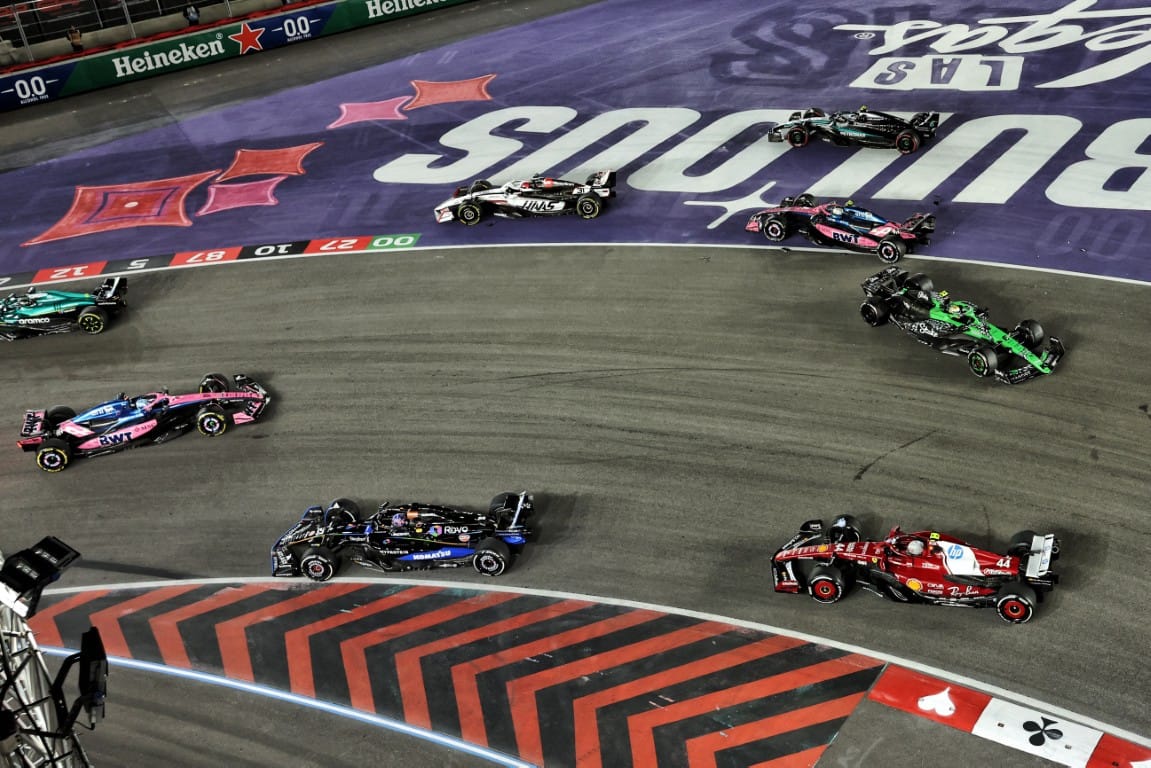
Sometimes there is frustration that near identical incidents are treated completely differently. One case, for example, was why Piastri got so heavily punished for his Turn 1 moment in Brazil, whereas Liam Lawson’s slide into the Australian at the following race in Las Vegas was deemed OK.
These moments stoke the fire on calls for there to be permanent stewards, because it is felt that this would help ensure that the same people are making the same calls through a season.
But what gets overlooked in the binary debate between the current system and a switch to permanent stewards is the wrong impression that things are hugely inconsistent right now when it comes to the make-up of the panel.
Over the past decade, there has been a big push to reduce the number of permanent FIA F1 stewards that are used throughout the year – with the aim being to improve consistency.
Right now there are just 12 individuals who make up the panel of F1 stewards who are used over the course of the year. These are four experienced chairs, three former F1 drivers and five number two FIA stewards.
These operate on a rotational basis, with each event having one chair, one number two FIA steward and one driver steward. They are joined by one ASN steward per event, who must hold an FIA Super License and who also must have attended an annual FIA Stewards Training Programme and passed the written assessment.
Each F1 Steward also needs to hold an FIA Super Licence, is also required to attend annual programme and must pass a rigorous assessment.
Having just 12 stewards over the course of a season is already close to the level that could be expected if there was a permanent panel - as some rotation would be needed anyway.
Plus, one of the strongest arguments about not just having a select panel of the same four individuals at every race is that this helps prevent bias creeping into the system, whereby there is a risk of competitors feeling an individual has a vendetta if decisions continually go against them.
Right now, with 12 stewards for the year, there are some extra processes in the system that are designed to ensure more consistency.
For example, it is preferred that one of the stewards from a race is used at the following event – so there should never be a case of a totally new group of individuals ruling on things.
Where this continuation is not possible, then the chair of the previous stewards is available on line to offer any advice.
Of course, even with all the above not every decision is going to be universally liked.
Plus calls made amid time pressures in the heat of competition may not be identical to how they would be viewed sat days later when reviewing things in peace and quiet. But there has to be compromises that come from not delaying stewards' rulings until hours or days after each race.
Can things be improved from where they are right now? Yes, of course.
But it would be wrong to think the whole system is a failure because less than 1% of decisions end up becoming talking points.
Having a perfect stewards’ system, where every decision made gets the full support of every driver, is a utopia.
But what is important, and this is the process that the FIA aims for in having its get-together with the drivers, is that it takes on board grievances and works to evolve and improve how it does things in the future.