An F1 champion's take on Verstappen vs the media
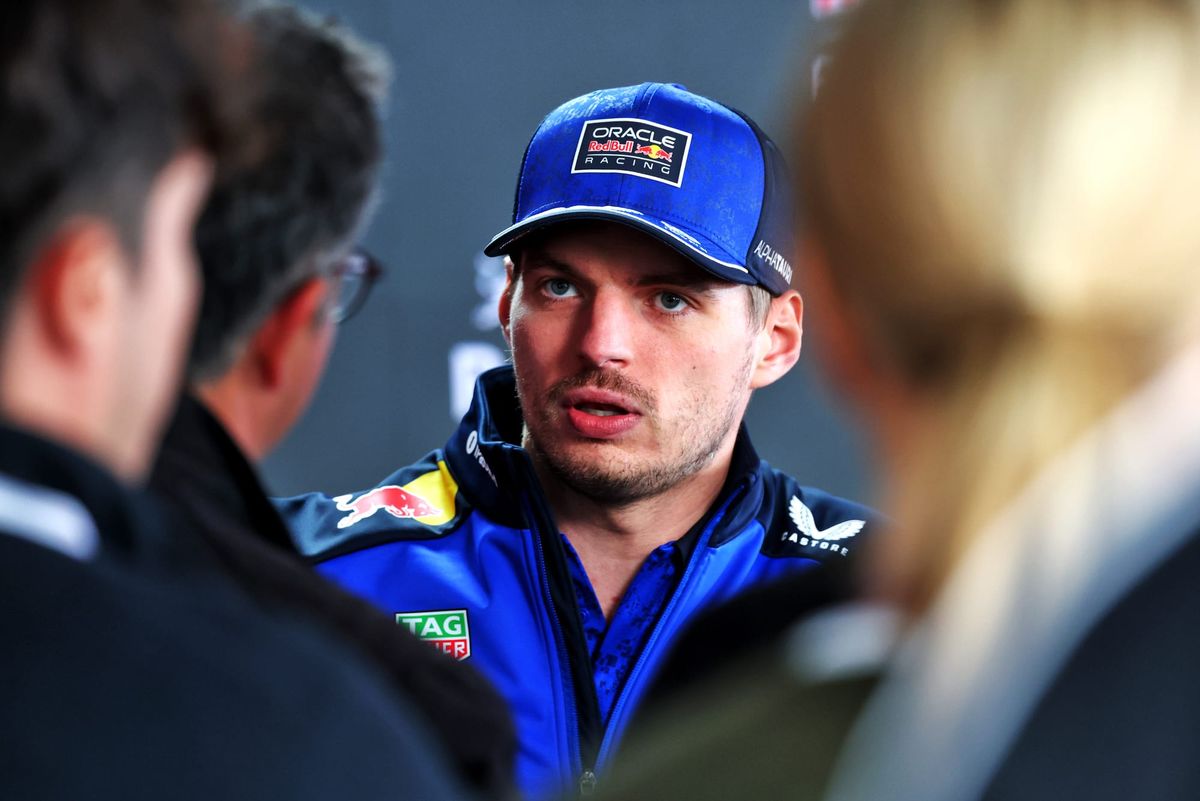
Max Verstappen's decision to eject a journalist from a press briefing at the Japanese Grand Prix shone a spotlight on the dynamic between Formula 1 drivers and the media.
Opinions were certainly very divided about the rights and wrongs of what had happened.
Some suggested that Verstappen was out of order in doing what he did in such a public way. Others said he was well justified to act like that because the fault lay elsewhere.
But wherever anyone stood on the matter, there was one undeniable truth: this was not the first time that a driver and a journalist had clashed like this, and it certainly would not be the last.
Relations between drivers and journalists ebb and flow all the time; and tensions can rise for a range of reasons.
Sometimes it is the result of criticism, sometimes it is an awkward question. It may even be for writing the truth or for publishing a story that drivers do not want getting out there.
Last weekend, The Race caught up with Damon Hill - back at Suzuka with Williams to celebrate the 30th anniversary of his 1996 F1 drivers' crown, clinched at the Japanese GP venue - for some fascinating perspectives on the evolution of relations between drivers and the press.
The good and the bad
Hill is certainly well qualified to talk about the subject, having lived through the rough and the smooth with the media during his F1 career.
Some positive memories include celebrating with Fleet Street journalists the day after winning the championship on the Shinkansen bullet train to Tokyo before a night together in the Cavern Club.
"They were having a great time," smiles Hill as he reflects on that post-title day. "It was quite funny, because you'd think you'd want to celebrate with your team and your friends. But I had to celebrate with Fleet Street!"
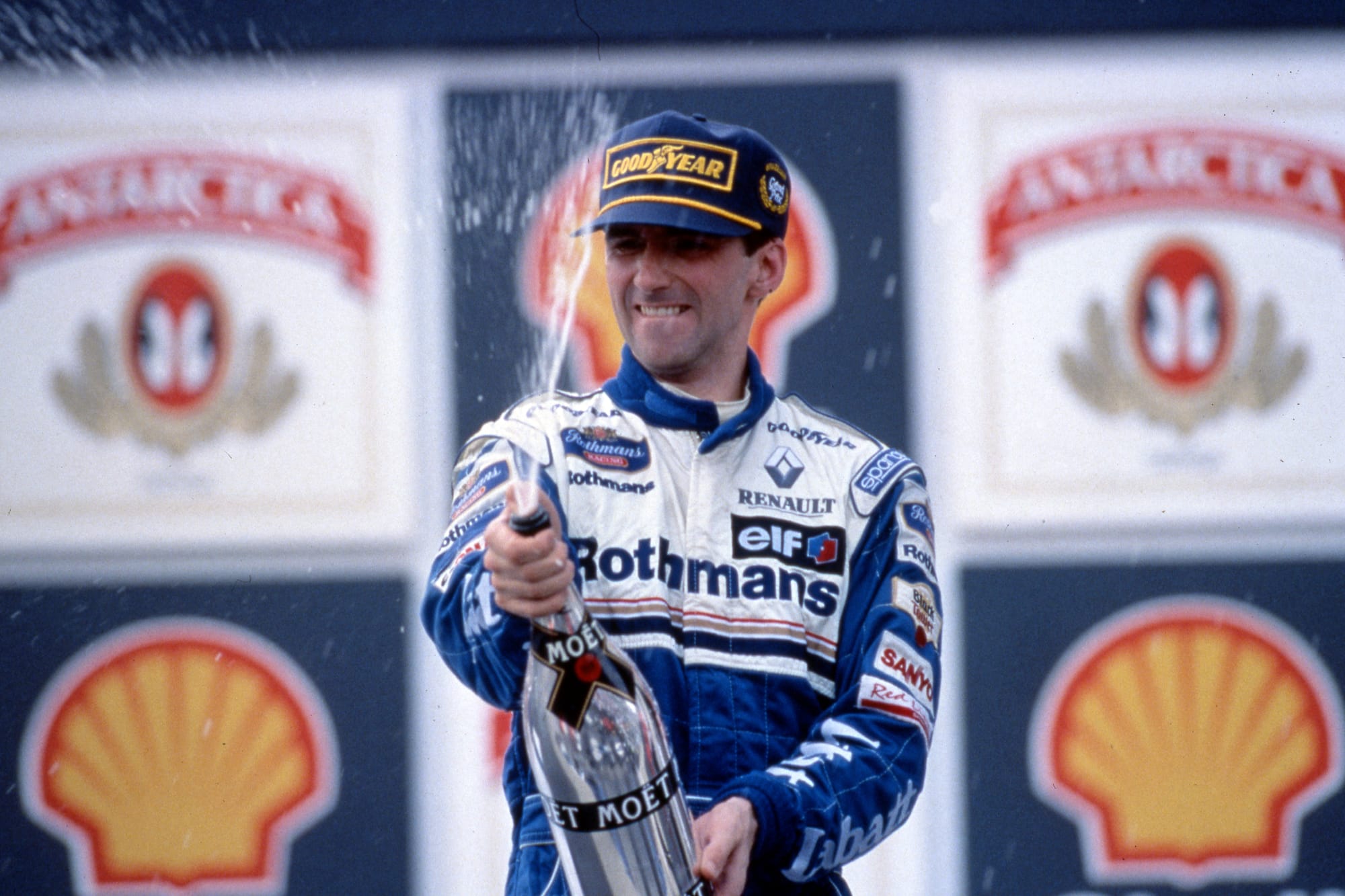
On the flip side, Hill was also on the receiving end of some pretty brutal headlines from those same individuals.
This included him famously being labelled a 'prat' across the back pages after his 1995 British Grand Prix collision with Michael Schumacher had triggered some harsh words from team boss Frank Williams.
In those pre-social media days, the interaction between driver and the press was very different to how things are now.
Good coverage relied on things being much tighter-knit; but that did not stop the hard questions and the harsh criticisms when things went wrong out on track.
As Hill said: "Honestly, I really loved the Fleet Street gang. It sounds odd to say it, because they sometimes came up with some absolutely horrific and very bruising headlines. But they were friendly faces, and they were the only way I could get my story across."
Hill also famously lived through his own paddock confrontation incident, as he once ejected a journalist from the Williams motorhome himself.
This was in the wake of an Autosport magazine exclusive front page story ahead of the 1996 German Grand Prix, written by Andrew Benson and titled 'Has Hill been dumped?', suggesting that Hill would be losing his seat at Williams at the end of the season.
While Benson had faith in his sources, and was ultimately proven right, Hill knew nothing about what was happening at the time – and at Hockenheim requested Benson leave the motorhome.
Relive the full story of Hill's Williams split AND that confrontation with Andrew Benson in Bring Back V10s' episode about that saga - listen below or find it in your preferred podcast player
"It [the story] was on the front cover of Autosport, and it was conjecture as far as I was concerned," said Hill.
"It only broke later when Frank told me that it was not a load of rubbish. I did a Max Verstappen and told Andrew, 'you can get out of here and you are not welcome'.
"Poor old Andrew scurried out. But he knew it was true, and I had to kind of dig a bit to find out."
A fresh perspective
Hill can laugh now about events that seemed so important at the time; but he says he never truly understood the media's approach to things, and the value of good driver relations, until he worked on the other side of the fence as a Sky pundit.
"I genuinely mean this: I wish I'd done Sky before I'd gone in F1 just because of the perspective," he said.
"We're talking after Max ejected a journalist from a press conference here, and I think, with the benefits of the insight that you get from what it's like to be reporting this sport, he would be better placed to be able to deal with some things if he had done it [worked in the media] too. I think they all would.
"But of course, you can't expect them to do that. It took me a long time to get to understand that this is a very, very important part of the job as a driver.
"It is understanding the consequences of failing, the consequences of the pressure and being in the spotlight, and knowing how the things you say will help or hinder you achieving your goals.
"At first, doing Sky, I was very reluctant to be critical of drivers. I didn't want to be the person that put the pressure on. But then it is an adult world, and ultimately they have to be able to cope with the truth."
The good and the bad
For all the downside of brutal headlines, and those moments when drivers find themselves at the centre of controversies in the paddock, Hill admits there is something exhilarating about it.
Asked what it is like to be in the eye of a media storm, Hill said: "I don't know whether to say, I hope you don't find out, or I hope you do find out, because it's brilliant in many ways.
"You're the centre of the story and you know this is the time of your life.
"You know you need to behave. Everything you say, what you do, it had better be the right thing.
"Everyone fantasises about what they would do if they were prime minister. But when you finally get into a position where things you say have an effect on your life, then, in many ways, it's a precious opportunity."
Hill says that while media criticism or negative stories are not always great to deal with, equally they are an important part of F1's ecosystem: because without them everything just becomes "dull" PR.
"My worry is that F1 as a business is very concerned about its public image," he said. "And teams are concerned too – because they want good news stories.
"But a good news story all the time, it's very dull. And anyway, you can't have good news without some bad news. It's the yin and yang of the whole thing.
"With Liberty, I'm an F1 ambassador so I know that they're very keen to smooth over the bumps and cracks they have, but it's the risk that makes the sport fascinating.
"We see these people under pressure, in the spotlight, and many can only imagine that 'Blimey, if I went to work every day and there was global news coverage of everything I did, how would I cope?'
"That's what makes this sport so amazing. It is that people do it, and it's hard. Everyone's being judged and exposed."
And he cites a recent remark that stood out to him as perfectly summing up things in F1.
"There was a great quote from [Fernando] Alonso recently, in Drive to Survive, and it was something like: if you can't deal with the truth, then you're in the wrong place."
For more of Damon Hill's perspectives, watch or listen to his two new podcast series:
The Undercut with Damon Hill and Mark Hughes
Stay on Track with Damon Hill and Johnny Herbert