F1's plan for six 2026 rules fixes revealed
Formula 1 stakeholders are gathering for a crunch meeting next week to try to solve the biggest problems with the 2026 rules formula, and The Race understands there are six key solutions in play.
The first three races have laid bare the good, the bad, and the ugly of F1's new rules era, and a big push is under way to fix some obvious problems.
Those problems don't include the new yo-yo style of racing, which has prompted love and loathing in equal measure from drivers and fans, as F1 doesn't see it needing any urgent action.
But there is paddock consensus that a number of other areas do need urgent attention via rule changes.
So, team technical chiefs, as well as representatives of the engine manufacturers, are to gather with heads of the FIA and F1 on April 9 to discuss tweaks.
They hope to agree on a raft of rule changes to come into play before the next race, the Miami Grand Prix on May 3.
We’ve learned the three priority areas for the meeting and the potential rule changes that could be brought in.
The three priorities
Ollie Bearman's escape from serious injury in his high-speed crash at the Japanese GP has put safety at the top of the agenda for the rules summit.
The Haas driver's crash, triggered by a 50km/h offset between his car in boost mode and the energy-saving Alpine of Franco Colapinto ahead, has shown how serious the consequences can be when things go wrong.
McLaren team principal Andrea Stella repeatedly said that this was an area that needed some urgent attention before there was an accident.
And with those fears having now been realised, it would be inexcusable for action not to be taken. As Bearman's Haas boss Ayao Komatsu put it: "We just cannot ignore it."
Another focus area is saving qualifying from what's ruined it in 2026 so far.
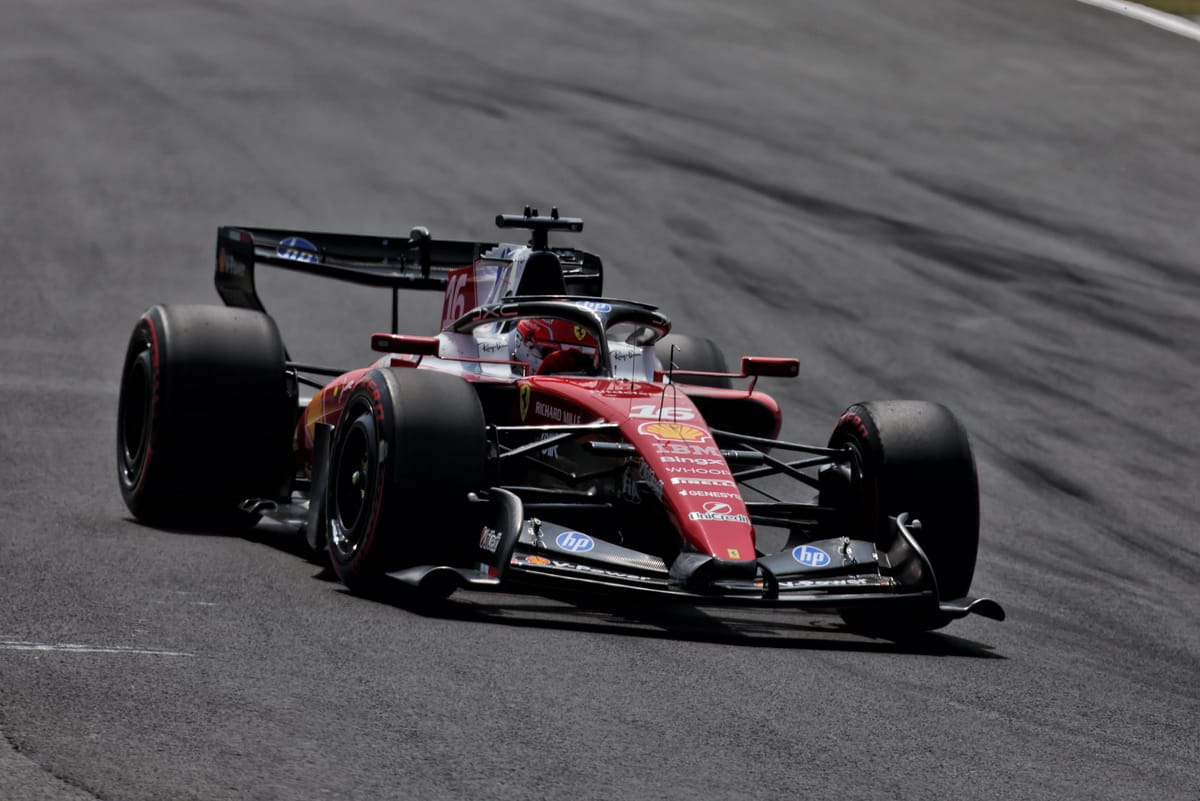
The likes of Charles Leclerc are saddened that the days of "crazy", on-the-edge Q3 laps are over and while the yo-yo racing has divided opinion, qualifying in 2026 has very few advocates.
There is too much energy management that leads to more lift and coast and super clipping, the enemies of flat-out qualifying.
Plus, there are those weird algorithm quirks The Race revealed after China with a stark Leclerc case study, where the cars are confusing themselves from a minor driver error or input difference.
On top of this, there has been no bigger focal point for fan and driver criticism about the new 2026 regulations than the speed drop off that is coming at the end of straights when cars run out of battery power.
It was not unusual in the previous rules era for cars to hit top speed - widely referred to in F1 circles as Vmax - slightly before the end of straights and then get slower in the final approach to corners.
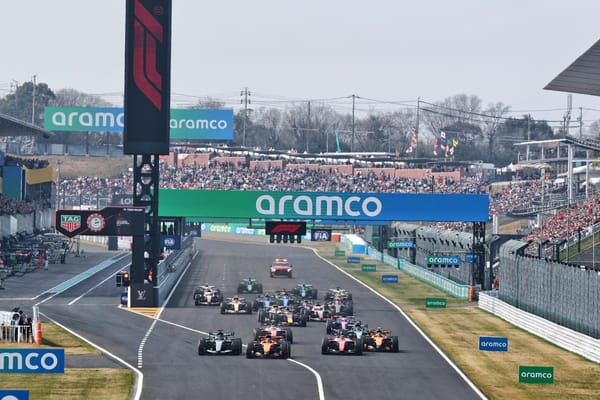
However, this phenomenon is much more extreme with the latest generation of cars. The run to Turn 9 in Melbourne was widely derided, and it was the same story at Suzuka last weekend as the speed of cars dropped away on the run down to 130R.
As Lando Norris remarked afterwards: "It still hurts your soul seeing your speed dropping so much, 56km/h down the straight."
It is not only annoying for the drivers, but it also looks terrible from the onboard cameras, where impressions are amplified by the engine note falling away.
The solution needs to revolve around flattening the speed curve - shifting where the peak of top speed is reached - from the middle of straights to the end.
The solutions
While the three core problems appear to be all quite different in nature, solutions in one area can bring benefits in the others.
A lot of detailed analysis has already been gathered - even from as early as pre-season testing - and data is being pulled together to try to work out the impact of any modifications that will be made to the rules.
The Race understands there's six solutions in play ahead of the meeting.
Increase the power of super clipping
Lift and coast is a necessary evil of F1 2026 because drivers have to harvest extra power, but as well as being anti-F1, so to speak, it increases the risk of huge closing speeds between cars.
Reducing the need to employ unusual tactics to recover energy is key here.
One straightforward tweak to help things would be to increase how much power can be harvested when super clipping, ie when drivers harvest energy while still on full throttle.
Right now, drivers are limited to 250kW when doing this, compared to the 350kW that is available from lift and coast.
If super clipping was increased to the same 350kW limit as lift and coast, then this would become the preferred route, at least reducing the prevalence of lift and coast.
Make the cars slower
The chase to allow drivers to push harder in qualifying could require what appears to be some counterintuitive thinking - because making the cars slower, with less available energy, could return qualifying to more of a flat-out spectacle.
The current issues with qualifying are all about the cars having too much power in the wrong place.
So what needs to be done is to smoothen the curve: stretch the deployment over much more of the straight so a car's energy doesn't run out until the last possible moment.
This can be achieved with the current cars by cutting back on the 350kW maximum deployment ability, because by burning less power, the available energy in the battery will last longer.
It is a back-up plan the FIA has had in mind for a long time. It was discussed early last year and the FIA asked teams to trial it during pre-season testing in Bahrain too.
Another alternative being evaluated is to perhaps mandate regulations that force MGU-K deployment to ramp down much earlier than happens right now.
F1's current rules have a ramp down rate - typically only allowing a 50kW drop every one second or 100kW at some circuits - that ultimately defines when battery power runs out.
This profile could be changed to ensure the ramp down slope is made more aggressive, so it takes longer to drain the battery.
Furthermore, current rules that require the MGU-K deployment to start being reduced at 340km/h could be tweaked to see that come in at a lower speed.
Stricter recharge limits
Perhaps the biggest weapon in F1's toolbox is actually reducing the amount of energy that can be recovered.
At the moment, the maximum allowed in qualifying is 9MJ per lap. But, at Suzuka to help on an energy-starved track, this was reduced at the last minute to 8MJ.
There has been some evaluation of pulling that back dramatically - to as low as 6MJ per lap - to help make it easy for drivers to hit the recharge limit and therefore avoid the need for so much lift and coast and super clipping.
The equation that needs factoring in, though, is how big an impact that could have on laptime - as less energy recovered means there is less to be deployed.
Sources have suggested that a drop from the current 9MJ to 7MJ per lap could add almost one second to laptimes, but a 6MJ limit could more than double that loss.
Some fans might not like slower cars, but you can argue drivers pushing slower cars to their limits is better than faster cars being driven conservatively.
And if tweaks were made in other areas of the rules, this could offset any speed drop from a 6MJ limit.
A leftfield solution
One leftfield way being considered to improve qualifying The Race revealed earlier this week is a complete overhaul of active aero rules.
Straight mode reduces drag by between 25%-40% and therefore reduces the power required to punch the car through the air.
Right now, activation of straight mode is in zones strictly defined by the FIA.
An alternative idea to be discussed is to drastically expand the use of straight mode and even remove the concept of zones entirely.
So just like in the early years of DRS, when its use in qualifying was totally free, so too this could be a concept that works for F1.
Opening up the use of straight mode would help reduce drag demands on the cars a lot - making the cars quicker in sections where the wings are open and increasing how far battery energy can go.
By totally opening up the freedom to use it - say for example by allowing it in Japan from Spoon Curve all the way to the chicane - teams would then have the choice of how to pitch their wing levels.
They could opt for straight mode to be zero downforce, so quicker down the straights, but drivers would then need to switch to corner mode in all bends. Or it could be pitched at a higher downforce level (with a drag compromise) so drivers could keep it open through some fast-flowing corners.
Engine tweaks (but not for now)
One of the ways that F1 can help improve the power management over a lap and reduce the battery headaches would be to increase the contribution of the internal combustion engine.
Right now the balance is roughly 55%-45% - with 400kW coming from the internal combustion engine and 350kW coming from the battery.
A shifting of the balance, ramping up the horsepower from the internal combustion engine and dialling down what the battery delivers, would drastically reduce the levels of electrical energy management that are a headache now.
One of the easiest ways to increase the internal combustion engine power would be to lift the fuel-flow limit.
But while the idea in principle has some support, there are technical complications that mean this is not possible this year.
The current internal combustion engines have been designed around the technical regulations, so changing things immediately to lift the power risks pushing internal components beyond levels they were designed for - triggering potential reliability concerns.
While any big change here is likely to be off the table for now, it is something that could be agreed to come into play for 2027, so manufacturers have time to adjust things.
Simplify the rules
While safety and energy management will take priority in the April 9 meeting, there will also be discussions about trying to simplify the rules.
Right now, it is not only fans and drivers confused about several aspects of the rules; Leclerc's aforementioned China qualifying lap was an example of power units confusing themselves because of an algorithm quirk.
Leclerc said it was a "bit silly" that in coming off the accelerator pedal, he had fallen outside of a threshold that allows for power deployment to be limited - so effectively burned too much energy in the wrong part of the track.
Getting rid of some of the complexities in the rulebook, such as those thresholds, would go a long way to putting some control back in the hands of the drivers.
And that is key to shifting qualifying to being more about driver and machine on the limit once again, rather than it feeling like a computer code is deciding who is on pole position.