F1's penalty points system has a big blindspot


Franco Colapinto's punishment for wiping out two cars in the Azerbaijan Grand Prix exposes why Formula 1's penalty points system is no longer fit for purpose.
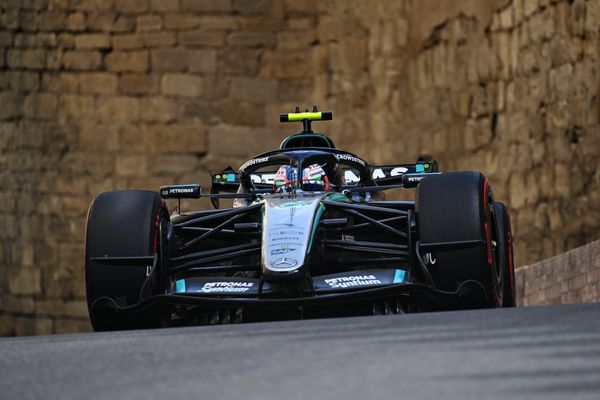
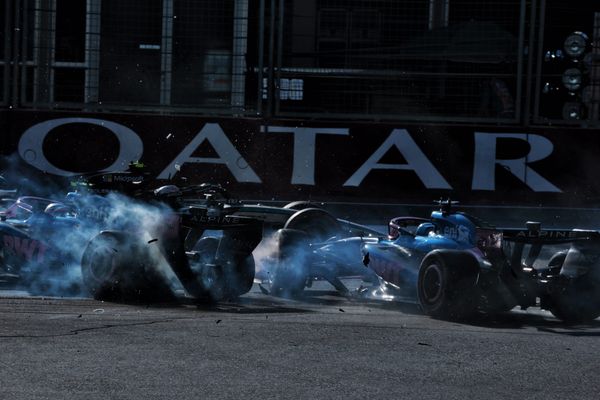
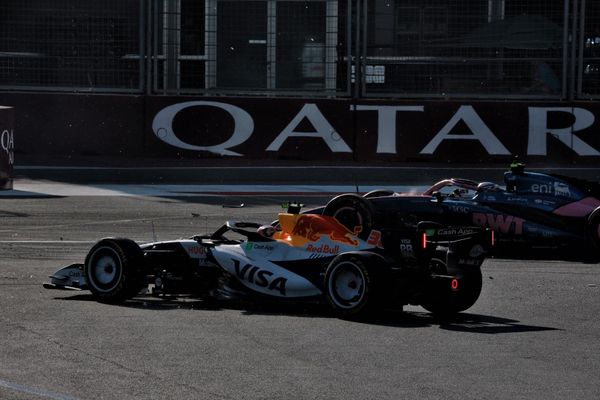
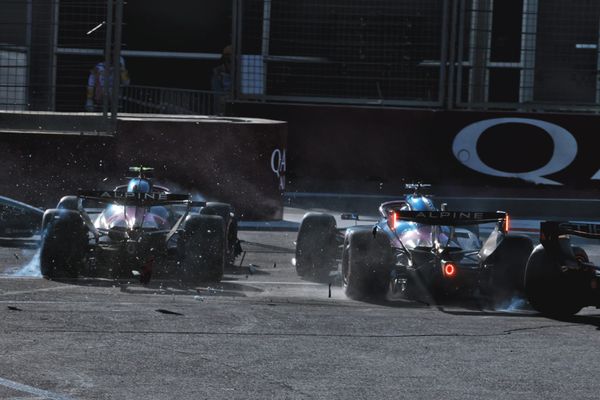
Colapinto was handed a 10-second time penalty for losing control of his Alpine and spearing into team-mate Pierre Gasly, who in turn also ended the race of Lando Norris's McLaren.
That penalty couldn't be served because he was out of the race, so Colapinto will serve a five-place grid penalty at the next race in Malaysia instead.
It's not the race ban that Norris called for but, as most other F1 drivers agree, that would be too extreme a punishment for an isolated incident.
As race winner George Russell said when asked if a race ban for Colapinto would be fair, "it was a small error that had a big consequence", so a race ban would be "too harsh".
A simple five-place grid penalty is probably too far the other way, though, considering Colapinto's error ended the race for two other drivers.
But the most striking aspect of the stewards' verdict on the Colapinto/Gasly/Norris incident is the one thing it's missing: the awarding of any penalty points.
F1 introduced a penalty points system to try to punish any repeat offenders, with a total of 12 points triggering a ban.
Kevin Magnussen became the first driver to reach the 12-point threshold, as he was banned from the 2024 Azerbaijan GP. And the likes of Ollie Bearman, Max Verstappen and Pierre Gasly have all been one or two points shy of that at certain points.
There was consensus among the drivers that the system wasn't working. None of those drivers deserved a ban and points were being handed out for fairly minor offences.
But it feels like there's now been an overcorrection.
We're 15 rounds into the 2026 season, and not a single penalty point has been handed out to a driver for causing a collision. They've only been awarded for yellow-flag or safety-car breaches.
There was certainly no deliberate intent from Colapinto, but it's hard to see why it wasn't deemed reckless or dangerous.
It begs the question: if Colapinto did the same thing in Malaysia, would he simply get another grid penalty or would that then warrant some penalty points?
You could argue the bar has been set extremely high for an incident to warrant penalty points. It has set the precedent that you can lock-up and wipe out two cars and you won't get a bigger penalty than a grid drop or any penalty points.
A full range of penalties is available to stewards at each race. Penalty points aren't the only route to a ban - they can even suspend drivers from the next race - but if that's the preferred route, then why even have the penalty point system?
Leaving it to the stewards at the race where a major incident took place rather than a points system would also put more emphasis on who the stewards are at each race.
The previous penalty points system at least meant the stewards judged each incident in front of them and awarded the correct penalty points. If a driver reached 12 points, then that was a consequence of the decisions of different stewards at multiple races, not just the stewards panel where a driver triggered a race ban.
It's hard to find a perfect system. The penalty points system on paper is a good idea; it will punish anyone who is repeatedly failing to respect yellow flags, for example.
But right now, the way it ignores drivers causing collisions feels like a huge blind spot.