

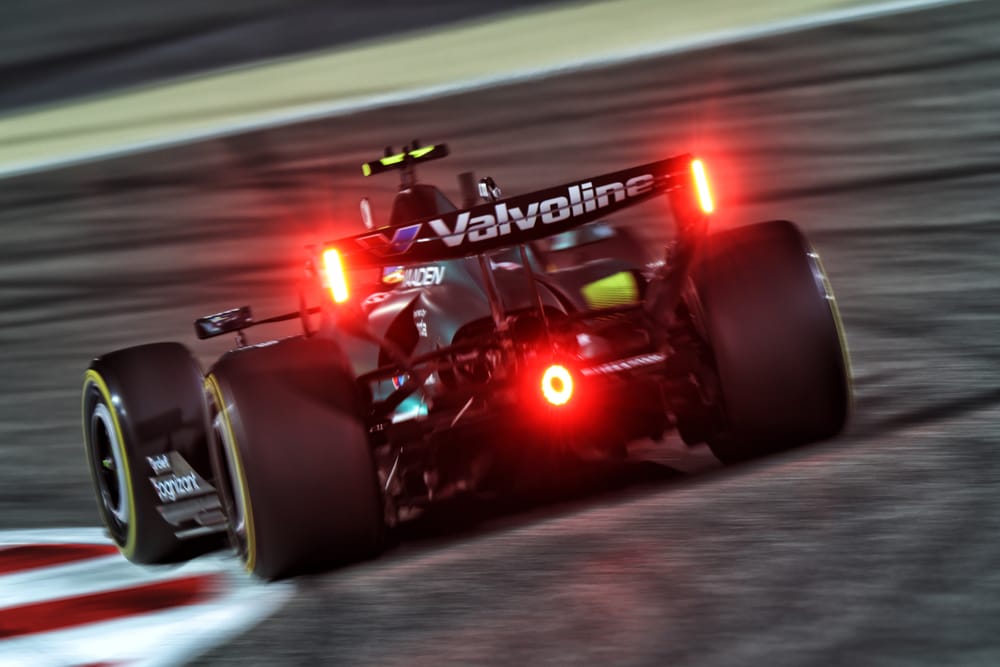
Formula 1 testing has debuted new ways of using the cars' rear lights to signal how the MGU-K is being used to deploy power or charge the battery.
F1 has introduced a range of new lights for 2026 as part of the big car and engine rules overhaul.
This includes the addition of amber lateral safety lights on the car's wing mirrors, which act to warn other drivers when a car has slowed to below 20km/h or stopped on track - and will come on when a car is stopped in neutral during race starts but turn off when first gear is selected.
More interestingly, though, is how the rear impact structure light - which has changed to an oval shape to save around 180g - has multiple functions depending on the car's battery state.
There are three different ways this can be used. A single flash denotes the MGU-K is delivering less than the full 350kW of power; two flashes means the MGU-K is not delivering any power but isn't recharging; and multiple fast flashes means the MGU-K is recharging while the engine is still running flat-out - more commonly known in the F1 paddock as 'super clipping'.
This is where the driver remains on full throttle but the MGU-K is switched into generator mode, works against the combustion engine, and that resistance is used by the MGU-K up to 250kW - not the full extent of its power - to charge the battery.
The rear wing endplate lights, which flash red, mirror the pattern of the rear impact structure lights.
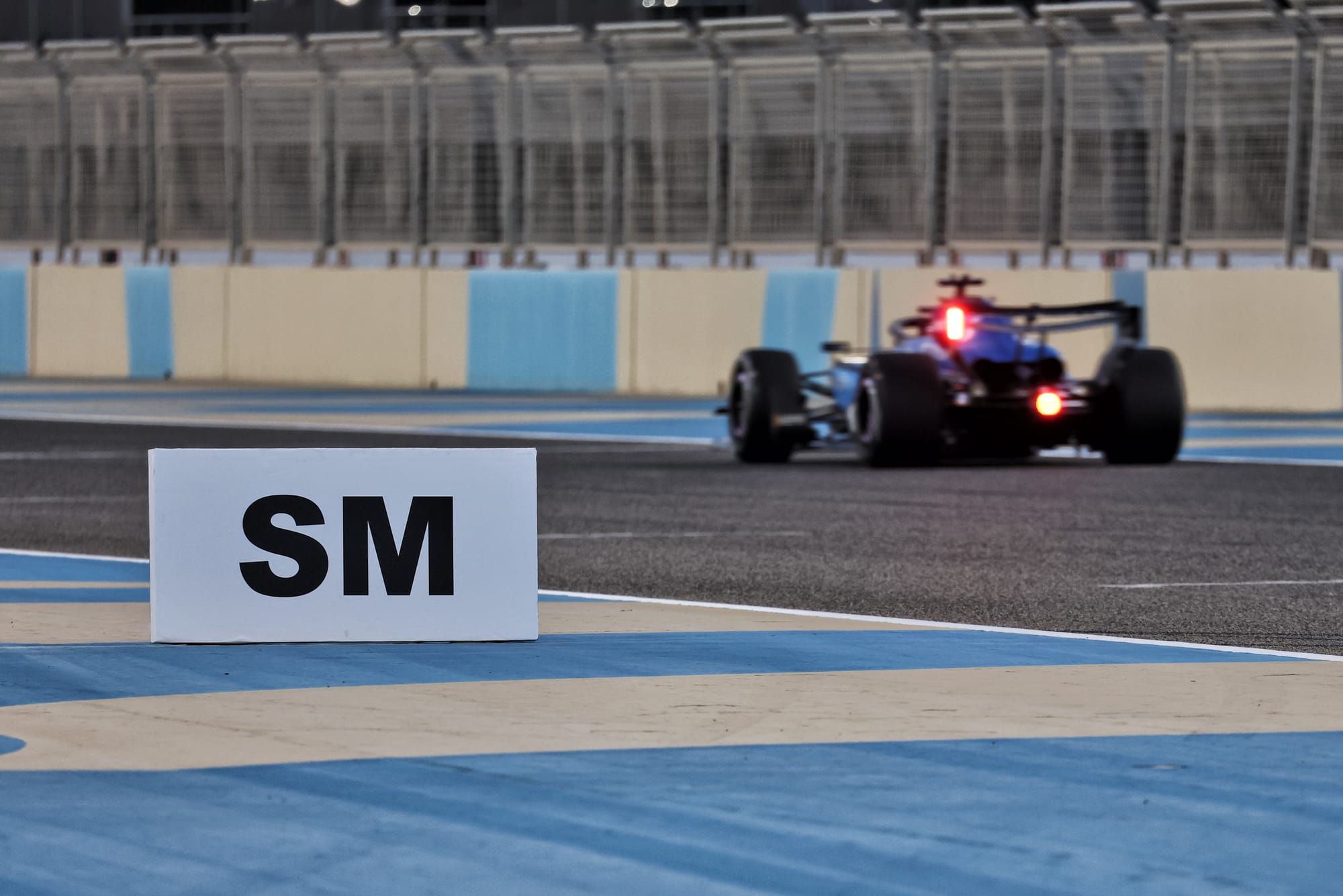
This briefly caused some confusion in last week's test when one of those lights failed on the Williams so only one was flashing - making some people wonder if this signalled something else entirely - when it should have been both.
The red rear impact structure light is also used for other reduced-speed scenarios such as a safety or virtual safety car, double-waved yellows, the speed limiter being engaged, or as a rain light when the car is using intermediate or wet tyres.
The light can also still turn blue if the driver does not have a full superlicence, like when a driver only eligible for a free practice licence stands in during FP1.
