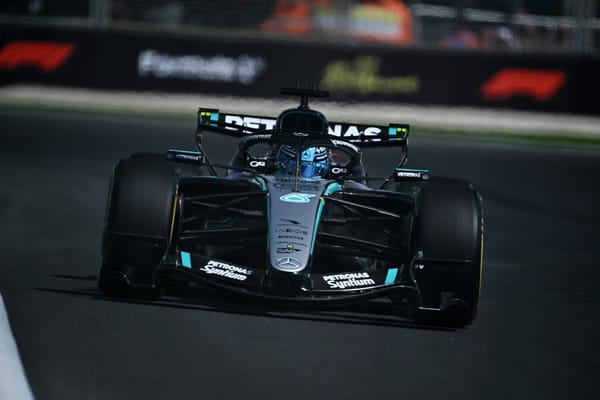
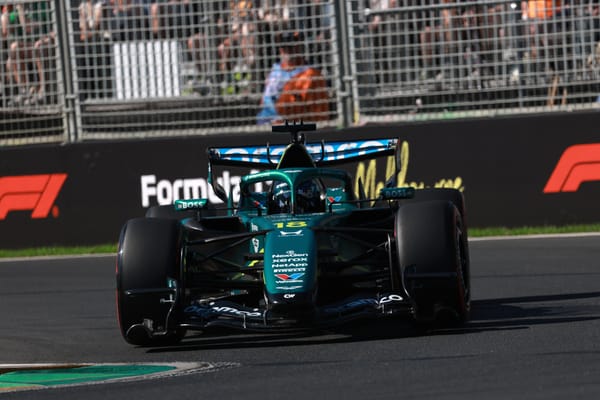
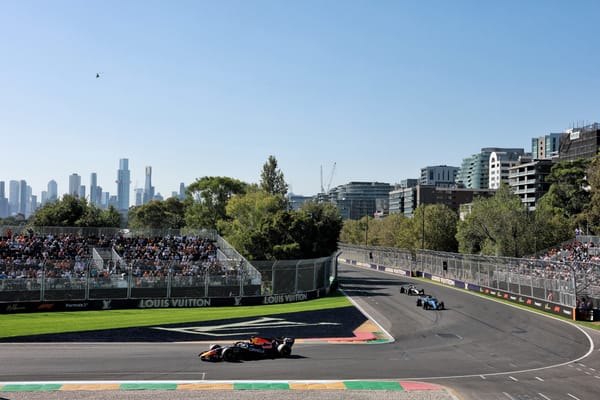
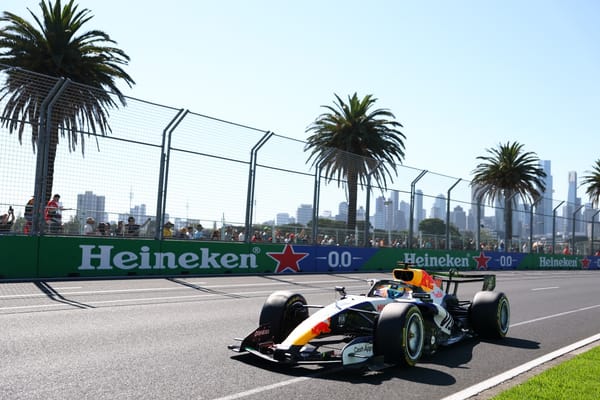
Our trackside impression of jarring 2026 F1 cars in Melbourne
Remember former Red Bull team principal Christian Horner warning us years ago that Formula 1 risked creating a 'Frankenstein's monster' car formula with the 2026 rules?
Well, it was hard not to feel, watching the new challengers close up out on track on Friday, that perhaps Horner should have picked a different Gothic horror: Jekyll and Hyde.
On the good side, F1's 2026 cars sound great and any fears of them looking like they are limping down the straights when out of battery power can be firmly erased.
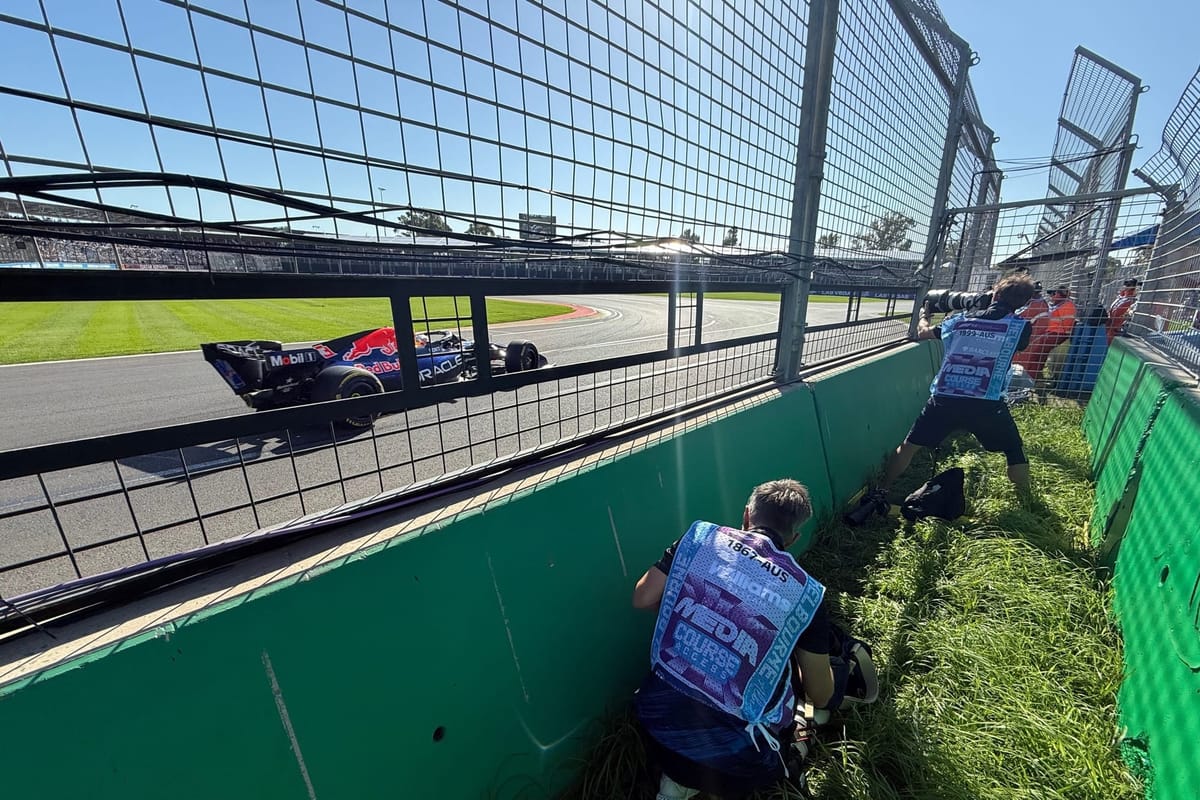
Standing outside the Lakeside Pavilion on the run between Turns 10 and 11 - when the cars rush past, even though going around 20km/h slower than last year - they have every bit of presence on the senses as the previous generation.
Looking for more analysis from Jon in Melbourne? Head to The Race Members' Club where he's providing daily updates - join now for 90% off your first month
There is no doubt though they are at their best in low-speed corners, helped almost certainly by the reduction in minimum weight and the fact that they are quite punchy off the apex because of the bigger batteries (when juiced up).
Their nimbleness through Melbourne's Turn 13 left-hander, where Oscar Piastri went off last year in the race, is especially clear to see.
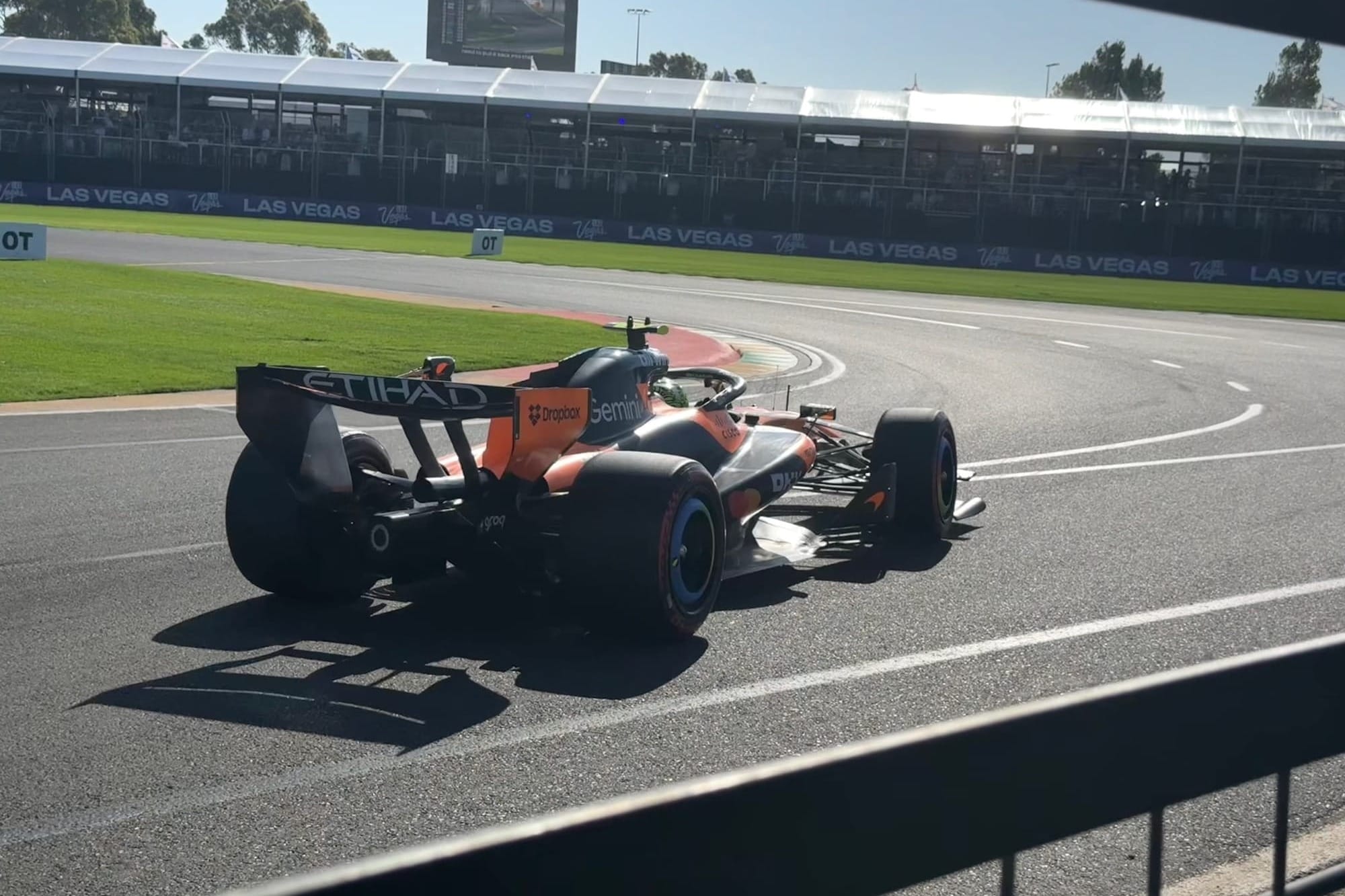
Drivers are able to attack the apex and it is clear to see how at ease each of them is with things depending on how much they managed to hug the inside kerb or how little the back end danced on the way out.
Each time through, for example, Mercedes duo Kimi Antonelli and George Russell looked perfectly set; at the other extreme, the Cadillac seemed especially more nervous.
The troubled Aston Martin wasn't going fast enough - and you could hear that with the engine note - to get anywhere near its limit.
Observe the cars out of Turn 12 and under braking for Turn 13 and it is clear how on edge the drivers can be when there is a sequence of slow turns that means they are not in economy mode
This was proven over the final 20 minutes of FP2 as a number of drivers snatched front brakes; Isack Hadjar running properly off track at one point.
The strong visual impression from this slow sequence is backed up by the data, which suggests a speed differential of just 10km/h compared to last year that is in line with the reduced downforce of these cars.
But the positives from this section of track are not matched, sadly, by how the cars look in the high-speed elsewhere around the lap. And the on-boards and data on this is even more depressing.
One of the most spectacular corners at Albert Park has always been the Turn 9/10 sweep.
It's a virtually flat-out (depending how much fuel is on board) dive into the left hander and then a knife-edge balancing act through the right using the tricky exit kerb that catches a lot of people out.
We had all long known that Albert Park would show off the worst of the 2026 rules, with the energy-starved cars struggling to harvest enough electrical energy around the lap.
But the scale of the problem is obvious to see from the outside as the Turn 9/10 section has gone from one of the most exciting areas of the track to one of the worst.
Speed here is not limited by lack of grip nor downforce, but by the lack of power. The cars are not on the edge; they are just slow.
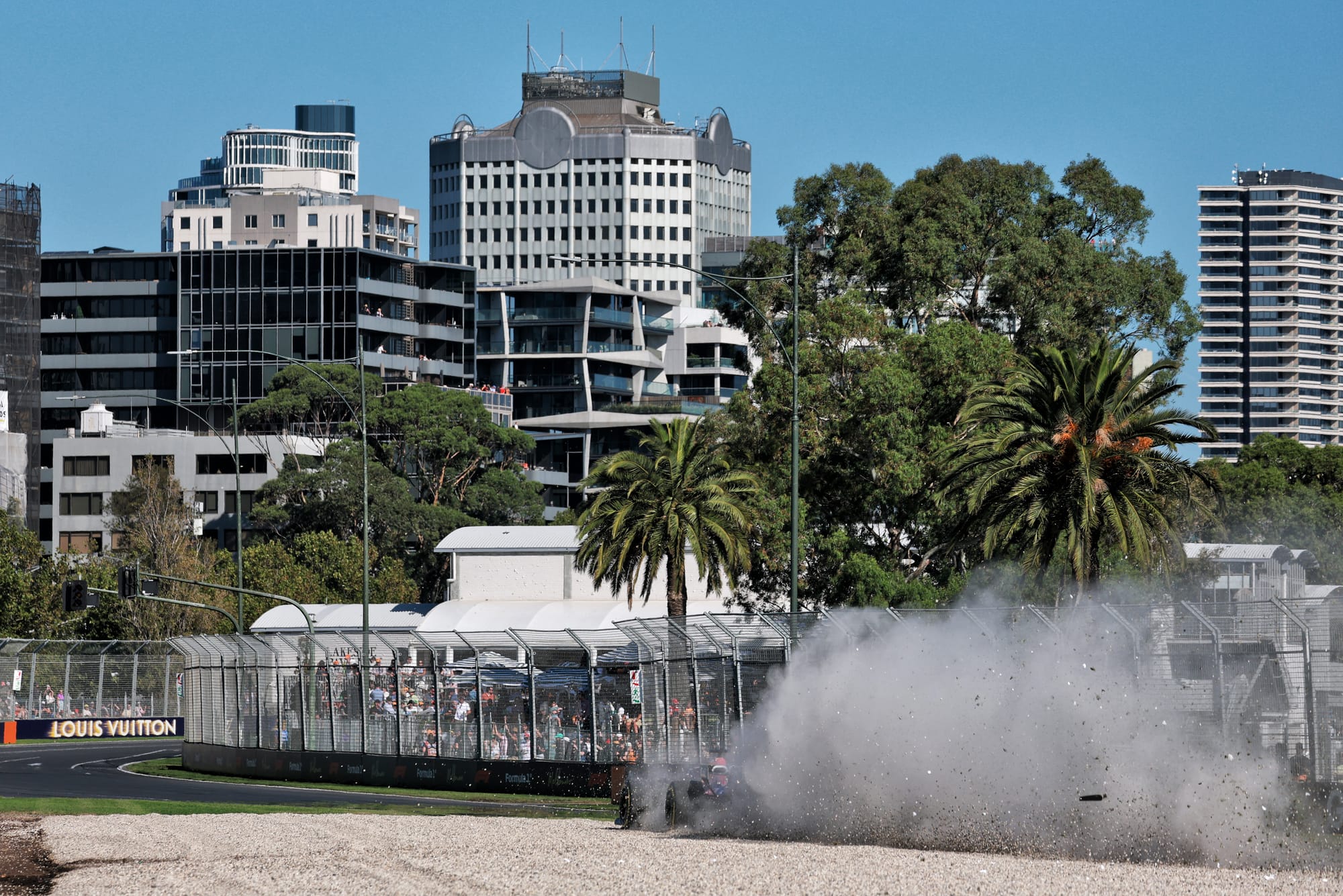
The turn-in to Turn 9 is still pretty much flat - and sure, Turn 10 remains difficult, as Max Verstappen showed in second practice with his off - but it is obvious that drivers are nowhere near the limit.
As onboard footage of Oscar Piastri's fastest lap from second practice shows, things start going wrong when the car runs out of battery on the run out of Turn 6 and through the sweeping Turn 8.
The McLaren has hit an impressive 320km/h at this point.
But when the battery is drained, things go south. With reduced power, the top speed fades away - leaving it down at just 274km/h at the Turn 9 apex.
If we compare this with Piastri's best lap from second practice last year, the apex entry is now around 40km/h slower and well off what the car is capable of if it was in maximum attack mode. And it shows.
Watching from the side of the track, if you are anywhere but stood a few feet away from the cars then the impression is so much reduced.
It was all so unspectacular at times that there were occasions early in the session where it was hard to know if drivers were on push laps or not.
And that confusion is probably further embellished by there being no visual indication of whether drivers are deploying or not.
The contrasts between Turns 9/10 and the Turn 12/13/14 complex is remarkable, but says everything about the strengths and weaknesses of these Jekyll and Hyde cars.
Give them a stomping ground where there is some decent braking, short corners and the need to attack, then F1's cars look amazing. On long straights, though, and especially if they run into high-speed turns, then they are not so great.
If the energy management rules end up staying as they are, fans are going to need to pick their tracks and corners wisely this year.