Bahrain F1 2026 test two winners and losers
That's it: pre-season for the 2026 Formula 1 season, featuring potentially the biggest-ever change of regulations, is complete.
So who had a strong second week in Bahrain, and who - in addition to the one obvious candidate - is on the back foot ahead of the Australian Grand Prix season opener in a fortnight's time?
Here's our pick of winners and losers after learning more and more about these drastically different cars:
Loser: Aston Martin
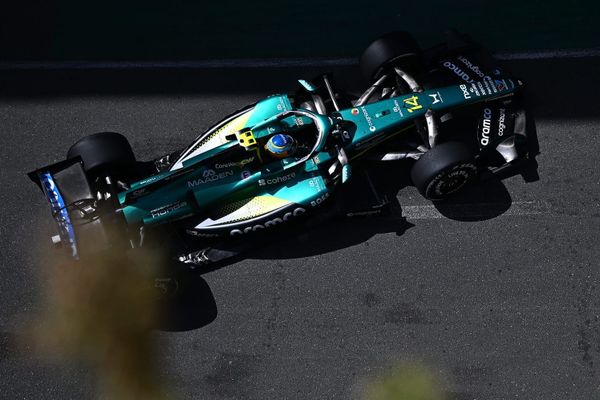
Aston Martin is in dire shape heading to the start of the season, after a Bahrain testing fortnight that has not only fallen short of expectations, but that is difficult to imagine having gone much worse.
Ongoing reliability problems with the Honda power unit - especially on the battery front - left it struggling for miles, and it is far from getting any proper read on what its AMR26 car is capable of.
Completing just six laps on the final day was a disaster, and Aston Martin now faces the risk of being put under pressure from newcomer Cadillac at the start of the season.
Worst of all is that time is out to get on top of its repeated breakages away from competition, as the next time the car runs will be in Melbourne. - Jon Noble
Winner: Ferrari
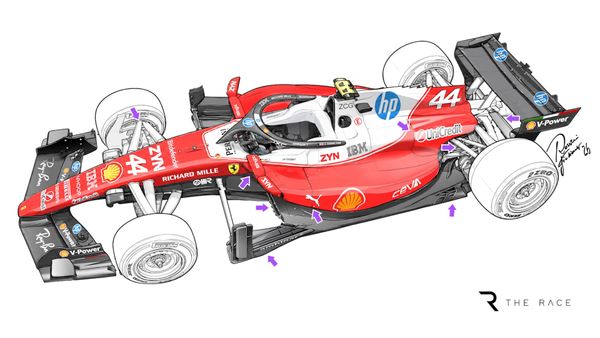
Ferrari ending winter testing on top by eight tenths of a second is a mostly meaningless statistic. But in the context of Ferrari's underwhelming 2025, it having missed the compression ratio loophole, and the 'spec A car' strategy of starting basic then upgrading being at odds with what key rivals such as McLaren were planning, this has been a very encouraging winter.
The car clearly has pace and the 'bring upgrades later' plan included genuinely radical tricks like the rear wing that flips upside down. Plus Ferrari's getting off the line in practice starts much better than a lot of its main opponents, which could be very important if starts are as wild as expected in the early rounds.
It's certainly not favourite, but it's somewhere in the frontrunning mix. - Matt Beer
Winner: F1 (ingenuity is alive and well)
F1’s all-new regulations were always going to offer the opportunity for teams to exploit some grey areas.
Heading into the final test, the biggest talking point about rules interpretation had revolved around compression ratios.
But Ferrari changed all that on the middle day with one of the most eye-opening design ideas we have seen for a while: its upside down rear-wing.
While it was officially labelled as a test item, so may never appear at a race, what was so welcome about it was it showed that room for leftfield thinking and ingenuity remains a cornerstone of F1. - JN
Losers: Mercedes' rivals
The arguments over the compression ratio engine rules loophole have been going on as a parallel off-track contest throughout pre-season testing. And as is often the case in pre-season testing, they've ended with a deceptive 'winner'.
The eventual compromise on the table in the vote that will be settled next week is a new mid-season form of testing that Mercedes thinks it'll pass fine anyway and that ironically might require its rivals to do more legwork and extra development in order to meet and stay competitive. - MB
Come behind the scenes with us in the F1 paddock throughout the 2026 season in The Race Members' Club - try it now with a 7-day free trial
Winner: Haas
Third in the mileage charts for test two, and the best-placed of all the Ferrari-powered teams in that regard.
But it's also in the performance stakes where things look encouraging for Haas. It's sixth in the headline times, so slap bang in the middle, but appeared to be marginally ahead of Alpine on the final day prior to Pierre Gasly's late-ish run on the softest C5 compound that jumped him ahead of Haas's Ollie Bearman.
Whichever way round Haas ends up in that particular squabble (and for what it's worth the consensus does seem to have it ahead), it does seem as though those two teams are leading the midfield pack. And when you remember that this is probably F1's least-well-resourced team, that would be a seriously impressive place for Haas to start this rules cycle in. - Jack Cozens
Loser: Williams
You have to wonder how much worse Williams's situation would look if Aston Martin's disasterclass wasn't in such plain sight.
For all the gentle encouragement of completing the joint-most laps of any team in week one in Bahrain, as it played catch up after skipping the Barcelona 'shakedown', all the available evidence from week two suggests that performance-wise, the Williams - a 2026 car carrying some degree of expectation on its shoulders - is nothing to write home about.
The performance runs have caught the eye for the wrong reasons: conducted on softer tyres than those around Alex Albon/Carlos Sainz, yet way off the sort of position you'd expect that offset to lift them to, even with some conservatism over fuel loads factored in.
And of the limited data we do have on the FW48's long runs, my colleague Val Khorounzhiy sums it up best by describing it as uninspiring. - JC
Winner: Cadillac
A Ferrari-powered hat-trick, as F1's newest team also makes the cut in our picks of winners from week two of Bahrain testing.
OK, in mileage terms - and that is a very important measure for Cadillac at the start of its F1 journey - there was actually a step backwards: 266 laps completed in week two versus 320 laps in week one.
But any of the worst fears about where Cadillac might be performance-wise in 2026 seem destined to not be realised. Valtteri Bottas's 1m35.290s on the final day was 3.3s adrift of the best time, yes, but it's nowhere near 'cut adrift' territory. It's not even last-place territory right now. It wouldn't even have been close to 107% territory based on 2025 Bahrain qualifying. (Cadillac is more than two seconds up on that cutoff time.)
Sure, the fact it could genuinely be ahead of one rival at the season opener says a lot more about that team's struggles than anything else. But if this level is anything like the reality to expect from Cadillac, then this is an unimaginably good starting point for a team that one year ago still didn't officially have the green light to join F1. - JC
Winner: Common sense
After the safety concerns that erupted over starts at the first Bahrain test, it would have been all too easy for F1 to do nothing or for the issue to become a political battleground.
But in a welcome breakout of common sense, the teams and the FIA not only implemented a good solution - but one that helped to add some spice to the test.
The extra five-second notice prior to the light sequence beginning has put to bed the worst fears over starts being tricky, and means F1 drivers can head to Melbourne more at ease about things.
The testing of the new start procedures in Bahrain has also highlighted that Ferrari - which has honed its engine concept around a short sequence - has not been hurt by the change.
The rapid practice getaways of Lewis Hamilton in particular have shown that Ferrari could have an edge in the run to the first corner. - JN