An extreme claim about F1 2026's driving style reset
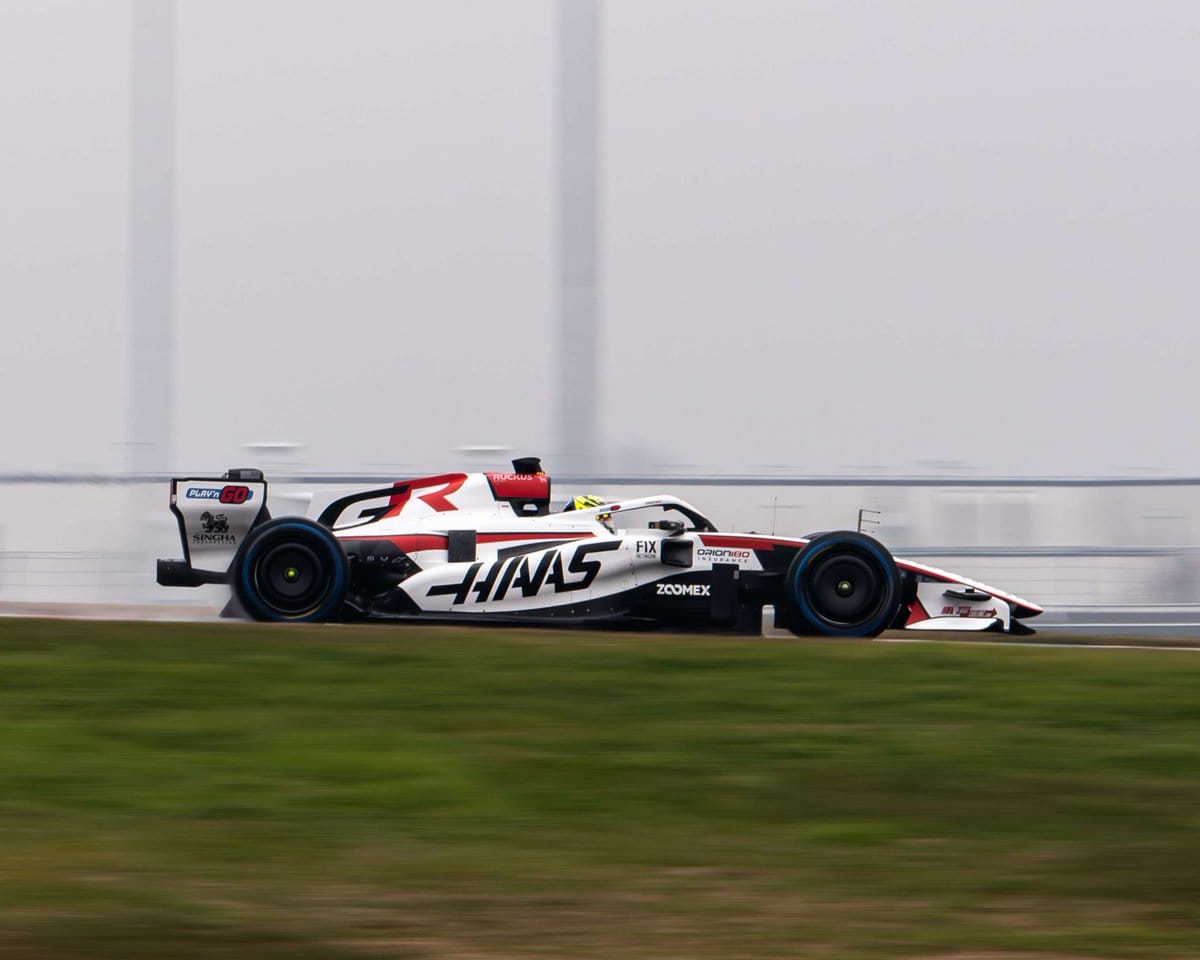
Esteban Ocon raised some eyebrows recently when he suggested driving Formula’s 1 2026 cars is going to be unlike anything experienced before.
In fact, he suggested that F1 drivers were going to have to completely forget everything they have learned since karting if they want to succeed in the season ahead.
But are F1’s new generation of cars, which are expected to prove so challenging because they are energy starved, really that extreme or will the traditional skill sets remain valid?
Ocon’s claims
After his initial runs with a 2026 model in a simulator towards the end of last year, Ocon left convinced that what drivers previously understood as the way to be fast in F1 can now be thrown in the bin.
“The biggest change is from the engine side, and that's going to be the key for us to be prepared,” he said as Haas revealed images of its 2026 challenger on Monday.
“It's an exciting challenge, and it's a different way of driving compared to before. I think we can forget everything that we've learned since go-karts on how to go fast, but it will be interesting to learn a new driving style and hopefully find speed with it.”
F1 drivers have widely talked about how different the new 2026 cars feel from early simulations runs – both in terms of a lack of downforce in the corners but also in terms of the energy management requirements.
Ocon said his early impressions were in-line with what others felt, but he was more upbeat than some others have been about the handling element.
“It’s a very particular way of driving the car,” he explained. “There's going to be a lot more management on the engine side and on the hybrid side.
“The car itself felt pretty good. The balance was decent, although of course it was our first taste in the simulator, so we need to see how it is in reality, but the level of grip was good.”
Efficiency rewarded
With so much laptime available from drivers optimising energy harvesting, as well as deploying it in the right places, there is a growing view that smart thinkers will be rewarded.
Lewis Hamilton suggested this week that F1’s 2026 cars were going to reward those who can master a range of parameters to deliver ‘efficiency’ on track.
“This is the period of time where you have to learn to be the most efficient driver that you've ever been,” he said.
“And that's utilising all the tools you have in your armoury as a driver, to save fuel, to recharge power, utilise the power, use the grip, and put all these things together.
“I think it's going to take a lot of work from the engineers to communicate and help the drivers to be able to extract everything and its full potential.”
Red Bull Powertrains' technical director Ben Hodgkinson agreed that quality talent like Max Verstappen will offer an extra edge by being able to work out where advantages can be found.
“I think with these regulations, the amount of power that you’ve got from the ERS is such a large amount of the performance of the power unit, and it can be deployed in different strategic ways, that I think there’s actually going to be quite a bit more for the driver to do," he said.
“There’s going to be quite a lot of choices to make and strategy that they’ll have to pull. So I think that Max will give us an advantage there, because his ability to be able to process things whilst doing 200 miles an hour is absolutely world class.”
Too many unknowns
Just how much the energy management will be down to driver choice, and how much will be dictated by teams, remains an open point though.
That is something that will only become much clearer after teams have put their cars properly through the paces in pre-season testing.
Alpine’s Pierre Gasly’s first reaction to Ocon’s claim about forgetting everything was: “I’ll still keep a few things that I've learned!”
But he said there was tremendous uncertainty about how things would play out.
“I think there's just a lot of unknowns at the minute on what these cars are really going to feel like, what the response of the engine is going to be like,” he said.
“Inside the car, I expect us to have probably a bit more input and we’re going to have to think a little deeper in how do we want to approach races, how do we want to approach our driving style and being on top of the energy management.
“It's not only going to be about being at the limit of what the car potential is. We'll have to be quite smart in how we drive just from an engine point of view.”
But others are not so certain that the 2026 cars will be alien beasts.
Asked by The Race about Ocon’s remarks, Audi’s Gabriel Bortoleto said: “It's not up to me to judge someone's comments, but I wouldn't put it this way.
“I feel like it's still a four-wheel car with steering. You still need to drive it. You drove it in karting, in F4, F3, F2 and you are going to drive in F1, and there will be regulation changes.
“Yes, it's a bit different because of the energy and the power unit being a bit more complex in a sense, but it's still a racing car. So, no, I don't personally agree that you will forget everything.”