'Everything was on fire' - Williams's F1 2026 disaster laid bare
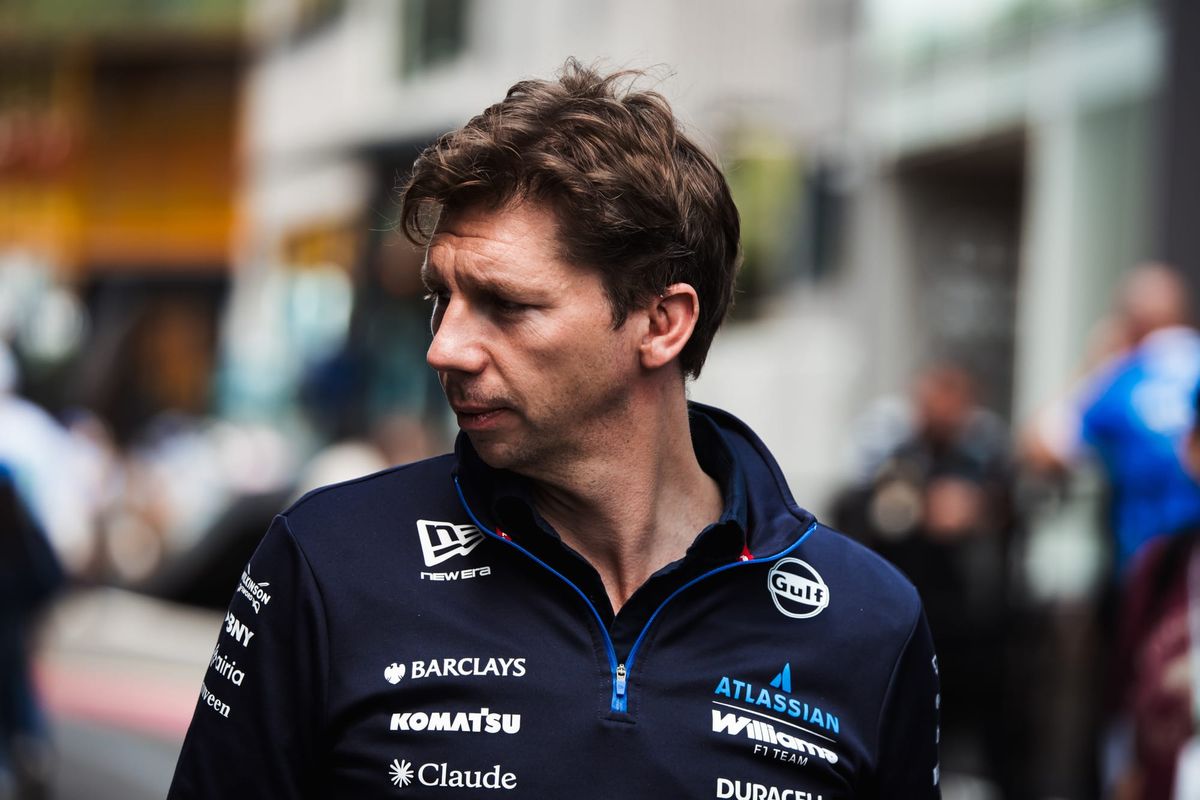
It is no secret what Williams got wrong this year. As team boss James Vowles admitted: "We were late. We were over budget. We were overweight.
"And we were not to the performance level that we were anticipating. So everything was a little bit on fire at this point…"
But what has not been so clear up until now was why things went so badly.
How had a team that had punched well above its weight in 2025 and taken two podiums, plus been the earliest to switch to its 2026 design, slipped up in concept and execution to leave itself ninth in the constructors’ championship right now?
Williams’ answer and planned response were enough to convince Carlos Sainz and Alex Albon it was a blip and agree to stay on, despite a season that has fallen far short of expectations.
With the pair now locked down, The Race sat down for an exclusive chat with Vowles to understand better why things had gone awry and what fixes are coming.
His answers were candid, both in the detail offered on the errors made and the personal accountability for some of it.
But there was also a clue about why what’s coming soon will show how serious the recovery plan is.
Why things went wrong
Vowles thinks a critical element as to why this year went wrong was that last season went so right.
A stronger-than-anticipated 2025 was viewed as proof that Williams was on a surge to the front, and led to some complacency.
"I think last year hurt us because we had belief we'd produced a car that was below the weight limit, and that doesn’t happen by chance," he said.
"There was enough belief in that, that it was strong enough and robust enough, to be able to carry over into a new regulation set. It wasn't. Simple as that."
Changes to production and manufacturing processes put in place under Vowles that worked well for a stable rules set were ultimately not good enough when it came to a total car revamp for new regulations.
Regulatory stability had not stress-tested things in recent years, and deficits in the team's tools – the result of a lack of spending over years – had not hit home until now.
As Vowles explained: "For 20 years, Williams didn't have the investment needed. If I compare it to my previous place [Mercedes], it's hundreds of millions of difference."
An obvious consequence of not having simulation tools up to the job is that the design office gets bad answers. That can put designers down the wrong aero concept path – which is exactly what happened to Williams.
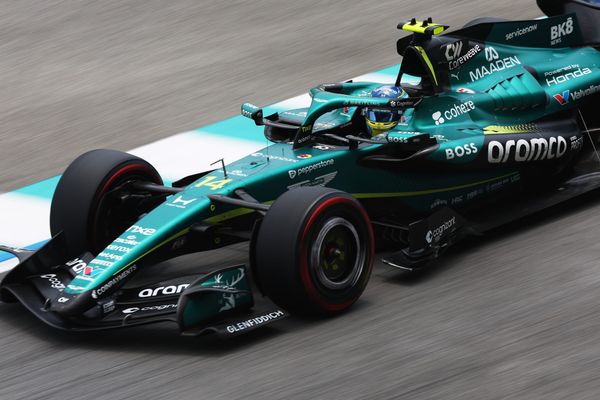
The high rake concept that it (along with Aston Martin) developed was the wrong way to go. While the error seems minor, the reality is it was quite damaging. It is little wonder both outfits are bailing.
As Vowles said: "It doesn't sound like a big problem - but actually it is, fundamentally, from an aerodynamics perspective.
"You're not developing the floor systems and structures at the level you need. That loses you not days or weeks, but months."
Vowles also confesses to his own role in Williams’ situation this year – in having allowed expectations to get set so high with how he framed 2026 that it was never going to live up to them.
"I was asked this in a different forum, do you regret? Yes, because I communicated poorly."
Vowles says that amid the success of 2025, he should have done more to stop runaway talk about what was possible for this year.
"2026 was never a championship fight," he said. "It's just not going to happen with a team that's got 20 years [of underinvestment].
"I think the words I used were, ‘last year is a benchmark’. So, still a failure. Just perhaps my role in all this was poor in explaining it."
The solutions in place
Getting things so wrong this year has forced Williams to challenge everything, probe deep for the weaknesses and get solutions in place that make a difference.
Without that, the risk of losing Sainz or Albon (or both) was on the table.
Speeding up production to the right cadence is critical. Williams has openly admitted it has been behind the curve with its car this year: its Miami upgrade was supposed to be what it had in Melbourne.
One standout move to improve this has been the signing of McLaren’s former chief operating officer Piers Thynne, who started at the squad last month (August) as chief optimisation and planning officer.
Vowles hopes the systems that Thynne put in place that helped McLaren in its push to the front will be valuable to Williams.
"He is a fantastic individual," enthused Vowles. "He brings greatness. He brings championship-level thinking and approach."
Williams has taken action on major system weaknesses too – which includes the pulling of software that Vowles says was "frankly unfit for the organisation".
A few years ago Williams famously replaced a 20,000-cell Excel spreadsheet with a modern-day software car-build system following his arrival. Some of what was introduced has fallen flat though.
Vowles added: "Actually, in many regards, it was hurting us, not helping us."
Accepting the fault, Williams pulled some of the Enterprise Resource Planning (ERP) software this summer to move to a different way of working.
Not ideal mid-season, but better to address things that are failing than brush them under the carpet and pretend they are not a problem.
Vowles: "Don't worry, we're still not back on Excel spreadsheets. But we are in a much better way of working."
Williams also needs to invest in bringing more of its systems up to date, with Vowles revealing that some of Williams CAD design software is 15 years out of date.
"If that's one piece I'm showing you, there's probably 100 behind the scenes," he added. "And we're going to get to each and every one of them: find them, fix them."
The innovation on the horizon
Solving production, software and infrastructure flaws is not all that is needed.
Vowles says that critical to a turnaround is a change of mindset too – with Williams needing to get its confidence back.
"When the pressure came on, we didn't push the boundaries as much as I know we can," he said.
So that is why he sees the need for Williams’ revised lighter chassis that is set to arrive from the Azerbaijan Grand Prix to lay a marker for the future.
It needs to be proof not only that the team’s design and manufacturing capabilities are back on track – but also that the squad itself is in a totally different place to before.
Vowles says the new chassis is going to push boundaries of innovation in terms of how it has come together.
"True innovation for me is that when another team finds out about it, they will change what they do," he said.
"This learning will be one that kicks us off for the next five years. There's no other chassis on the grid made the way we've done it. I can give you an assurance of that."
Vowles wants the chassis innovation, whatever it is, to be evidence that Williams can get things right – and to act as inspiration for that approach to flow through everything Williams does.
"It's those projects that allow us to start thinking differently, that allow you to start moving up the grid. There's just not enough of them, and they're not happening quick enough. They need to be."
The lessons of 2026 have highlighted that the changes that Vowles made to Williams since his arrival did not go far enough.
This year’s "big failings" were a catalyst to push more and have resulted in a team that Vowles says is now in a "different world".
It’s not been an easy time, and one that Vowles says made for the most difficult winter he can remember in F1.
But there is a hope and belief the team has now bottomed out. With that new chassis coming for Baku, the time is nigh to prove it.