What one image can't show you about Rwanda F1 track
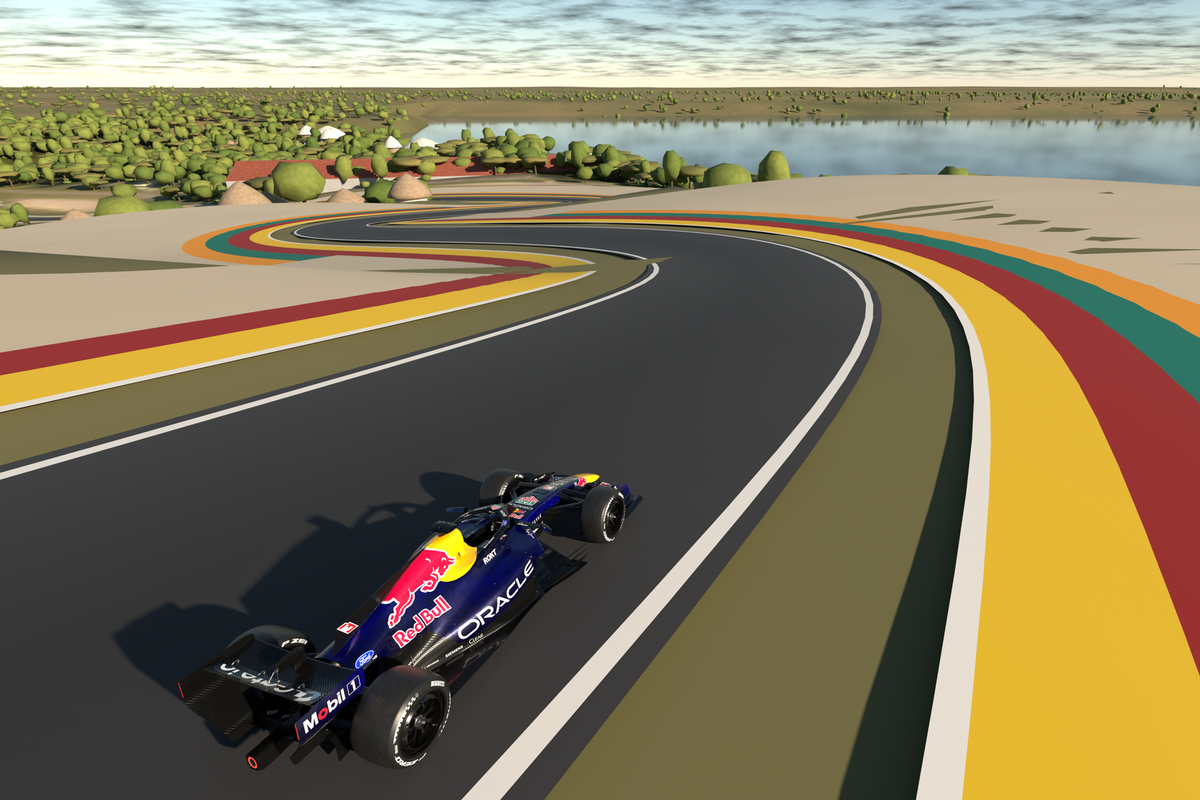
If you adapted the saying 'you should never judge a book by its cover' for the world of Formula 1, then tracks should never be deemed successes or failures based solely on rendered images of them.
What can look like nice lines on a bit of paper are no guarantee that a circuit will be good for racing.
Equally, corners that are spectacular and a thrill for drivers - such as Eau Rouge at Spa, the Degners at Suzuka, or even La Monumental at the newer Madring - look simple affairs when just viewed on a screen.
The disparity between the impression a track render can give and what the reality of a track is like when built is a topic that has come up in recent days following the reveal of the layout of the new F1 track in Rwanda.
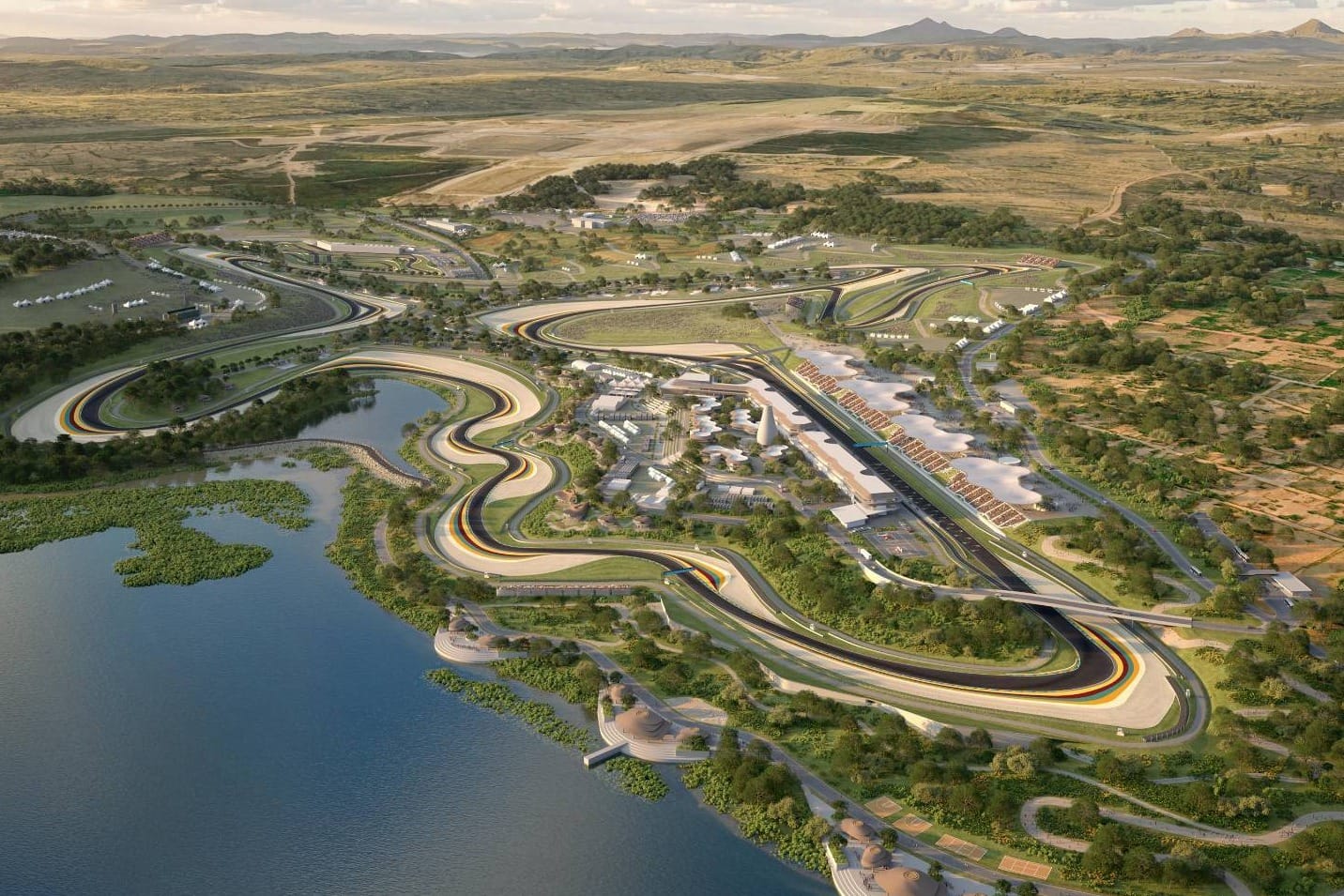
The single image released of the new Rise Motordrome track near Kigali, which will host the African Grand Prix from the early 2030s, drew mixed responses from fans - which was perhaps fuelled by some of the key elements of the layout not being visible.
That inevitably prompted debate about whether the track was going to be any good for overtaking.
After years working on the project, and thousands of laps of it on a simulator, track designer Alex Wurz is enthusiastic about what has been pulled together.
And there are so many details to the circuit, which will feature the greatest elevation change over a lap of the season, that are not possible to pick out from the render, according to Wurz.
"To give you a little flavour, in Turn 2, we are coming downhill with top speed," he tells The Race. "It's 10.8% [gradient] exactly. We're going into a very high compression with 12% banking, and then going 14% uphill, so you will only see sky.
"Towards the end of the corner from the 12% banking we are going to 6%, and then 4%. And in the sim, this feels just like pure joy.
"My favourite section is coming out of the canopy corner over the crest into the lake.
"The timing of it is that you just get light [as the car rises over the crest] and then suddenly you get a 10% compression, and from there you know your mind has to engage into the fast Esses.
"Those are the corners I think should resonate with the fans in the simulator, on your computer games, but hopefully with the big dogs - the F1 drivers themselves."
An emphasis on 'fighting'
As a former F1 driver and Le Mans 24 Hours winner, Wurz knows an awful lot about what makes a top-line track, and what ingredients are needed to help make a good race.
He says it is naive to think that overtaking can ever be guaranteed by a track layout because passing is influenced so much by car regulations, details on the day such as tyre degradation levels, and even whether a frontrunner has made a mess of qualifying.
What he thinks is critical though is to produce a track that allows drivers to "fight" each other, and that can only come from how corners are sequenced.
"We have wide open corners with corner sequences 1/2/3, where it means attack, defend, attack, defend," he says. "Now if I defended too much, I might be overtaken, or I'm so slow that the next guy is catching up. So, it is initiating fighting.
"If it finally is the track where the most overtakes are going to happen, to be honest, that's random. It depends which tyre manufacturer, and what tyre degradation on that day will happen.
"But it's a drivers' and riders' circuit. It's made for overtaking and fighting, and I think it should tick all those boxes."
Wurz has faith that what he has designed will not just be good for fighting, but also be a challenge that drivers enjoy.
"I think it will be an amazing circuit for racing, but equally for the drivers," he said. "If people like comparisons, I don't like them too much, but with red wine, you speak about berries and oak flavours.
"So, if we do the same with tracks, you could compare some of the sections to Spa because of the ups and downs and the speed and the flow. Of course, also Suzuka is one of every driver's favourites, and there's some flavours which you could compare.
"But it's all authentic and bespoke to the topography; it's flowing, it's fast, but we do have, of course, heavy braking areas."
Complexities hidden by the renders
One important element that is shared by a lot of tracks is elevation change, something that pretty much all top-ranking venues have.
The 197 metres of elevation that the Rwanda layout boasts should deliver something that will make even the straights spectacular, and was not obvious from the render - which The Race has subsequently produced more of.
The back straight for example, which was actually hidden from the images, plunges downhill before a proper compression as it rises up again into a heavy braking area.
There are also complex braking areas that are being built. "On the render, you don't see the long straight well, and you don't see the hairpins," says Wurz.
Effort has gone into creating tight turns with combined braking/turning where drivers are exposed to greater risks of getting things wrong - and therefore being attacked from behind.
"What is really challenging is if you are combining forces: your braking, your turning, to then optimise all four contact patches at the right slip angle," says Wurz.
"So those corners where you arrive at 300km/h and you break down to something like 80km/h or 100km/h, but with long combined phases, they are the ones where you can do the real divebombs. And we have three of those.
"I think those will be the sneaky overtakes. And if you start to defend, again, then your next straight line will be three and a half to four tenths down. And that triggers the fighting.
"And if there is no overtaking from that, triggering the fighting means someone else is coming. So I think it should at least initiate great fighting."
Havoc - or joy
Wurz has consulted a lot of driver friends with ideas for the layout, and says that feedback has been positive.
While he has not identified those he has consulted, he says that drivers with a total of 12 FIA world championships have been involved. As chairman of the Grand Prix Drivers' Association, the likelihood is that some of those titles were from F1.
Wurz thinks that, in order to make a layout a good drivers' circuit, it is critical that drivers have input on what works.
"I am in almost everyday contact with the greatest champions of current times, so I do show them tracks," he says. "I do listen to what is said about corner sections and which are rewarding and not rewarding.
"They always have some tips, but the principle layout was seen by one guy who texted me back he said: 'That will be instantly one of the most classic favourite circuits of all drivers.' And I really hope so because it is a lot of work!"
And if you want a hint of the way that the track layout has been shaped by thinking about the challenge drivers face, then there is no better example than the Esses section at the end of the lap.
Wurz says this area, which looks similar to but is not a carbon copy of the Suzuka Esses, is one that is going to punish greedy drivers who try to attack it too much.
"If you get one element wrong, the next five or six corners are off," he says. "That's havoc in your brain, but it's joy if you manage it.
"You are coming around the lake out of the forest corner, which is a really cool corner because it's only forest and the track, and then you come over a hill into a double right-hander.
"Here the lift in the stomach should be perfectly timed to then get the compression on the apex. And from this moment on, every movement you do on your instruments are important: steering, throttle and brake.
"None of the corners are flat. Everything has to be either just a downshift or dab on the brake. You really need to flow from one to the next.
"If you do a little mistake, it's designed that greed is penalising you. And this is so cool for the drivers because you kind of have to hold back a little bit, but you want to exceed it.
"If you slide half a metre too wide, that means you have already 0.15 seconds gone, so you have to be true to yourself. And this is a type of mind game.
"Suzuka does it very well. That's why all the drivers love it, and hopefully we can be in the same category of racetrack as the great ones."