Everything Ferrari's changing to try to win at Monza
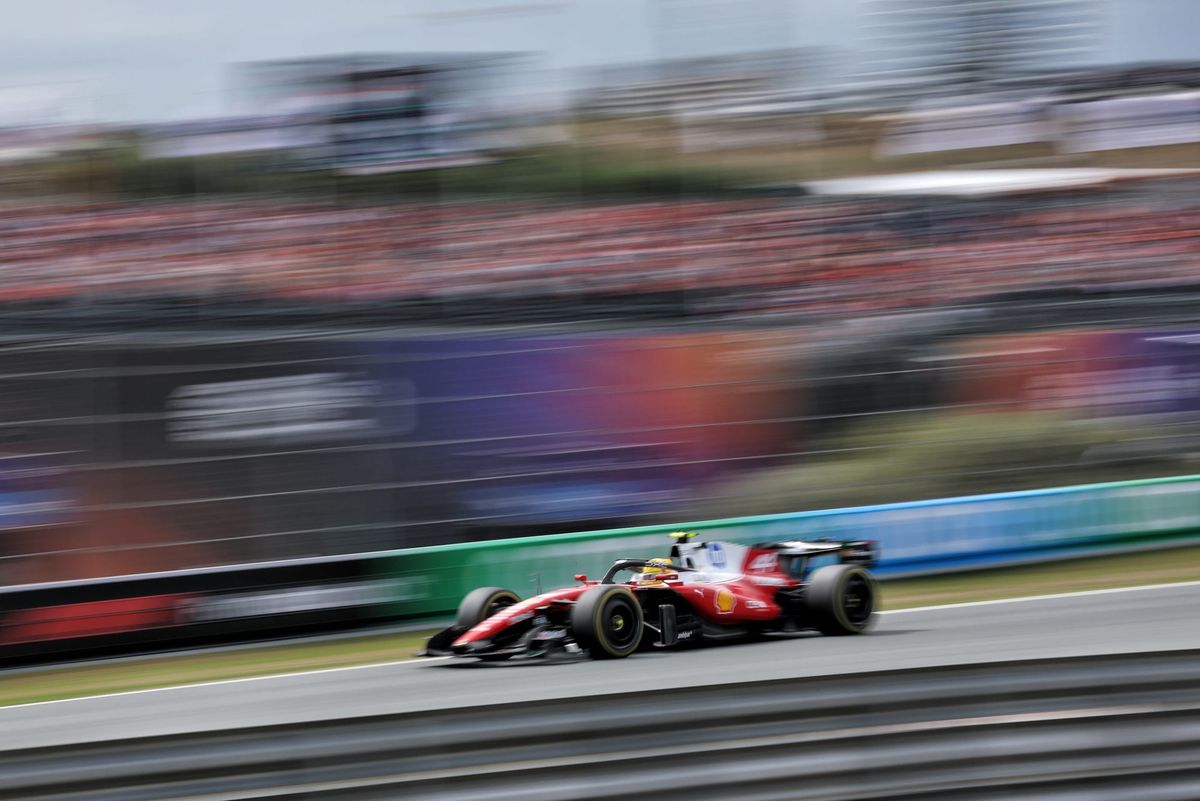
Ferrari's Zandvoort weekend marked not only its return to action after Formula 1’s summer break, but also the start of a new phase in the development of the SF-26.
A new floor and diffuser specification made its debut in the Netherlands, although the package represented only part of the upgrade Ferrari had originally planned for this stage of the season.
The initial plan was to introduce a more extensive update at Zandvoort. Ferrari ultimately decided to split the development programme, bringing forward the solutions that had already reached sufficient maturity while allowing more development time for the lateral section of the floor edge.
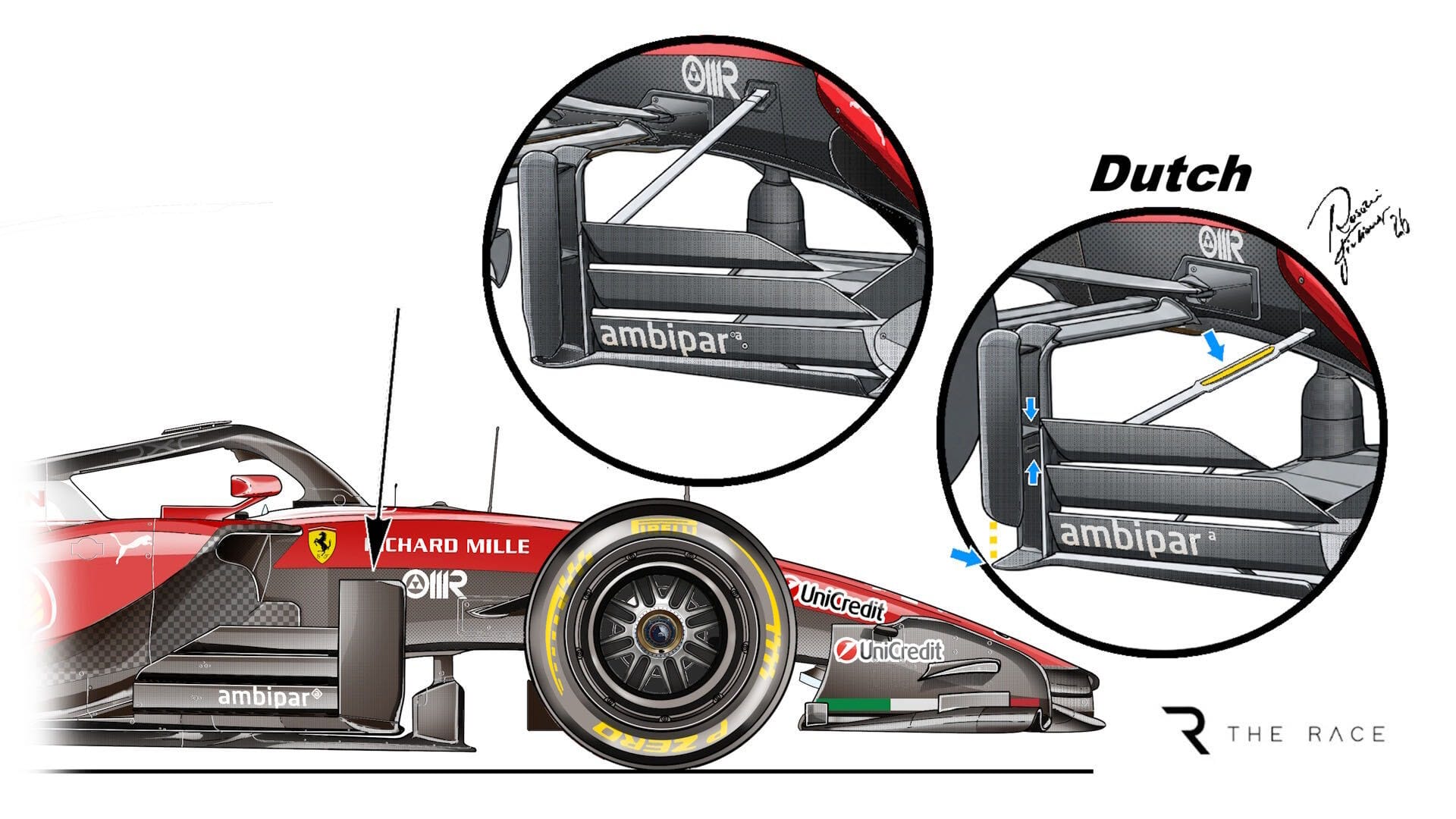
The floor used at Zandvoort was therefore mainly revised around the front floor boards and the diffuser.
The Race understands that the revised lateral floor edge will arrive later in the season, within a window currently stretching from Baku in late September to Austin a month later, with its exact introduction date still to be decided.
Overall, the Zandvoort package is estimated to have a potential worth around 0.15 seconds per lap.
So this is not a transformation of the SF-26, but another refinement of its aerodynamic platform, building on the floor evolution Ferrari had already introduced at Barcelona in mid-June - after which it won two of the next three grands prix.
Results have been harder to come by since the Silverstone win in July. Now it comes to Monza still with a degree of title hope for Lewis Hamilton in particular, and somewhat in need of home success. This is what it's doing to maximise its chances.
Monza package is more than a wing trim
The Italian Grand Prix is inevitably one of the races Ferrari places particular emphasis on, but this year the technical significance of its home event goes beyond Monza's traditional importance to Maranello.
On paper, the circuit's characteristics could play more to the strengths of the Mercedes- and Red Bull-powered cars.
Monza’s long full-throttle sections put a premium on outright power and energy management, while aerodynamic efficiency remains crucial. It is not simply a question of how much power is available, but how much downforce a car can retain for a given level of drag.
That makes finding the right configuration for the SF-26 particularly important.
And this is where Ferrari's work on the floor takes on a second purpose.
With active aerodynamics and the extensive use of straight-line mode, the compromise required for Monza could be less extreme than it has historically been.
The Italian circuit has traditionally been associated with the lowest-downforce wing configurations of the season, but The Race understands Ferrari has taken a somewhat less conventional approach in its search for low drag in 2026.
The rear wing will naturally form part of the circuit-specific adaptation, but it is not where all of Ferrari's work has been focused.
A high-downforce specification was introduced in Hungary, some elements of which – including the hanger flaps – were retained for the Dutch GP.
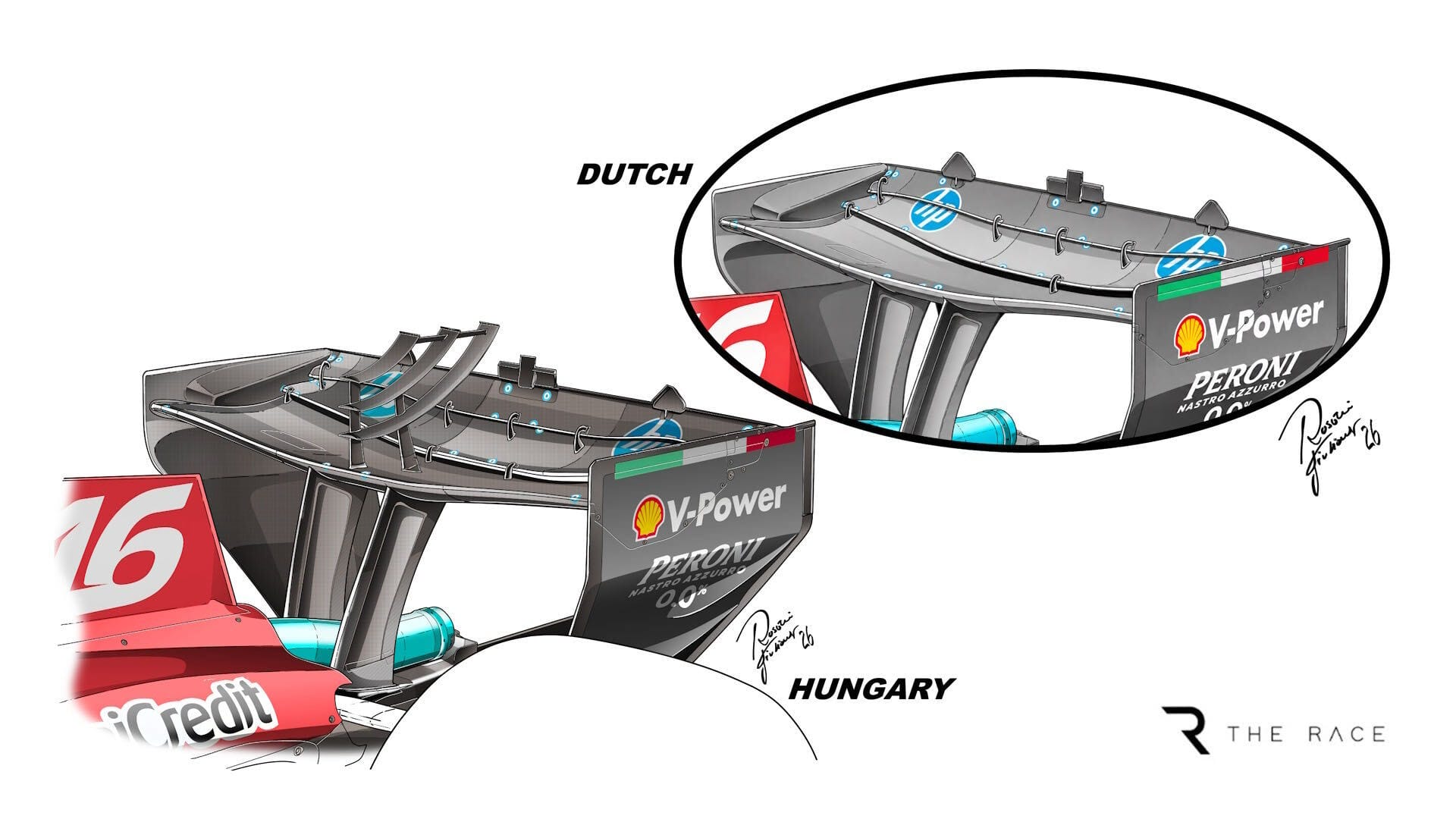
Those additional devices will be removed for Monza. But there will not be a completely bespoke 'Monza-spec' rear wing.
Instead, Ferrari will remove or revise elements across the bodywork and wings. The front wing is not expected to undergo any significant changes, while the rear wing will be cleaned up through the removal of the hanger flaps.
A significant part of Ferrari's low-drag work has instead focused, once again, on the floor.
The precedents
Ferrari has developed a Monza-specific adaptation of the floor aimed at reducing drag, following a similar direction to one it had already explored in Austria and Britain two months ago.
At those two races, the single vertical element in the floor-board area reappeared on the SF-26. That configuration is set to return at Monza.
It had previously been used through to Miami at the start of May before Ferrari switched to the subsequent three-element arrangement, which was revised again as part of the Zandvoort update.
This makes the timing of the Dutch GP upgrade particularly interesting.
The new floor represents the latest development baseline for the SF-26, but individual components can still be adapted – or removed altogether – according to the requirements of a particular circuit.
For Monza, Ferrari's approach is therefore not simply to take downforce off through the wings. It is also looking at how the floor itself can contribute to reducing the car's overall drag.
Why the exhaust wing stays
The ‘FTM’ or flick tail mode system – the small winglet positioned ahead of the exhaust outlet – has also been part of Ferrari's low-drag evaluation for Monza.
One of the options considered was removing it altogether, something Ferrari had already experimented with at the Red Bull Ring with both Spa and Monza in mind.
At Spa, however, the grip compromise and uncertain weather conditions led Ferrari to retain the winglet rather than sacrifice the downforce associated with it.
Its removal was considered again for Monza as Ferrari looked at ways of cleaning up that area and minimising drag.
However, The Race understands Ferrari has ultimately opted to keep the FTM, preferring to find drag reduction elsewhere on the SF-26.
Then there's ADUO 2
The other element that could make Monza particularly significant for Ferrari is the power unit.
Maranello has a new internal combustion engine specification ready, developed using the second of its two available ADUO opportunities, after the first update was introduced in Austria alongside a new Shell fuel specification.
The ADUO 2 engine represents only a partial step compared with the broader development work Ferrari is carrying out on its internal combustion engine for 2027.
But some of that work can be transferred to the 2026 unit, and the new specification is already ready to race.
The question is when Ferrari chooses to introduce it – and Monza is a realistic possibility.
Ferrari is looking to align the introduction of its ADUO 2 engine with the addition of the fourth internal combustion engine and fourth turbocharger of the season to each driver's pool.
Both Charles Leclerc and Lewis Hamilton have so far used three ICEs and three turbochargers.
Synchronising those two steps would allow Ferrari to introduce its latest engine specification at the same time as it brings a fresh unit into service anyway, then maximise the use of the upgraded version over the final part of the season.
There is no obligation for Ferrari to introduce it at Monza and a final decision has yet to be made.
The engine is ready, though, and the combination of Monza's characteristics and Ferrari's power-unit pool management makes the Italian Grand Prix a particularly logical opportunity to introduce it.