Our verdict on wild F1 Australian Grand Prix
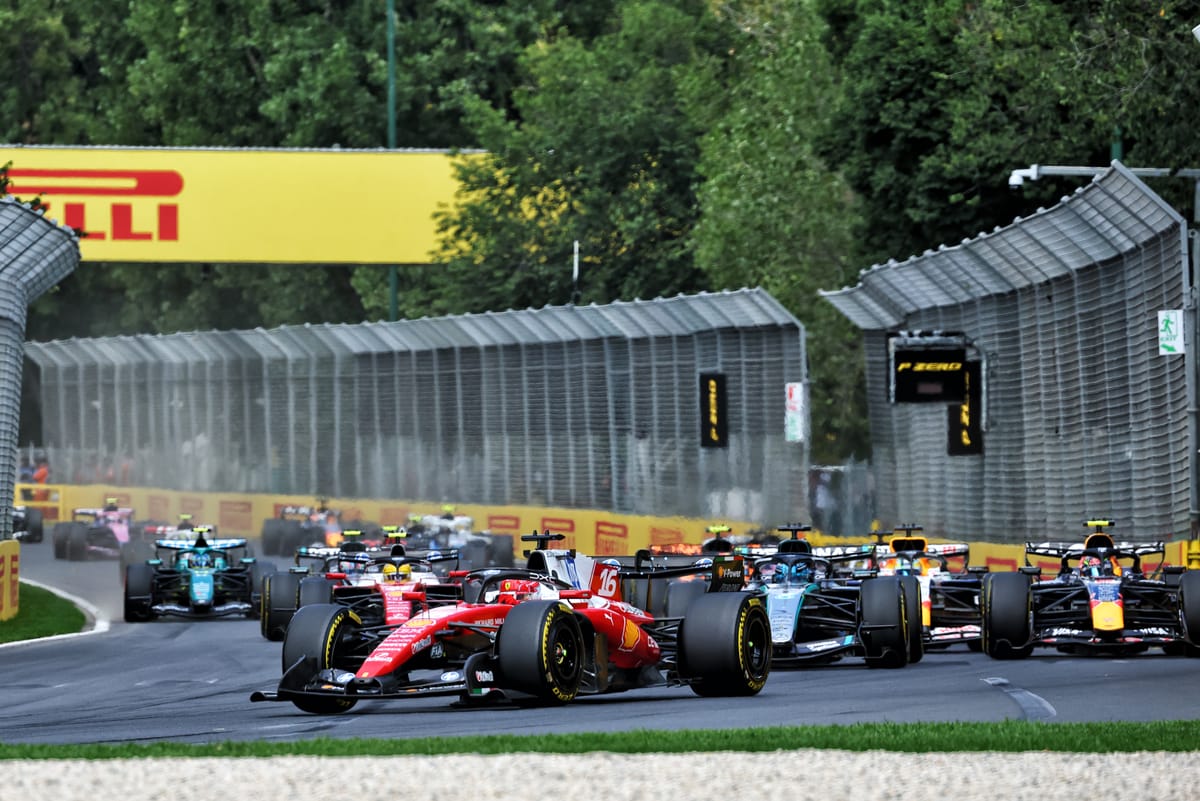
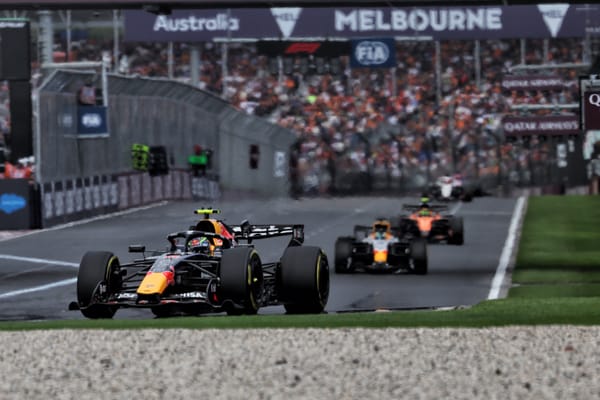
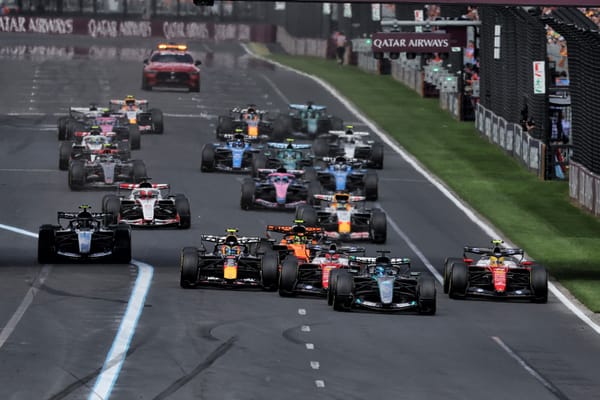
After all the pre-race fears and criticism, Formula 1’s 2026 rules era definitely kicked off in action-packed fashion at the Australian Grand Prix.
Does the frantic action of the early laps ease the sceptics’ fears? Or was it all a bit too contrived?
Here’s our team’s snap reaction to what happened in Melbourne.
2022 should be a warning
Josh Suttill
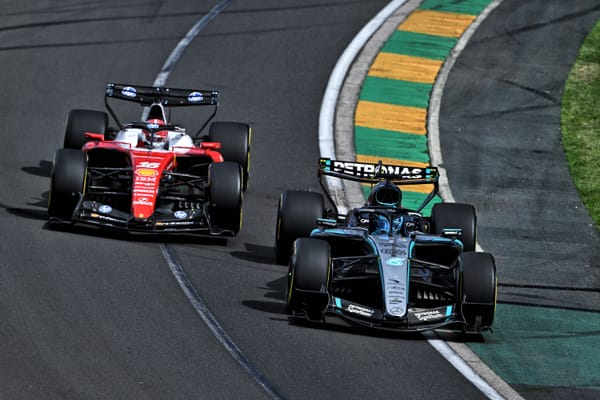
This was a great grand prix, seven lead changes in 10 laps and a proper Mercedes versus Ferrari battle, which fizzled out more due to Ferrari’s strategic mistakes (and weaker pace) than a fault of the rules.
But I can’t help but remember the opening races of 2022, where Max Verstappen and Charles Leclerc routinely diced for the lead across Bahrain and Saudi Arabia.
That promised regular wheel-to-wheel battles for race wins, but they were rarely a feature of the rest of the ground effect era that followed.
Just like they did in early 2022, the teams will optimise their 2026 packages, work out the secret to this formula (in this case, energy management) and that will take away a lot of the overtaking opportunities. As right now they’re arising from the nativity in understanding each team and driver has of this new formula.
So I think we should enjoy this kind of racing while it lasts in 2026, because there’s every chance these clever teams will find a way to make it more dull.
An intriguing redefinition of F1 racing
Edd Straw
The Australian Grand Prix showcased some of the benefits of the new regulations in terms of the variation in starts that allowed Leclerc to jump into the lead and, most interestingly, the challenge George Russell faced in getting past him.
Russell's conundrum captured the essence of this different kind of racing. Once, closing out a pass effectively meant being able to get ahead and then usually the next meaningful corner to ensure that you can stabilise the gap. Now, completing a move means not only getting ahead using the power advantage of deploying more of your battery energy, but also having enough to stay ahead. It can take a while for that to settle down, particularly at a track like Albert Park.
That explains why Russell tried in multiple places to make a move that could stick, none of which did. It was fascinating to watch because you could see Russell trying to work out how to solve the equation - where to make the move, how much battery did he need to have to be able to make the move and not be a sitting duck on the straight or straights that followed. All of this also allowed Lewis Hamilton and Kimi Antonelli to join the train, which would have complicated things further.
The divergence of strategy interrupted this and meant he didn't have time to play out fully, but I suspect Russell would have made a decisive move eventually given the pace advantage of the Mercedes. It's worth noting this track is towards the more challenging end given how energy-poor it is, but it demonstrates the knowledge and understanding the teams need to build to optimise their approaches in races.
Whereas before it might be a question of what pace advantage do you need to pass, now you need to know where the battery state of charge must be. So let's say you make the pass on the approach to Turn 9, how much charge will you need to come out of Turn 10 with relative to your opponent not to be repassed? There are countless game theory implications to that question, which is encouraging.
The concern is these are questions the teams and drivers will quickly learn the answers to, allowing them to tune for each track, meaning such battles will likely be resolved more quickly as time goes on. But in Australia this created some gripping scraps with wheel-to-wheel moments in unusual places, even if by the chequered flag much of the finishing order was, as you would expect, dictated by underlying car pace.
The increased variables and disorder also forced drivers to think on their feet, meaning Leclerc can at least take satisfaction from the fact that he managed to hold position and even draw a lock-up out of Russell even if the result wasn't what he hoped.
A sigh of relief for F1
Ben Anderson
I think F1 can breathe a sigh of relief after that. It was a perfectly acceptable season opener in terms of on-track action.
What made it was Leclerc forcing his slower Ferrari into the lead at the start. Slower car defending from faster car always makes for some fun at the very front, whatever the rules.
And that fun was amplified by no one really knowing the best way to race wheel to wheel in the early laps, so it looked more difficult than it previously might have been for the faster car - in this case Russell’s Mercedes - to get back ahead.
It was definitely fun to watch them go at it for a short time, especially because Leclerc didn’t make it easy and Russell found it difficult - for whatever reason - to reassert himself.
In terms of the TV spectacle, I suppose it doesn't really matter if a lot of that passing is happening simply because of battery power causing one car to slow down more than the other at certain points. It's always cool to see places change both into and out of a corner, rather than being one and done.
This battling also allowed the cars immediately behind them - Hamilton’s Ferrari and Antonelli’s Mercedes - to close back in rapidly. It’s a shame the early action didn’t persist and this didn’t become a four-way fight for victory.
Unfortunately, between a combination of Ferrari’s flat-footedness under the first VSC and the sheer pace advantage of the Mercedes in a steady state, this didn’t happen.
Once Russell reclaimed the lead from Hamilton bang on mid-distance, this race became what it would have been had the Mercedes been able to get off the grid better - mostly processional.
So all in all it was… OK. But it’s always interesting when the rules are brand new and nothing has been properly figured out by anyone. There’s more unreliability than normal, no one knows how the tyres work and what the best strategy is etc.
That jeopardy and naivety is there whenever the rules are brand new, so we need to be careful of declaring the whole thing a success that's somehow specific to this particular rules set.
I’m certainly glad the race was the best bit of the weekend to watch, but that doesn’t change the fact the cars - and especially these energy-starved power units - don’t work properly, which makes them underwhelming to drive and to watch onboard.
On TV that doesn’t matter so much, especially if the racing is close. TV has never been good at translating a proper sense of speed and producers can obviously be tactical about what they show and when. Certain portions of the audience won't care either, so long as there's close competition.
And there’s obviously been a nice bit of jumbling of the old competitive order, with Mercedes and Ferrari improving compared to last year, McLaren and Red Bull regressing, and the midfield still quite unpredictable.
But in terms of the race itself, it really all hinged on that Ferrari cameo at the front. The first 29 laps were genuinely interesting. The rest, I would say not so much.
Fun race doesn't mean concerns aren't valid
Scott Mitchell-Malm
We needed a race to judge the rules holistically, and in the end this opening weekend has been very underwhelming at its worst, chaotically fun at its best, and averaged out as ‘a different kind of F1 but still F1’ overall.
Watching everybody still have to figure so much out in real-time was brilliant in the opening laps and as entertaining as I hoped it would be with start performance variance, drivers pushing to different degrees, battery deployment causing some big early swings. And the process of sifting through that to work out a developing picture wasn’t too bad as it didn’t get messy or too random.
Once things settled down it was a fairly stagnant F1 race, just with bigger battery offsets, and that’s mostly much of a muchness to me – although I’d rather not see or hear cars super clipping halfway down the straight to Turn 3 instead of chasing the car ahead, which happened.
It’s important to remember that a reasonably good first race doesn’t render the criticism to this point invalid. There’s stuff to dislike still, problems to try to mitigate as best as possible. And there’s the caveat that the best thing about this race was the uncertainty - which will probably fade as teams get on top of the best way to go about the start and the opening laps.
This will have been a massively useful data-gathering exercise for them to do that. Hopefully some of the variables remain powerful, and racing can be interesting.
It will be interesting to see if that side gets better or worse going to tracks that will be less bad for qualifying.
The element that saves the racing
Matt Beer
I love a wild race start and an unpredictable grand prix, and I’m not too much of a purist about any element of motor racing - I just want it to be open enough to hold an audience’s attention (mine included).
But I did have a niggling concern with some of the early moves in Melbourne that it was all too easy as drivers with more energy in the right places surged easily past electrically breathless rivals on the straights.
Then as the laps unfolded you could see drivers figuring out the tactics more and everything became less simple in the best way.
I was never too fond of ‘drive-by’ DRS passes and always wanted the straightline speed boost to be just enough to set up some proper action in a braking zone. Get the cars close enough together to let them race, not do all the racing for them.
As drivers worked out how they could best defend and counter-attack, far more of the Melbourne action was actually happening in the braking zones - and the passes weren’t foregone conclusions anymore.
Like Josh, I fear this will only last a few races before teams perfect it all a little too much. But it’s going to be fun while it lasts, and the element of tactical thinking involved makes this less ‘fake’ than DRS for me.
Exciting but is it for the right reasons?
Gary Anderson
I’m still trying to take it all in, it was exciting, but I’m still not sure it was for the correct reasons.
However great to see 16 cars actually making the chequered flag, that’s a testimony of the ability of all these teams to adapt to and optimise these new regulations.
The start played out as expected with Ferrari being better off the start line, probably because of its small turbo PU concept, but the best car's underlying performance falls to Mercedes.
I don't think the race result would have been affected by Ferrari not stopping during the first VSC, but it’s good to see them in the battle, perhaps as Hamilton said, it should have at least pitted one car to keep more pressure on Mercedes by being on the same strategy, but hey ho, it’s still very early days.
Great start but race turned flat
Eden Hannigan
When the race started, it felt like we could be on for a classic to kickstart this new regulation cycle. Ferrari kept its fast starts from pre-season testing, which allowed the racing between Russell and Leclerc to ignite the opening laps
Instead, after the two VSCs and a typical Ferrari strategy blunder, to me the race fell into a lull it could never really get out of.
Sure, there were some battles and close contacts throughout. Esteban Ocon revived his rivalry with Pierre Gasly, while Liam Lawson produced something similar with Sergio Perez.
Last season’s title rivals Max Verstappen and Lando Norris produced a late fight for fifth, so there were things happening to provide some entertainment.
But to me, there was a slightly inauthentic feel to this race. Instead of feeling like the overtakes were done thanks to genuine pace, it instead gave the impression of 20 drivers trying to figure out how to manage the battery, power and overall get a grip of these cars.
Sure, it was fun and I expect in this adaptation period there will be ups and downs, but after the opening laps I may have had my expectations raised far too high. Much like the others, I also have concerns that this could be another false dawn at the start of a new regulation cycle.