Cadillac's already achieved its first big F1 milestone
Cadillac has cleared a “big milestone” on the way to its Formula 1 track debut in January, which will be a critical moment in preparation for its first season.
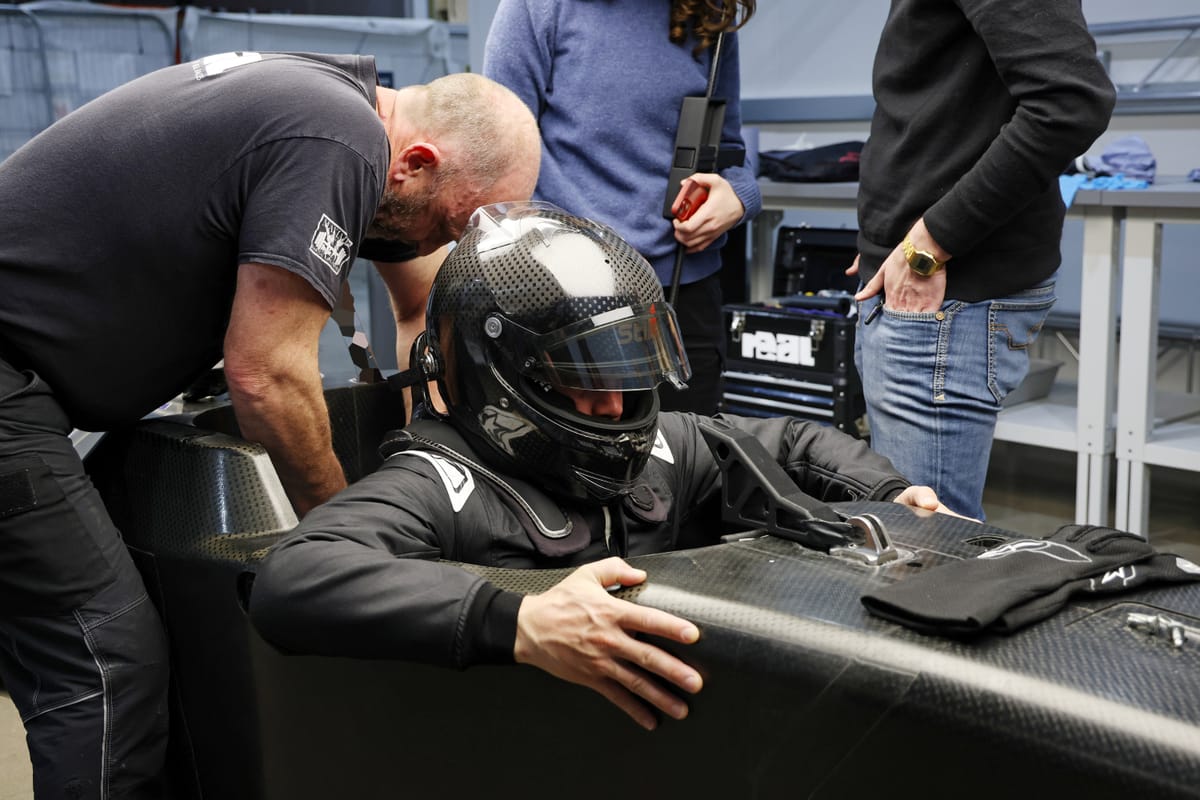
Earlier in December, Cadillac passed the mandatory FIA homologation tests for the “whole rear end of the car and the monocoque itself,” team principal Graeme Lowdon told The Race.
The FIA technical regulations detail more than 20 areas across 17 pages, with homologation and testing requirements for various areas including the front and rear impact structures, tests of the survival cell (the monocoque itself) and engine separation calculations.
What Cadillac has passed with its chassis includes a frontal impact test with a force of at least 52G, while the gearbox casing and rear impact structure it is designing has to survive a dynamic rear impact test that involves them being fixed to the ground while a solid object weighing 875kg is projected into it at 11 metres/second or faster.
Passing these tests by early December is “something I think the design group within the Cadillac Formula 1 team can be really proud of”, Lowdon said.
“If we look at the design challenges in the new formula, with the weight of the car significantly reduced, these tests become effectively more and more stringent in comparison, because you're targeting a lower overall car mass.
“So for any team to pass them, I think it's a milestone. For us, it's more so because we haven't got years and years and years of team-based experience of designing these components.”
This allows Cadillac to proceed in getting the car ready for a January shakedown and then the behind-closed-doors collective test in Spain at the end of the month.
Had Cadillac failed any of its tests, it would leave it with a major redesign that would stress the overall programme for the car, but may also compromise specific areas like the cooling architecture and overall weight.
And given Cadillac only had the green light for its 2026 entry at the start of this year, losing more time re-taking homologation tests would have been a setback it simply could not afford.
Despite that, the first version of a Cadillac F1 car will be immature even by the expected standards of all the 2026 cars in the private Barcelona test.
Cadillac is “on schedule”, according to Lowdon, but the “super complicated” cars required 85,000 components to be designed, manufactured, or subcontracted to have everything required for the season opener in Australia, "and if any one of them is late, it can impact your ability to test or race”.
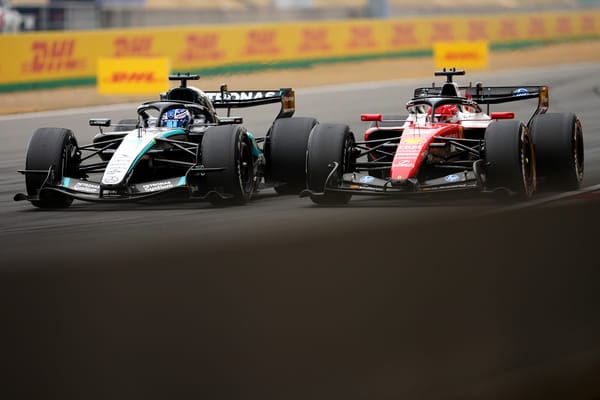
As such, Cadillac has “prioritised delivery over everything else”, because there is a serious need to get to the track in January and start building experience as a team on the ground - with its only testing to date being a two-day run at Imola borrowing a 2023 car from Ferrari.
“You're constantly faced with these trade-offs,” said Lowdon.
“What we've done, which I think is sensible, is prioritised delivery over everything else, because we're still building our factories and manufacturing facilities and all sorts of other things, and they'll take years to come fully online.
“Some of the other teams know how far to push their internal production processes to the absolute limit. That wouldn't be a sensible approach for what we're doing coming in as a new team.
“You have to leave some margin, and like everything in Formula 1, as soon as you make any decision, there is a compromise, and there is a cost to it.
“But equally, we've got programmes in place to catch up in those areas as well. The good thing about the ’26 season is there's an awful lot of testing opportunity.
“Those opportunities can give us a chance to bring new parts even at that stage.”
That suggests Cadillac will be bringing various upgrades to the two Bahrain tests in February and its car will likely evolve rapidly through the year as long as the team’s production capacity can keep up.
Performance is a secondary priority to simply banking reliable running in the first place, though, hence Lowdon viewing a January test as “helpful” rather than an unusually early start and a major logistical headache when the team is flat out trying to be ready for its F1 debut.
“Every single bit of focus is on ’26 so having the opportunity to test is super valuable,” said Lowdon.
“It's not a mandatory test at the end of the day. So if teams decide that it's not useful, they won't go.
“We know that the challenge that we have is different. The very fact that we can actually go and test is great.
“At the minute, it was super difficult for us to do a test [with an old car]. Unbelievably difficult. It's not difficult for any other team to do it because they've got previous cars. We haven't.
“That's the kind of thing where just being able to test in January is helpful.
“With a project like this, every day is a school day, and you're learning something all the time. And the quicker we can get the car on the track…you have to remember that as a team, we don't have the benefit that the other teams have of having a windtunnel that's correlated to what we're seeing on the track.
“These teams here are running a ’25 car, and they'll know their correlation to their ’25 models. So when they start putting the ’26 model in that same windtunnel, they'll have a good idea about whether it's accurate. Or what kind of scenarios would cause the correlation problems, or whatever.
“We have none of that at all. There's nothing that's been in our windtunnel or CFD that's ever turned the wheel on the track yet.
“So the quicker we get that element of feedback the better.”