10 things we learned from the first Bahrain F1 2026 test
From big pecking order clues to political games, from 2026 rule problems to a clear team in trouble, Formula 1’s first official week of testing at the Bahrain Grand Prix venue in Sakhir properly delivered in terms of big storylines.
Here are nine major takeaways.
Teams are desperate not to be favourite
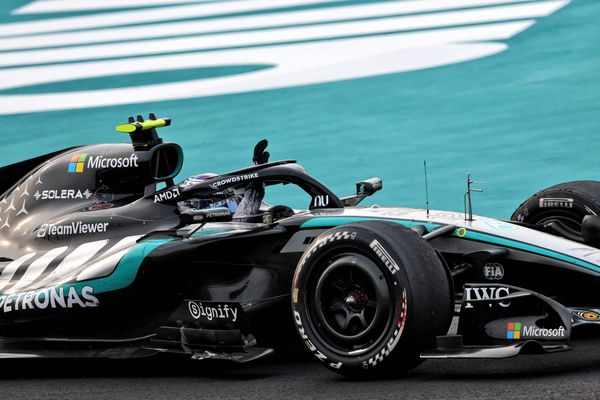
Mercedes left Barcelona as the champion of pre-season. Red Bull took that mantle on Wednesday in Bahrain. Ferrari was turning heads on Thursday. By Friday it was Mercedes again.
And all the while everybody tried to shift the spotlight onto someone else, because all the top teams are desperate not to be labelled fastest.
Ferrari thinks Mercedes is deliberately hiding its pace, the unspoken implication being that it was doing so to downplay a perceived engine advantage and reduce the likelihood of a late compression ratio rule change. Something Max Verstappen was more explicit about, insinuating that Mercedes would suddenly be a lot quicker on the straights in Melbourne.
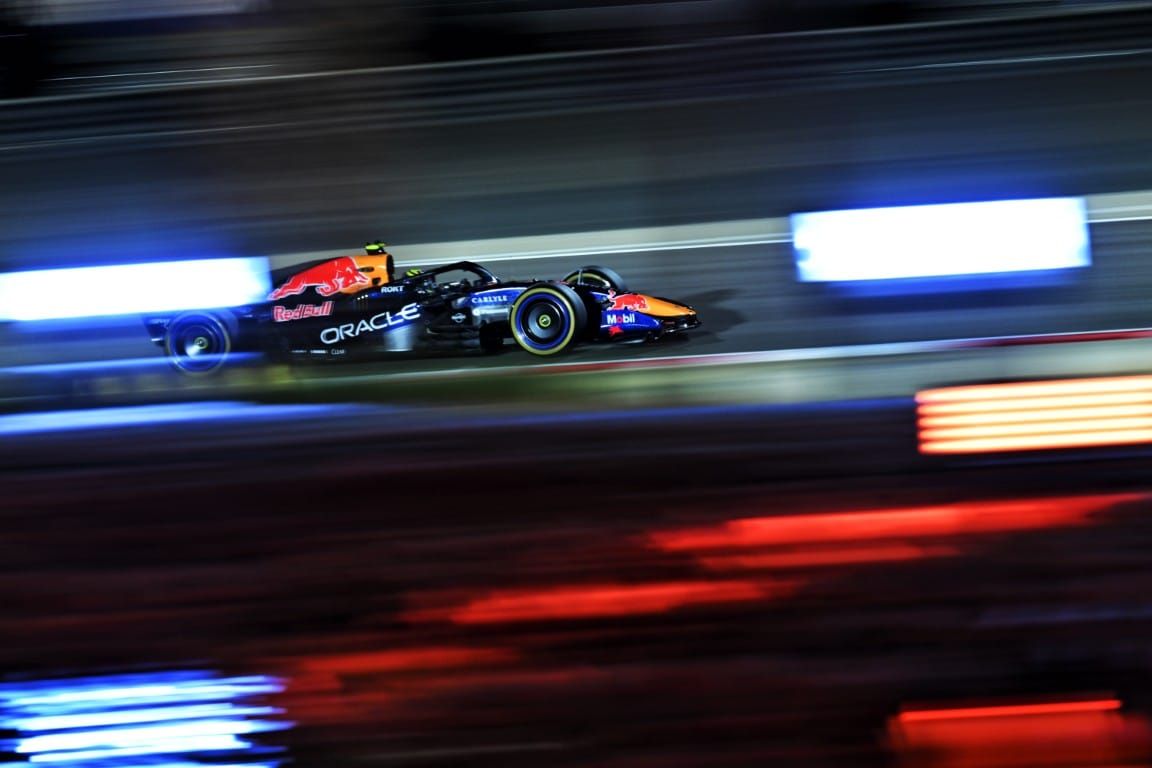
Mercedes and its customers, for their part, have waxed lyrical about Red Bull all week, praising the preparation and subsequently the performance of its brand new in-house engine.
Red Bull has batted that away emphatically, as it also believes Mercedes has plenty more to show, and thinks it is only fourth-fastest itself.
But Mercedes customer McLaren seems to be keen to claim that fourth position for itself too, as it argues this ruleset favours works teams given the intense energy demands and the benefits of having your car and engine perfectly designed for each other and getting access to key engine information at the earliest opportunity.
What the laptimes tell us
Persistent timing system crashes and Red Bull not doing a race simulation on the final day mean the race sim picture is incomplete - but at least there is a picture.
The McLaren of Oscar Piastri, the Ferrari of Lewis Hamilton and the Mercedes of Kimi Antonelli all did race simulations on Friday afternoon - Antonelli going about half an hour later than the other two.
There was not a ton here between Mercedes and Ferrari, at least not conclusively. In stint one, which both cars ran on the C3 soft, Hamilton was faster to start with, but Antonelli kept the pace better. In stint two on C1 hards the Mercedes did appear to have a decisive advantage - but data is missing after 12 laps.
RACE SIMULATIONS (MORE IN-DEPTH ANALYSIS HERE)
STINT 1
Antonelli - Soft, 16 laps (1m40.128s avg)
Hamilton - Soft, 17 laps (1m40.280s avg)
Piastri - Soft, 11 laps (1m40.947s avg)
Stint 2
Antonelli - Hard, 12 laps* (1m38.547s avg)
Hamilton - Hard, 17 laps (1m38.929s avg)
Piastri - Medium, 20 laps (1m39.604s avg)
Stint 3
Hamilton - Medium, 6 laps* (1m37.461s avg)
Piastri - Hard, 18 laps* (1m38.472s avg)
* timing cut off when Antonelli was in second stint, and Hamilton and Piastri in third
What is clear enough is that the McLaren was a step back, across all stints, maybe by as much as half a second.
Red Bull engine a 'reality check'
Red Bull has been winning praise for the work done on its first F1 engine since the Barcelona test, but that was mainly because it was surprisingly reliable straight away.
In Bahrain, that surprise and respect has turned into low-level fear. Mercedes asserted the Red Bull is a second quicker on the straights because it has unmatchable charging capabilities, so is deploying electric power more around the lap.
The work done on the gearbox, too, has clearly facilitated a great package in terms of making first gear quite pleasantly usable for its drivers, a rarity in modern motorsport. This means Red Bull can maximise battery charging potential with aggressive downshifts without terribly destabilising the car.
Mercedes driver George Russell thus described this test as a “bit of a reality check for us” because after a winter of speculation that his team was in the best place, in Russell’s own words Red Bull has now “knocked it out the park”.
Russell’s adamant “they're very much the team to beat” even though Mercedes hit the top of the times on the final day. He says making improvements across testing at the same circuit is more straightforward, but it’s Red Bull’s pace at the starts of these tests that’s caught his eye.
Come Australia, Russell is already convinced Red Bull will be ahead.
Starts are a 'recipe for disaster'
What first emerged in early testing as a bit of intrigue about the high-revving nature of F1 2026's race starts has turned into a full-on safety issue.
With a good start demanding drivers rev engines for around 10 seconds to spool the turbo up, while at the same time not overcharging the battery, finding consistency is proving very difficult.
And if repeated mistakes are happening in low-stress conditions of pitlane exit practice getaways, it is only going to get worse amid the stress of a real start at a grand prix.
But what has alarmed drivers – and now several team bosses – is that when things go wrong with the starts, they go badly wrong. And that means there is a risk of drivers being left stranded.
Throw into the mix cars on cold tyres being in straight mode, with minimal downforce, and it is little wonder that Piastri has labelled it all a "recipe for disaster".
Calls for changes to the start procedure have grown very loud – with the FIA set to come under pressure over the matter at next week’s F1 Commission meeting.
Williams recovery has a pace question mark
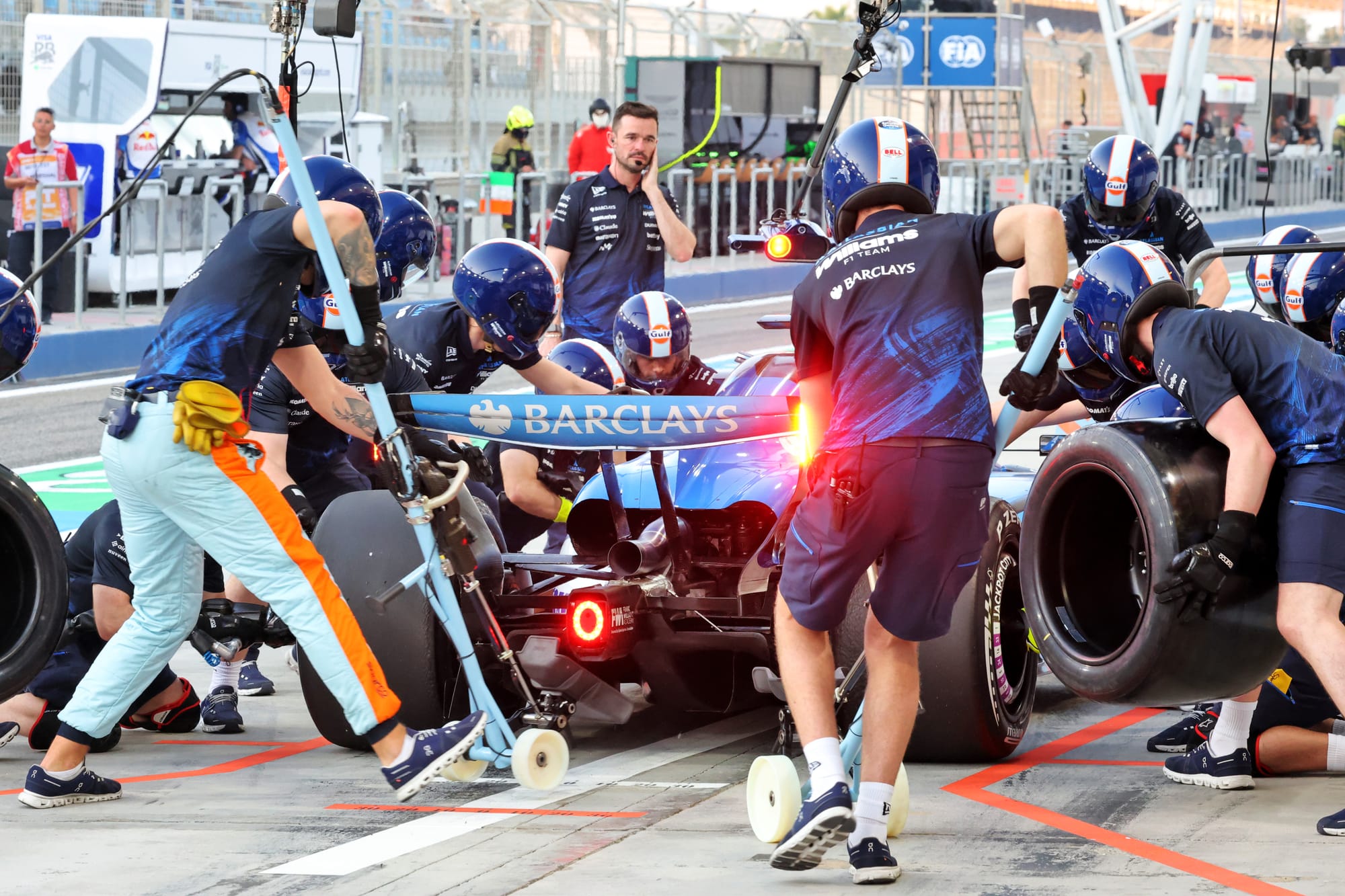
Having failed to make the Barcelona test, Williams achieved its primary objective for Bahrain by completing more laps than anyone else.
DISTANCE COVERED (km)
1 Williams 2245
2 McLaren 2240
3 Ferrari 2213
4 Haas 2072
5 Audi 1867
6 Red Bull 1823
7 Racing Bulls 1769
8 Cadillac 1704
9 Alpine 1683
10 Mercedes 1461
11 Aston Martin 1098
This, combined with the fact it had completed two filming days before this test started, has proved the Williams is reliable and allowed some serious work to be done.
However, there are bigger question marks over the performance of the car. Yes, it looks comfortably in the midfield - but not at the head of it. And as this is a team that sees fifth place as its new baseline, that means not everything is all right yet.
The car doesn’t look as comfortable on track as the Haas and Alpine. There’s a hint of perhaps running a little bit stiffer than ideal, and the grip suffering as a result. The race simulation on Friday afternoon was notably slower than that of the aforementioned teams, too.
But Williams is behind on running, so the key for the next Bahrain test is to understand the data, improve the car set-up and unlock the performance that could take it to the head of the midfield.
The team in the most trouble
Brand new car and engine rules meant there was a good chance a ‘crisis team’ emerged in testing this year.
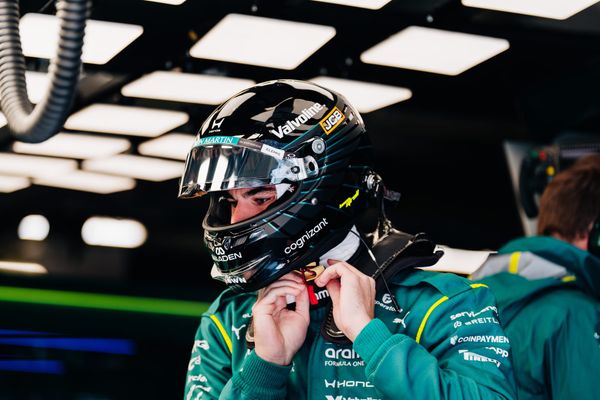
Aston Martin might not go quite that far, but it is the team most in trouble. After the bold AMR26 turned heads when it appeared in Spain, its only headlines have been for negative reasons here.
Starting the test unreliably, looking awkward on track all week, and seemingly being seconds off the pace, is a nightmare beginning for a partnership that promises so much.
This is far well short of the standards expected for a team led by Adrian Newey, backed by the financial might of Lawrence Stroll, powered by a works Honda engine, and led on the driving side by Fernando Alonso.
The good news is there’s a whole other test still to go to make progress - but as team principal Mike Krack said, the main lesson this week is there’s a lot of work to do.
The best midfield team…by default
The smallest team on the grid has much to be happy about after the first test in Bahrain - partly by virtue of other teams struggling conspicuously.
The top four teams from the end of 2025 look a cut above the rest, but Haas, at least after the first week’s showing and some solid mileage numbers at Barcelona, appears to be towards the top of the next group.
Ollie Bearman set the eighth-fastest time of the test and Esteban Ocon the ninth-fastest, but more impressive is Haas’s place in fourth in the mileage charts - just shy of 400 laps overall.
Team boss Ayao Komatsu was elated with the team’s start to 2026 - understandably so - as it really hasn’t had a major hitch in Bahrain, and only one at Barcelona.
Unremarkable? Maybe. But maybe it’s remarkable just how decent Haas looks right now compared to some others…
Cadillac's had the best start possible
Cadillac logged over 1700 kilometres in Bahrain - more than Alpine, Mercedes and Aston Martin. It also showed respectable pace, ending up 3.7 seconds off on headline laptimes - and 10th-fastest of the 11 teams, ahead of Aston Martin.
As a result, attention has turned to exploiting more of the potential of the car even though no proper performance runs have yet been attempted. All of this means the team has created a firm foundation to build from.
All this points to backmarker respectability. For a start-up team, that is as good as a win given the scale of the challenge.
There were no major problems, it looks the part on and off track and while there is still a huge amount of work to be done, the performance in Bahrain is testament to how rigorously the process of building up the team has been executed.
The real Audi isn't amazing - but isn't bad
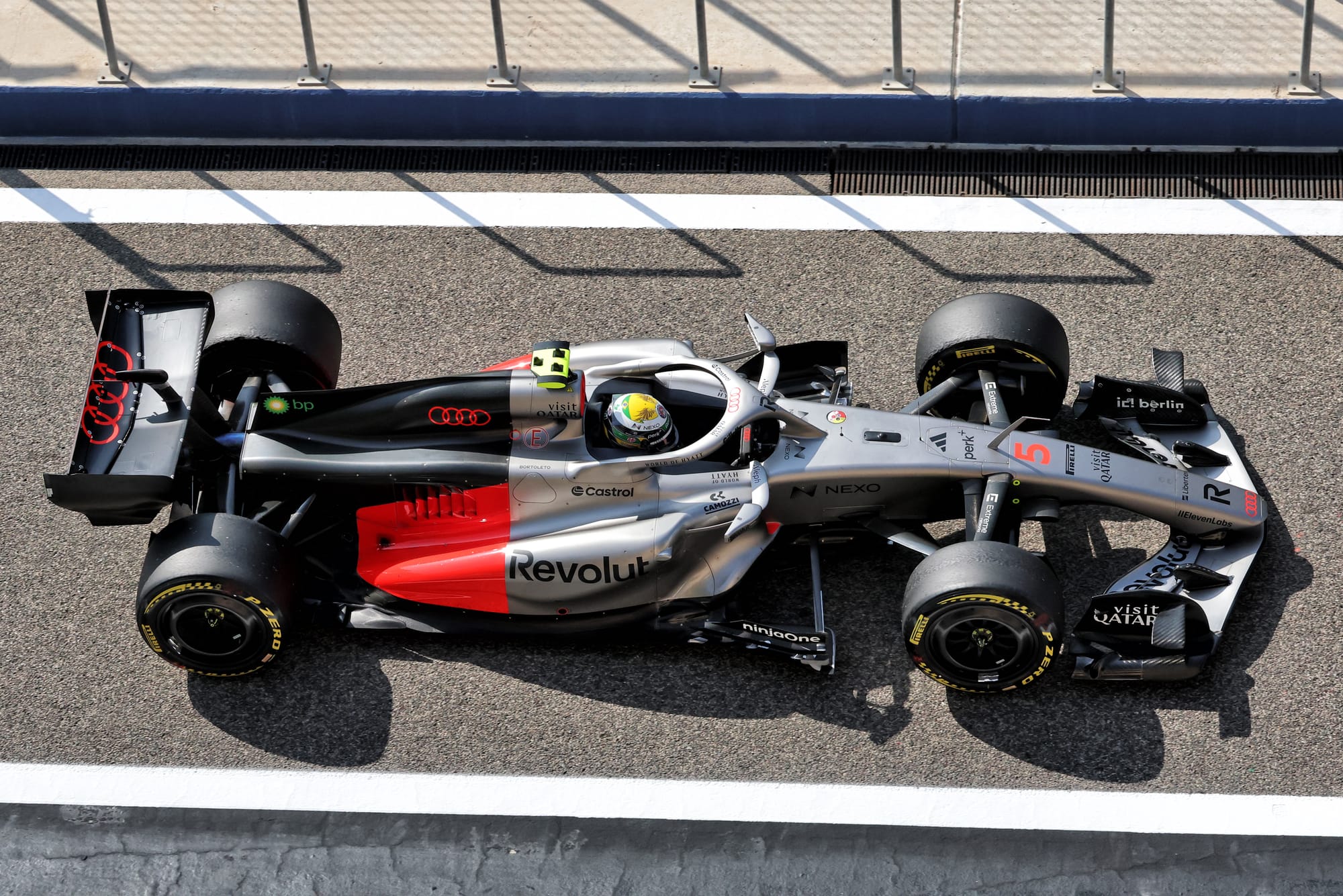
Even though Audi ran its 2026 car so early it was always likely to be the one that changed most by Australia, we were surprised by just how different it was this week.
In aerodynamic terms it is close to a B-Spec. The bodywork has been totally revised, with vertical sidepod inlets that somewhat resemble the Mercedes zeropods, little details popped up here and there like slots in the keel floor, and Audi even changed the entire front wing with a different activation system.
The real Audi turned up in both design and function. It’s not stunningly good, but it was never expected to be. There’s work to do to make the car more compliant and tune the engine better, as it is clearly not as far along as fellow newcomer Red Bull Powertrains.
But it’s more reliable, seems reasonable in the midfield, and it now has a sturdier foundation than the one it started building in Spain.
Qualifying prep tactics are odd
While it is too early for Pirelli to know how degradation is going to be with the new 2026 cars and tyres, as nobody is running close to the limit, it is seeing the first evidence of some quirks with its products.
One of these is a potential impact on qualifying – as teams and drivers now have to balance the need for tyres to be in the right operating temperature with having a full battery.
Achieving both those targets is proving to be too difficult for a single lap, as the speed needed to keep the rubber in check ends up burning through too much energy.
Early indications are pointing to teams potentially favouring double preparation laps before qualifying efforts this year – which will give them enough time to get their ducks in a row.
With an extra two cars on the grid this year, if everyone ends up doing extra laps in qualifying it could lead to a few more 'traffic paradise' moments for everyone.