Australia's a damning indictment of F1 2026's worst trait
In the end, we did not need to wait for Australian Grand Prix qualifying to judge Formula 1 2026’s worst car trait.
What Saturday’s session – and scathing comments from some of F1’s best drivers afterwards – confirmed was painfully obvious already on Friday. And calling it painful is a kindness.
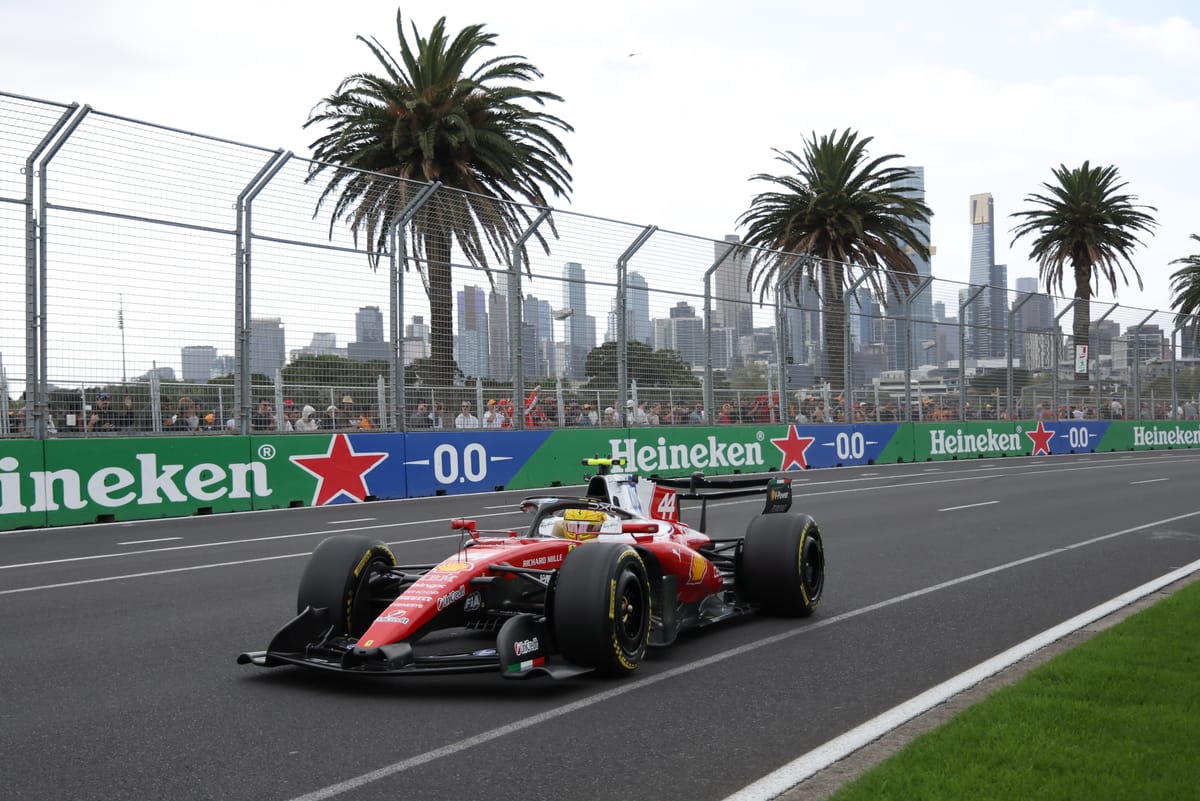
There’s a stretch of about a kilometre at the Albert Park circuit that encompasses the best two corners on the track: the fast, blind-on-entry Turn 6 right-hander and then the left-hand Turn 9 at the end of the flat-out kink that leads into the high-speed Esses.
Well, they used to be the best corners. No longer. They have been neutered - Turn 6 to a lesser extent, admittedly, but Turn 9 in a way that makes it a brutal watch. Cars are slowing down by more than 50km/h on the approach there while still on full throttle because the engine has to work as a generator for so much of the final part of that flat-out section.
It is an order of magnitude worse than what testing hinted at in Bahrain. Fernando Alonso’s claim the chef in Aston Martin’s hospitality could drive the car in Turn 12 could potentially be glibly dismissed there as a reflection of his team’s particularly problematic situation – but it afflicted every single car in Australia to an underwhelming degree.
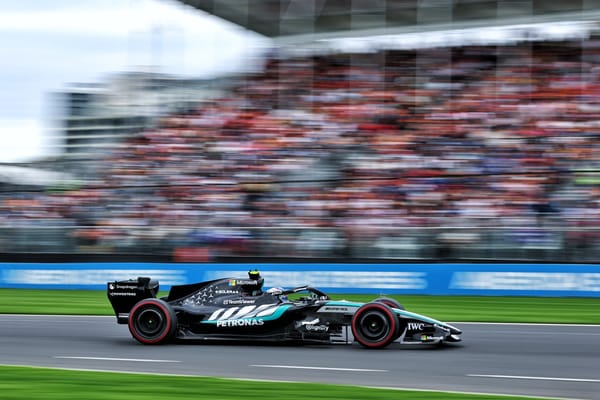
Comparing these cars to their predecessors has limited value but here it serves a purpose simply to highlight the extent of the oddity. George Russell’s pole lap has a similar maximum speed on the run to Turn 9 as Lando Norris’s from a year ago. At the point they enter the corner, Russell’s 2026 Mercedes is some 30km/h slower than Norris’s 2025 McLaren. And it has got there via a gradual ramp down.
If this was just a difference in downforce levels prompting a longer braking zone, it would be fine. That’s broadly what’s happening at Turns 1 and 2, for example, or the slow penultimate corner. But this speed reduction is not being defined by grip level. The challenge of picking the braking spot and throwing the car in at high-speed seems almost non-existent in Australia, where the cars are intentionally not being taken to the edge.
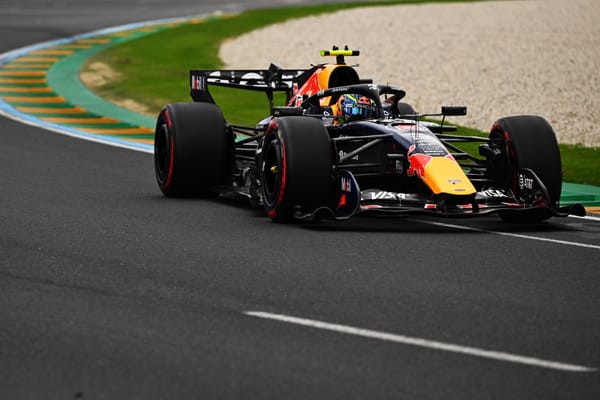
Thank goodness for Mercedes providing a better quality for the 2026 case study, at least. The next-fastest car - Isack Hadjar’s Red Bull - was around 10km/h slower than Russell at the end of some straights with weaker deployment. Hence the non-Mercedes voices are particularly moody.
This does not mean there is no driver skill on display or anything like that but qualifying as a spectacle has become compromised. Not by technology or car design but by regulation. It is the worst thing to watch with these cars because who wants to see deliberate under-driving in the fastest corners because the time sacrificed will be paid back in multiples on the straights? Unsurprisingly the drivers are making it clear it is the worst thing about pedalling them, too.
It is still sensible to observe the first race before drawing a final conclusion from Melbourne. Maybe there is something to this formula that will reveal it as a Sunday saviour – if so, qualifying compromises could be a little easier to stomach. It is also important to bear in mind this will be at the extreme end of the spectrum, and is therefore sensible to think that even next week China could be different, that going back to Bahrain wouldn’t be nearly as bad, and that there will be several tracks this is not as big a problem and the drivers are not so discontented.
But given the first few races include Saudi Arabia (assuming it goes ahead) and Japan, two circuits that will be hard on deployment, it would be naive to think that the first half-a-dozen races or so will overwhelmingly change anyone’s negative opinion of these cars. The big question is what can be done about it. A knee-jerk reaction in terms of rule changes could be a big mistake.
There are also still some upsides. The drivers might not like having less grip in the slower corners, but they are better to watch there - in person, on TV, on onboards. When the cars are not energy-limited, they have immense power and better agility than their predecessors.
We should not pretend there is nothing good about them at all. But we should be able to accept the limitation that has been laid bare before us – even if, again, this is F1 2026 at its worst.
There is very little challenging about coasting into a fast corner 50km/h slower than before.
There is nothing satisfying about excitedly watching the onboard of a pole lap, only to hear the fastest car slowing down and even downshifting at full throttle.
And there is ultimately something very unfulfilling about the best part of qualifying – watching a driver put their car on the limit – having to be compromised to maximise performance on the part of the track that has nothing to do with driver skill: the straights.