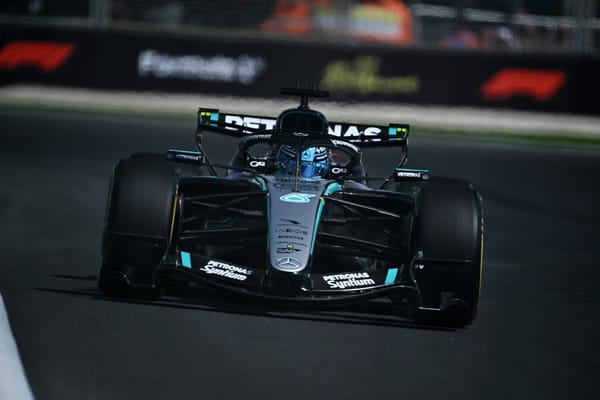
Audi fears significant deficit if 2026 engine tricks allowed
Audi believes Mercedes could enjoy a “significant gap” at the front of Formula 1 in 2026 if it is fully exploiting tricks with engine compression ratios.
A technical row has been bubbling away for weeks over Mercedes and Red Bull potentially having found a clever way to run with higher compression ratios than the rules appear to allow.
A limit of 16:1 laid down in the 2026 regulations is measured in ambient conditions, but it is suggested that the two manufacturers have found a way to run at a higher limit when engines are running at operating temperature.
The issue has prompted Audi, Ferrari and Honda to write to the FIA seeking answers about the legality of such designs, and further talks are planned at a meeting with the governing body that is scheduled for Thursday.
But the reason why it has become a big issue is now clear, with Audi chief operating officer Mattia Binotto believing that any manufacturer that is able to run with a higher compression ratio will have a big advantage.
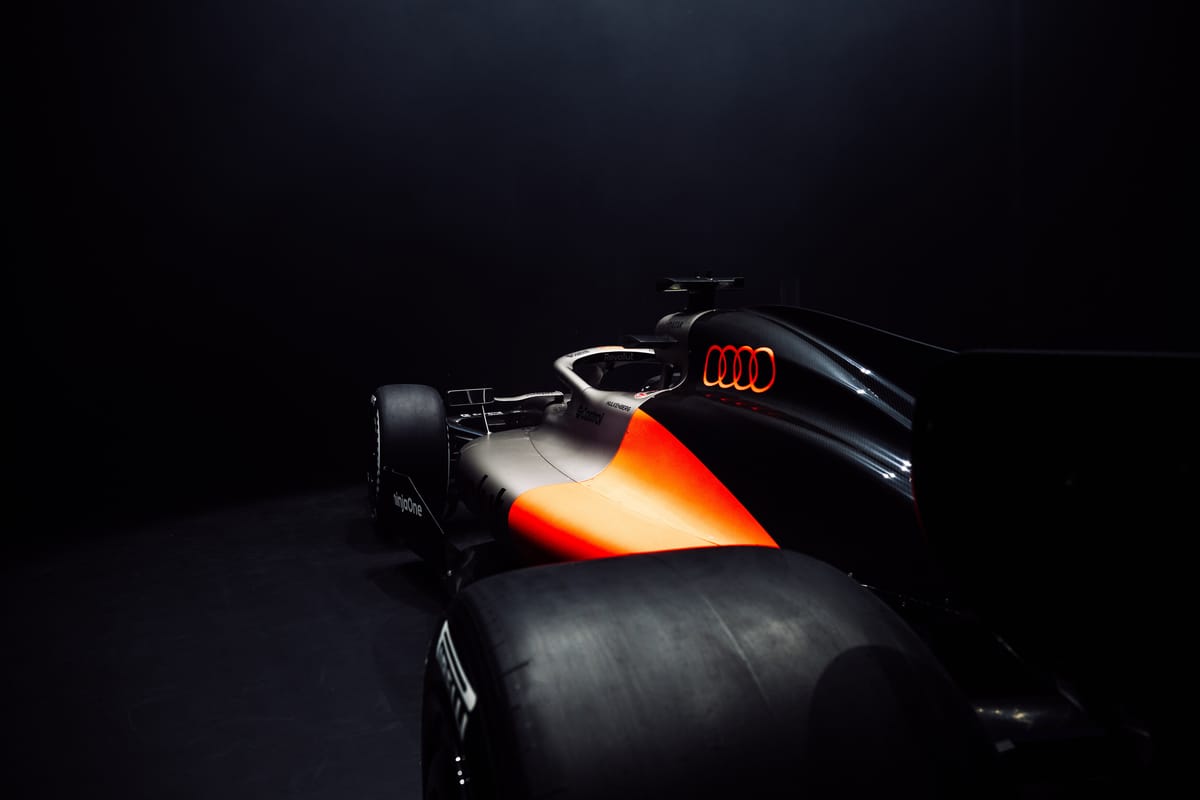
Asked at the Audi livery launch in Berlin about the potential impact on the competitive picture for 2026, Binotto said: “If it's real, it is certainly a significant gap in terms of performance and lap time, and that would make a difference when we come to competition.”
Sources suggested recently that the gains on the table could be as much as 10-15bhp – which is worth around 0.3-0.4 seconds per lap.
Audi technical director James Key reckons robust enforcement is required from the FIA – because it's unfair on rivals to not be able to respond if engine compression tricks were being allowed.
This is because under F1’s power unit homologation rules, engine designs are now frozen for the year unless teams are given additional upgrade opportunities because they are too far behind.
“I think if it's sort of bypassing the intent of the regulations, then it has to be in some way controlled,” said Key.
“We trust the FIA to do that, because no one wants to sit a season out if you've got a blatant advantage that you can do nothing [about] with a homologated power unit.
“I think for us, hopefully, the FIA will make the right decisions.”
Key suggested that nobody would accept a team being allowed to run a trick diffuser if others could not copy it, so it was nonsensical to allow a similar situation for engines.
“You've got to have a level playing field,” he added. “If someone comes up with a clever diffuser, and you said it's not the right thing to do, no one else can have it, but you can have it for the rest of the year, it doesn't make sense. We would never accept that."
No rule change on horizon
While the FIA has agreed to discuss the compression issue with manufacturers at a meeting later this week, Binotto is not anticipating any immediate rule change.
He thinks that the discussions taking place on Thursday will be more about agreeing a long-term framework over how to measure the compression ratio.
“I don't think there will be clarity or compromise,” he explained.
“The meeting, which has been set for the 22nd of January, is more to continue to discuss how can we improve or develop a methodology for the future to measure the compression ratios in operating conditions.
“Today we are doing it [measuring] in cool conditions with the engine disassembled - so you may wait until the end of the season to know if you are compliant.
“It's simply we are trying, all together, to really develop a methodology where we can measure it in real time while the car is running.
“My hope in that meeting is not clarity on the regulation itself, but more to define a methodology for the future.”
There have been suggestions an unhappy manufacturer could challenge the designs of Mercedes or Red Bull at the season opening Australian Grand Prix by lodging an official protest with the stewards.
However, Binotto has suggested that may not be so straightforward to do if nobody is sure exactly what is being done – as any complaint would have to be against a specific design element that breached the rules.
“You can protest if you know what you're protesting,” Binotto said.