Near-misses expose big safety concerns with F1 2026
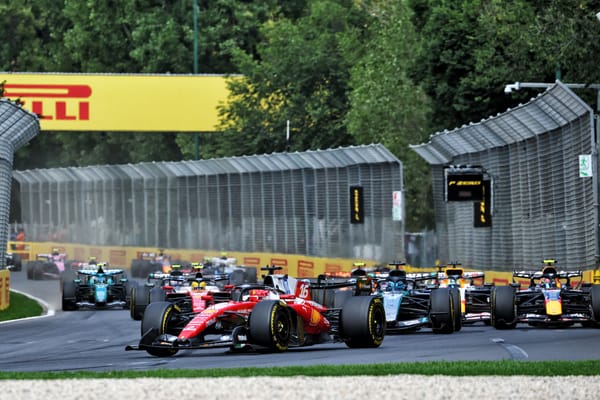
Some Formula 1 drivers believe fortunate near-misses in the Australian Grand Prix have further exposed two safety issues that need addressing.
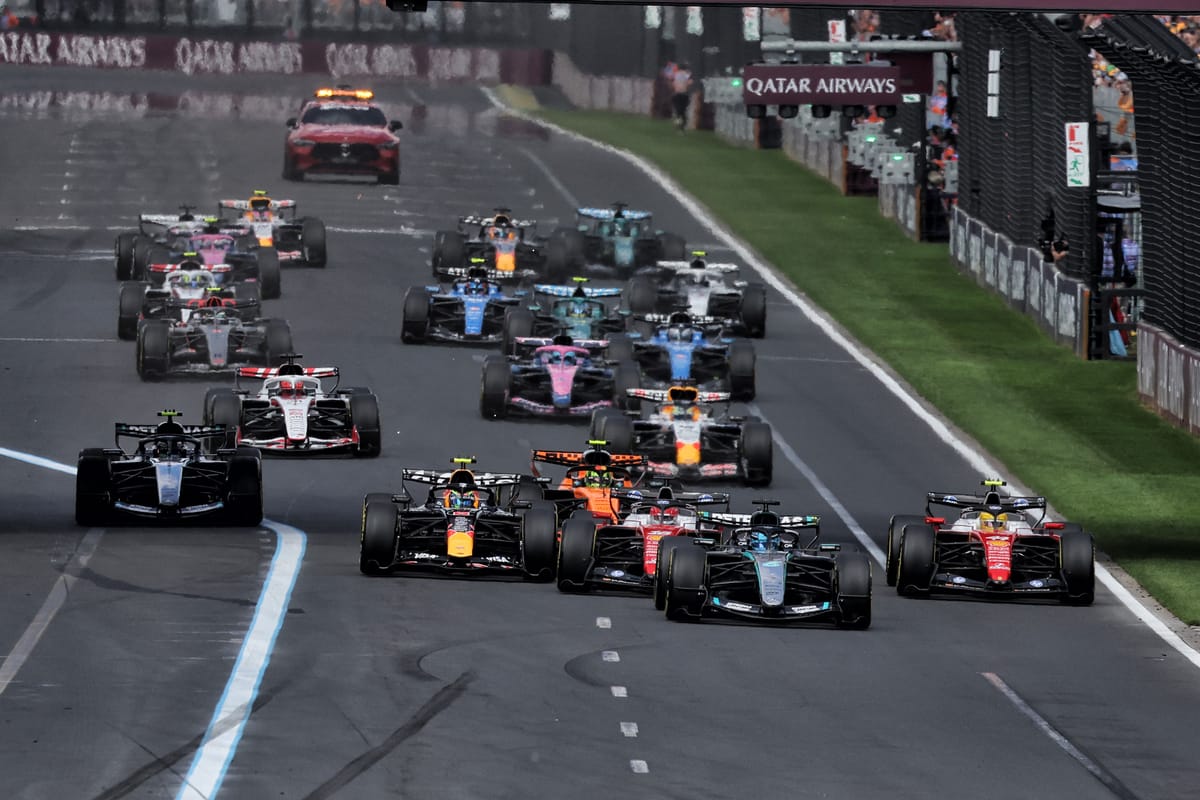
A popular concern during pre-season testing was about the potential for big differences in race starts between drivers leading to incidents on the first lap.
The engines have turbos that need to be spun up to avoid a lag between throttle input and power delivery, hence the extended period of revving just before the start itself.
But it’s an inexact science because while there is the new five-second pre-start procedure, and the period of the red lights coming on one by one, there is then a final hold before the lights are extinguished at the discretion of the start lights operator.
Working out exactly how long to rev the engine to spin the turbo, and how much to rev it without then having the wrong throttle input for the launch to avoid wheelspin, is therefore very tricky.
Ferrari’s engine has a smaller turbo so is less vulnerable to this, hence the mega starts we saw in testing and indeed in the Melbourne race. But there was another variable too.
Charles Leclerc, who got a great launch from fourth and was able to dive into the lead on the brakes in Turn 1, reckoned the starting lights operator was being “quite cheeky” with a short hold before the lights went out that “took everybody by surprise”.
The first race start being so varied was also not helped by several drivers reporting much lower battery levels than expected after the formation lap.
George Russell and Max Verstappen, for example, were baffled that they didn’t have any electric power to deploy - this doesn’t happen immediately as it only kicks in after 50km/h, but it explains why it wasn’t just the initial launches that were different it was the next phase of the start too.
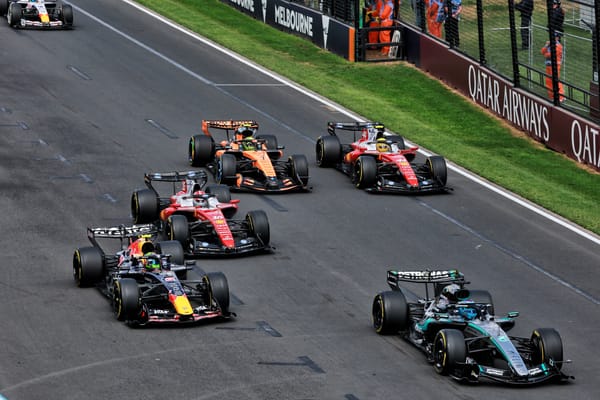
In all the chaos, we had a change of lead, big swings four or five places throughout the order, and Fernando Alonso even rocketing from 17th to 10th in his hamstrung Honda-powered Aston Martin.
Franco Colapinto, meanwhile, was lucky to even still be running. He somehow avoided a catastrophic crash as he dodged Liam Lawson’s slow-moving Racing Bulls at the very last second, by squeezing through an impossible gap and saving F1 from the worst possible scenario.
“At the start I almost had a massive shunt with Liam as he was stuck on the grid,” Colapinto explained.
“That was pretty lucky to be honest. Things like that happen but it was just very dangerous and quite sketchy.
“I’m glad I got through that.”
Drivers further back being blind to slow or stationary cars at the start is one of the most unsafe situations possible, and is exactly what some warned about in pre-season.
After all, race start safety was one of three concerns McLaren team principal Andrea Stella had expressed after testing.
“I think the concern remains today, the start was a bit of a near miss,” Stella said.
“There were huge speed differential on the grid. We can hope for the best or we can just do something further to make sure that we reduce this speed differential.
“This is a very technical matter. I don't think we should go too far into ‘we should do this or we should do that’. My appeal in a way, my call is to say we should do more.
“Keep attention on the start because at some stage that will become a problem.”
Other safety concerns
Some safety concerns emerged beyond just the start, including speed differentials on straights between cars that are still deploying energy and those that run out of it.
Lando Norris warned: “Depending what people do, you can have a 30, 40, 50km/h speed [differential] and when someone hits someone at that speed you're going to fly and you're going to go over the fence and you're going to do a lot of damage to yourself and maybe to others, and that's a pretty horrible thing to think about.”
To state the obvious, that implied ‘car in the crowd’ warning is a very serious one to make.
There was another more subtle issue too. Some drivers were already wary of the impact of following very closely through the kinked section in the middle of the lap that has a straight mode zone where the car’s active aero is in low-downforce mode.
It was this concern that led to the FIA deciding to get rid of that zone before FP3, only to do a U-turn and reinstate it before the session began due to a backlash from teams.
Carlos Sainz called it “really dangerous” on the opening lap, and later on when racing someone else.
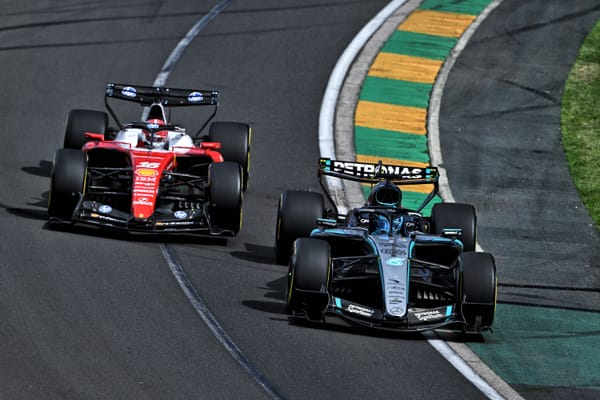
Even race winner Russell, who experienced the phenomenon in his fight with Leclerc, had an opinion on this.
He found some of the racing "a bit sketchy" and actually wants the FIA to change the straight mode so that the front wing angle doesn’t reduce as aggressively.
This would make it potentially more sketchy in terms of the rear being light and moving around, but Russell found there is just not enough front grip in the current set-up and it was “like my front wing wasn’t working”.
He believes that could be an easy fix, but the same can’t be said for some of the other fundamental things exposed by F1’s 2026 race debut.