9 things we learned from day one of Bahrain F1 test
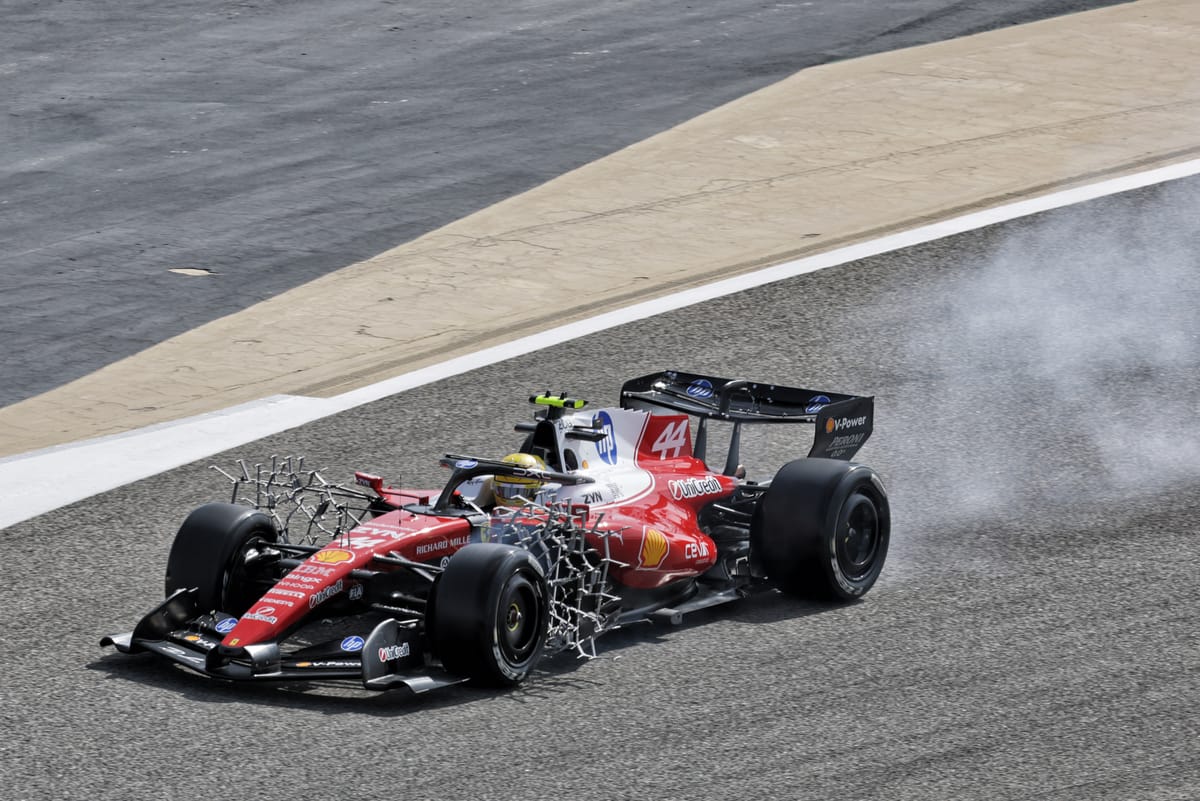
The opening day of F1’s Bahrain test has already given us the deeper insight we’ve been waiting for – so here’s everything we learned from the first proper day of watching 2026 F1 cars.
Mercedes’ extraordinary Red Bull claim
Does F1 have a new early benchmark? That’s what Mercedes boss Toto Wolff insisted with a surprise declaration fuelled by his team’s analysis of the initial long-run pace and GPS data.
According to Mercedes, strong energy deployment meant Max Verstappen’s Red Bull was gaining about one second per lap on the straights - consistently.
That would be a massive advantage if repeated in races, and a huge achievement for Red Bull’s brand new in-house engine programme.
For regular trackside insight throughout F1 testing, join The Race Members' Club - claim a free 7-day trial here
But there remains some scepticism in the paddock about whether there are some politics at play here at a time when Mercedes’ own performance is under the spotlight amid F1’s ongoing compression ratio controversy.
And talk of any team being clearly ahead is not universal. McLaren chief designer Rob Marshall reckons the reality is that everyone is super close.
If Mercedes really is on the back foot against Red Bull, though, this was a sobering day for the early pre-season favourite given it had a first major setback itself.
Kimi Antonelli only managed 30 laps right at the end of the day because an issue believed to be on the car side, not engine, left him on the sidelines for most of the afternoon.
What the early data tells us
While it was McLaren’s world champion Lando Norris who topped the times on Wednesday, Verstappen was a close second and was on a very quick-looking lap that faded in the final corners.
And the Red Bull's consistency and speed in Verstappen's hands went unmatched over stints of any meaningful length.
Verstappen ran each of the available tyres - the C1 hard, the C2 medium and the C3 soft - in bursts of around 10 laps. He ran a high-1m38s average on mediums earlier in the day, but averaged just under 1m38s on the hard later on - and was then comfortably in the 1m37s range on softs towards the end of running.
Perhaps most impressive was that all of these runs came with zero anomalous laps, by which we mean cooldown laps or anomalies from errors. That couldn't be said of Red Bull’s rivals.
It's still early and the usual caveats about engine modes, fuel loads and energy deployment apply. And Charles Leclerc and Ferrari had a handful of solid 1m38s runs late on, while Mercedes was in the same ballpark once it eventually returned to the track with Antonelli after his problem.
But Red Bull certainly made a strong impression.
Why Max stands out trackside
From trackside, Verstappen also stood out for an aggressive downshifting technique linked to the new engine demands.
Most notably at Turn 10, typically a second-gear corner, Verstappen repeatedly downshifted to first while still heavily on the brakes, causing a sharp rise in revs and visible car instability.
His approach, usually involving rapid double downshifts in sequence, is aimed at maximising energy recovery under braking to better charge the more powerful 2026 MGU-K.
Red Bull was the first to deploy the tactic in Bahrain and did so the most consistently and effectively, with Verstappen comfortable in managing the destabilising effects on the car.
Audi tried similar methods but looked less settled, while interestingly the Ferrari and Mercedes-powered cars largely stuck to conventional techniques.
Though unlikely to be a silver bullet, it makes an interesting early differentiator – and a potential clue that Red Bull’s targeted tolerance for more aggressive tactics in energy recovery.
Ferrari’s car seems really difficult
After an encouraging start in the Barcelona test, the Ferrari looks far from the most stable car early on in Bahrain.
That doesn’t mean it’s bad by any means, but it suggests there’s work to do.
That impression was supported by Lewis Hamilton. He talked about how complex driving these cars is generally, joking that you need a degree to understand them.
He also described the run into the tight Turn 10, the left hander leading onto the middle straight, where Hamilton had an off today, as the hardest that it’s ever been here.
Now, this is a tricky corner thanks to the curved approach through Turn 9 and plenty of drivers had difficulty, but it seemed particularly difficult for Ferrari.
The car certainly appears responsive on turn-in, but all around the track it looked like a handful mid-corner.
Ferrari needs to turn that responsiveness into consistency to get the best out of the car.
Aston Martin and Honda troubles
Aston Martin only managed 65 laps during the whole Barcelona shakedown test, and its game of catch up in Bahrain didn’t start well as Lance Stroll managed just 38 laps on Wednesday thanks to a Honda engine problem.
Honda described this as a result of a data anomaly which was detected and required further analysis ahead of a return to the track on Thursday.
There are still five days of testing remaining, but the clock is ticking and Aston Martin is now well behind in terms of distance covered with just 431 miles logged compared to the 2618 of Mercedes. Even Williams, which missed Barcelona entirely, is ahead owing to today only.
Fernando Alonso has already indicated that Aston Martin expects to start the season behind.
But based on the first day of running at Barcelona, it’s still in the ‘falling even more behind’ phase. And that doesn’t bode well.
Audi with a bold new design
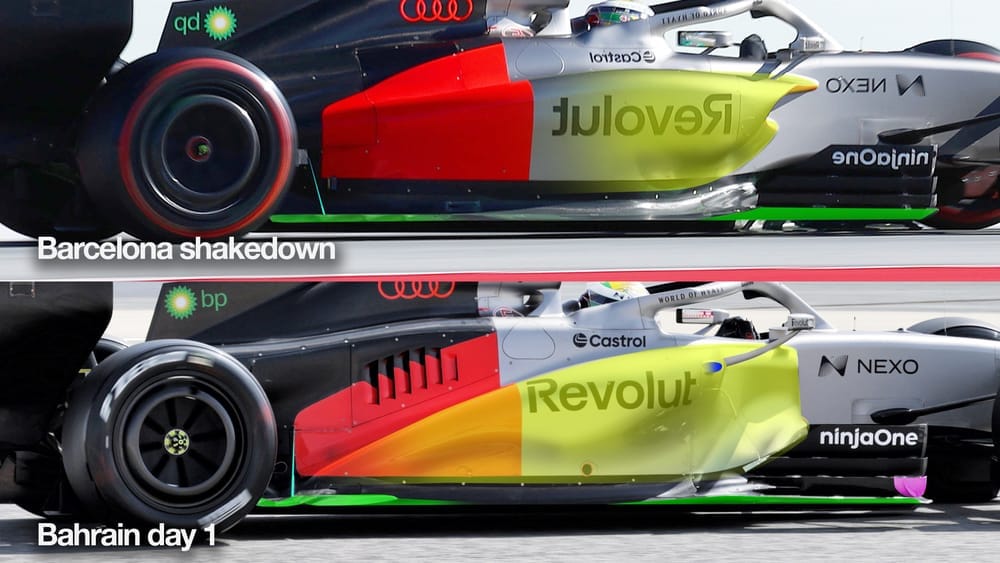
Audi was the first team to run this year way back on January 9, and appropriately enough it’s the first to introduce a big upgrade package - or at least, one that’s very visually obvious.
It includes a change to the front wing, with a small turning vane added to the rear of the front wing endplate lower tunnel and a tweak to the top flap to make it more loaded inboard. This should help to induce greater outwash.
But what really caught the eye was the sidepod change. The previous, more letterbox-shaped inlet is replaced by a tall, narrow one as part of a major overhaul of the sidepods. That includes the move to a more aggressively downwashed top surface guiding airflow to the rear of the floor.
It’s just the first salvo in what’s set to be a fierce development war.
How the cars really sound
The few videos we were served of the cars from Barcelona offered a bit of a clue that the new engines sound quite different to before.
Hearing them in person the sound is always quite different to what comes through on television, and they are all subtly distinctive. We wouldn't go so far as to say they are drastically different from the previous generation of engine, but the absence of the MGU-H does make them sound less muffled. They are a bit more aggressive in some ways.
The Red Bull and the Audi sound the meanest although with Audi that is because it sounds a bit less refined. The Honda didn't come past enough to get a great read on it, but it sounds a little bit louder and more raw. By comparison, the Mercedes and the Ferrari engines seem kind of quiet and conventional - the closest to what came before.
There are also different sounds to get used to with the turbo seeming a bit more prominent, lower gears being used in a lot of corners, and more lift-and-coast and energy strategies down the straights resulting in the odd unusual noise. Practice starts appear to require more revving, too.
Williams is overweight, but it works
After deflecting rampant speculation over the winter about its car being overweight, Williams has admitted that it will need to get its FW48 on a bit of a diet over the first few races.
While claims about it missing the target by 20-30kg appear to have been on the extreme side, team boss James Vowles admitted that its official claim of being 772.4kg – just 4.4kg over the minimum weight – was just “a press pack figure”...
Although Vowles fell short of revealing what the car weight actually is, he has said that efforts will be made after the start of the season to shed some excess.
The early good news for Williams though is that having missed the first test, it has at least started to rack up the miles.
And that decent foundation means it can at least avoid being unprepared if there is performance being left on the table with the car itself.
More cars should have this design...
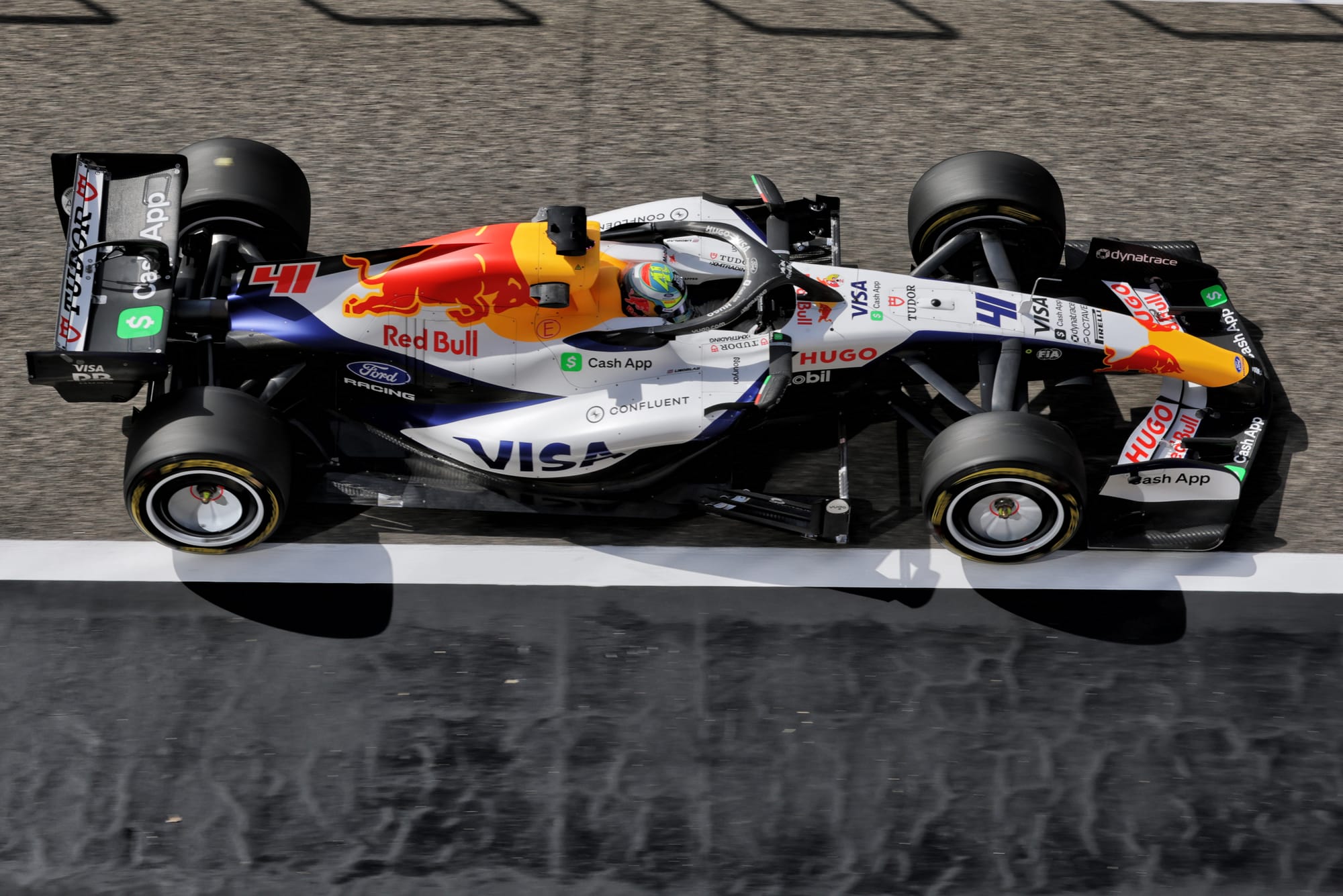
Shout out to the teams that have put their race numbers on the shark fin of the engine cover: Ferrari, Red Bull, Racing Bulls.
Watching trackside it's so much easier to identify these cars with the numbers plastered on the side. The Ferrari has white numbers on a red background, so it's particularly easy to spot.
The other teams have either got a blank section or used it for a little bit of a sponsor logo, which is a little bit of a shame, if unsurprising.
More from testing
- The first clues from Bahrain F1 test day one long runs
- The trick making Verstappen and Red Bull stand out from trackside
- McLaren tops first day of Bahrain F1 test but Red Bull shines
- What's behind Hamilton's sudden 2026 F1 cars criticism
- Mercedes claims Red Bull a second faster on straights
- Gary Anderson's verdict on upgraded Audi 2026 F1 car
- Where new F1 cars are already troubling drivers in Bahrain
It'd be great if this could be mandatory, because you don't just have to have the car right in front of you, side on, to see the number – it's actually visible from quite far away and even at an angle.
So if you're watching from the grandstands at an F1 race, it's going to be easier to spot those cars. And that might seem insignificant, but visual identifiers matter especially as drivers aren't exactly easy to spot in these cars.
It's not a big thing. But it's a worthy, fan-friendly service, and was a notable aesthetic lesson from our first experience trackside.