No excuses: A make or break Hypercar season explained
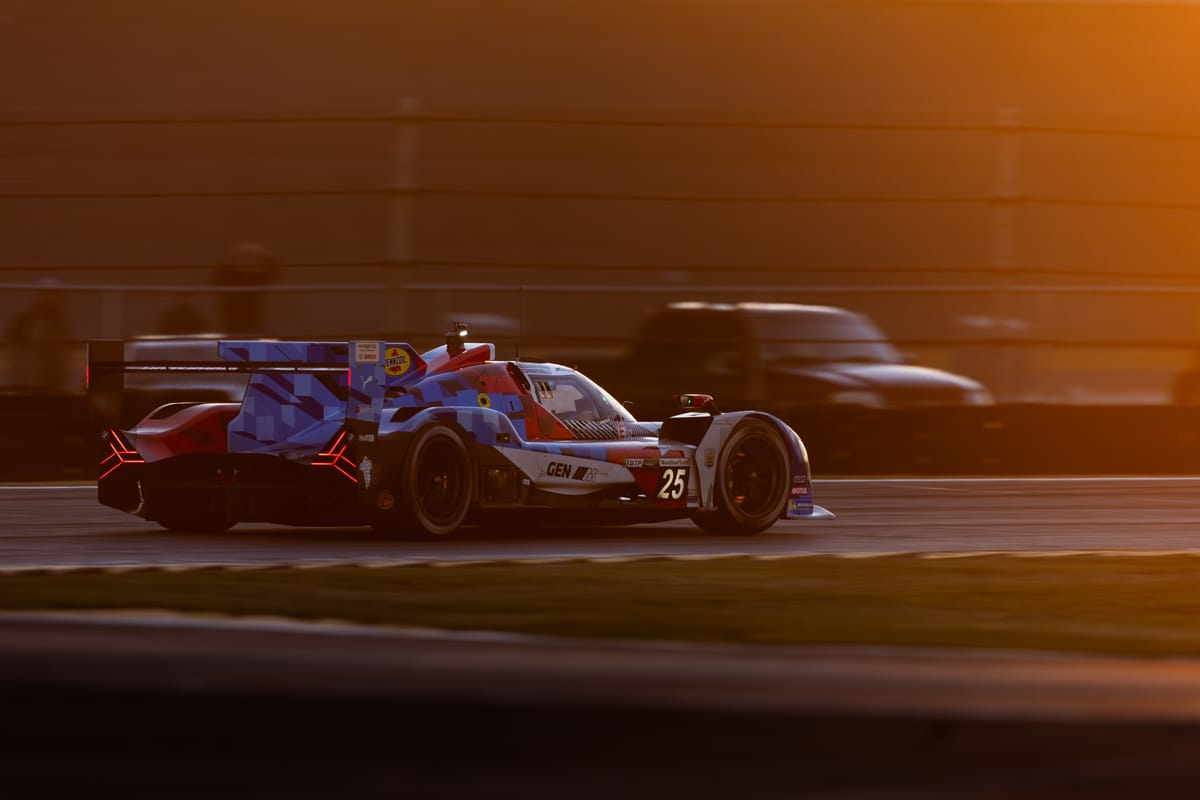
BMW M Motorsport cannot afford another season like 2025. After World Endurance Championship and IMSA SportsCar Championship campaigns that promised much and delivered very little, 2026 feels like a decisive one. A manufacturer of BMW's calibre cannot linger in the midfield indefinitely, and the fourth season of the M Hybrid V8 has to be the one that finally clicks.
The car has been significantly revised, and the American programme has been handed to Team WRT, already running BMW's WEC effort. On paper, the ingredients for a reset are there. The question is whether they will be enough.
A sobering reality check in 2025
Inside BMW, there is no attempt to sugar-coat last season. The 2025 Hypercar/GTP campaign was deeply underwhelming, particularly given that it was the M Hybrid V8's third year in competition.
In IMSA, BMW benefitted from a favourable Balance of Performance for much of the season, yet came away with just four podiums including a single win. That was only good enough for fourth in the championship, and last among the manufacturers that ran two cars for the full season.
"We often had the potential but didn't manage to put everything together," accepted Sheldon van der Linde. "We didn't get everything right, so maybe we didn't deserve to be at the very top."
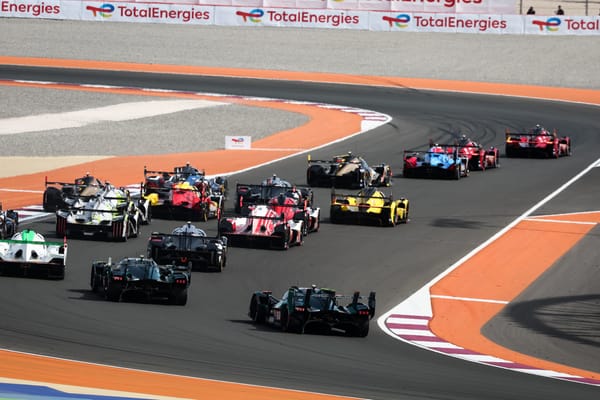
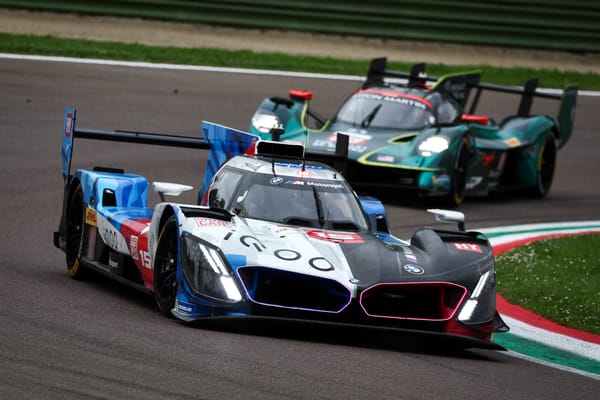
If that was disappointing, the WEC campaign was worse. After podium finishes straight out of the box in Qatar and at Imola, BMW's form tailed off dramatically. A best result thereafter of fifth in Sao Paulo told its own story.
The numbers were brutal: 63 points scored in the first two races, just 24 across the final six, the same total as Aston Martin.
"I don’t know what to say," admitted BMW M Team WRT boss Vincent Vosse after the Bahrain finale. "We have technical issues, but we also need to understand why our performance has dropped so much since Le Mans. We have a lot of work ahead of us for 2026."
BMW finished fifth in the manufacturers' standings, 71 points behind Cadillac (in fourth) and only three clear of Peugeot, second to last in the championship.
A deeper rethink of the M Hybrid V8
A change of brake supplier - from Carbone Industrie to Brembo - during the winter of 2024-25 was widely welcomed. But it quickly became clear that it would not be enough on its own.
BMW has therefore gone much further, committing to a more substantial evolution of its LMDh.
"This is a BoP championship, but we're still trying to find an advantage in the overall car concept," explained BMW M Motorsport project leader Achim Klein. "After three years, you realise you're stuck in a corner where development options are limited. This step is about opening up new set-up and more or less performance directions."
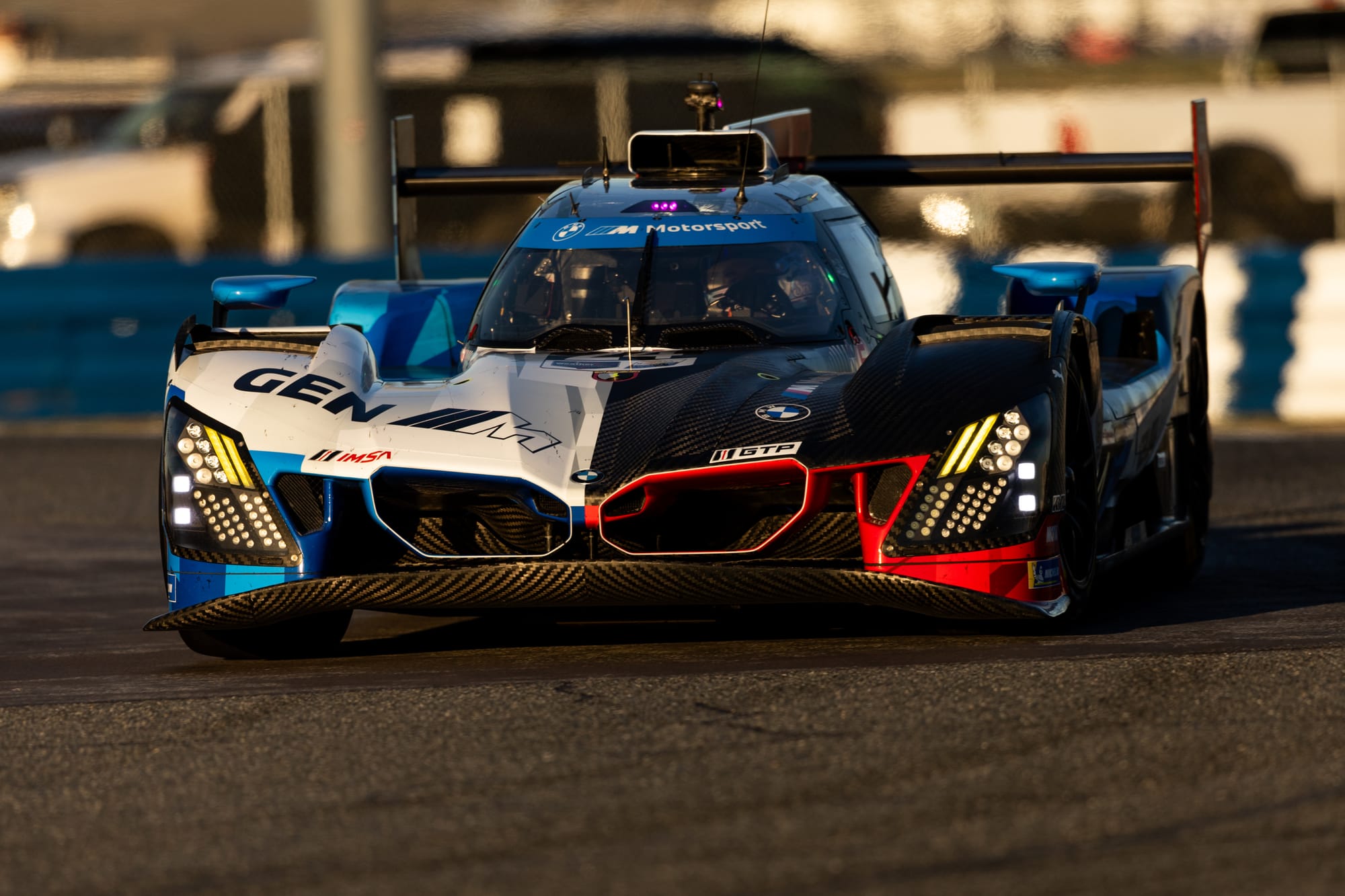
Visually, the car looks almost new, but appearances are only part of the story.
"It looks like a new car, but it's just an aerodynamic update with a visual styling” added Klein. "So the overall front split is changed. The kidney grille, of course, is new. What you can see is the outer shape of the car, which changes the car behaviour a lot. But the big part of the improvement is under the bodywork. It's mechanical parts, so it's mainly cooling and internal airflows."
Around half of the bodywork has been changed, including all parts wearing the camouflage livery. That inevitably required the use of Evo Jokers - at least one, and probably more - from the five permitted between 2021 and 2027.
What was the target?
Governed by BoP, the WEC is more about vehicle dynamics and power management than the pursuit of outright intrinsic performance. Find two seconds per lap and the regulators will simply take it away again through weight or power adjustments. What cannot be BoP'd as easily is driveability, balance and software - and that is where BMW believes it can make progress.
"We're talking about consistency in car behaviour," Klein told The Race. "Driveability is key in this championship. A GT needs to be good enough to allow the gentleman drivers to extract the performance. It's the same here. The idea is to extract the performance on the long distance. If both of us could be quick in this car, it would be perfect."
The 2026-spec M Hybrid V8 has completed three test outings: Paul Ricard, Austin following Lone Star Le Mans, and the IMSA-sanctioned Daytona test in late November.
"The main target is consistent performance across different track layouts," Klein said. "Being able to run stable laptimes throughout a stint without fighting an edgy car. Tyre degradation? It is a consequence of balance."
Can WRT unlock BMW's IMSA potential?
BMW's split with Rahal Letterman Lanigan Racing at the end of 2025 closed a 16-year chapter. Results ultimately forced the issue: three IMSA seasons with the M Hybrid V8, no titles, no major endurance wins.
Even in 2025, with a favourable BoP and four consecutive poles from Dries Vanthoor, BMW repeatedly failed to convert, often through poor race execution. Long Beach, where time was leaked in the pitlane, was the clearest example.
From 2026, the IMSA programme will mirror the WEC structure, with Team WRT running both.
"This championship is unforgiving," Klein explained. "You can't leave anything on the table. That's why we chose WRT. We want to operate as one group, not manufacturer on one side, team on the other. We had a good exchange with the American team, but when you bring it into one house, it's easier."
WRT Hypercar and GTP programme director Bernard Demmer knows the value of that approach from his time at Porsche Penske Motorsport.
"Sharing information faster, learning faster...that crossover is a huge advantage," he said. "If there's a problem in WEC, you can fix it for IMSA two weeks later. Porsche ramped up quickly because they literally combined all the learnings they had from the two championships. People were literally sitting next to each other all the time.
"The biggest goal is the sharing of information. And the biggest part where we want to be well connected is the performance-related engineering from the tracks. Race and performance engineers will act as one group that is not only thinking for two cars, but all the time for four cars."
There is still an element of risk. WRT's direct IMSA experience is limited, even if BMW has ensured experienced personnel are embedded in the programme.
"It's not just about IMSA knowledge," Klein insisted. "Wherever WRT goes, it wins races. That shows how quickly it adapts."
WRT has also based its US operation in North Carolina, on the same campus as the Haas Formula 1 team, a strategic move that could pay dividends long-term.
The excuses are gone
BMW has done almost everything it can: a heavily revised car, a unified WEC/IMSA structure, and a clearer technical direction. The driver line-up is the one area of continuity, and that is no weakness.
In WEC, BMW fields some of the strongest crews on the grid, while Vanthoor and Van der Linde will race in both championships to strengthen the link between programmes.
WEC
#15 - Kevin Magnussen / Raffaele Marciello / Dries Vanthoor
#20 - Robin Frijns / Rene Rast / Sheldon van der Linde
IMSA
#24 - Sheldon van der Linde / Dries Vanthoor / Robin Frijns (Endurance) / Rene Rast (Daytona 24h)
#25 - Philipp Eng / Marco Wittmann / Kevin Magnussen (Endurance) / Raffaele Marciello (Daytona 24h)
"We're racing with an updated car and a new team in IMSA," said BMW M Motorsport boss Andreas Roos. "That's already a lot of change, so maintaining driver continuity was important. The key now is working as one team and moving this LMDh project forward."
After three seasons of learning, the margin for error has disappeared. Now comes the moment of truth. After three full seasons of Hypercar/GTP racing, the time for excuses is well and truly over for BMW.