Alpine WEC Hypercar programme in jeopardy
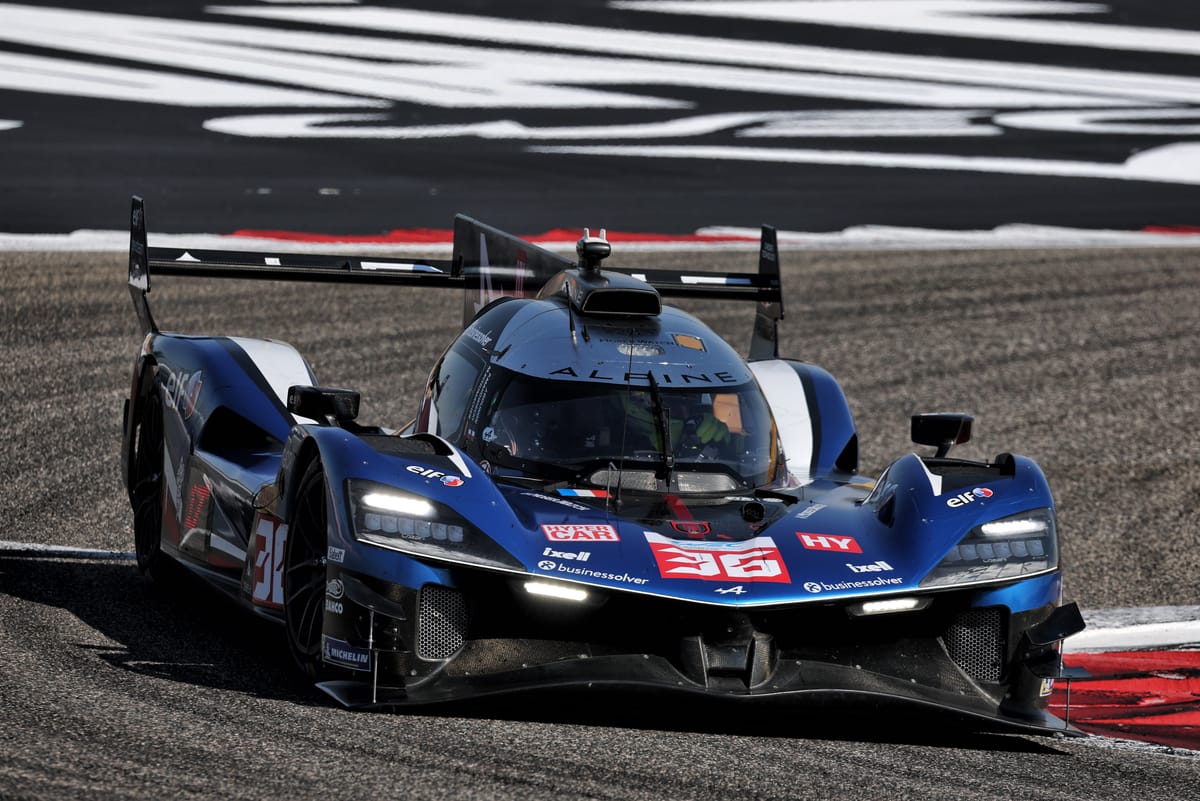
Alpine looks increasingly likely to pull out of the World Endurance Championship after 2026, and could also close its historic Viry-Châtillon base that until recently built its Formula 1 engines.
Alpine is still not profitable as a standalone brand. A few years ago, the stated objective was to reach break-even by 2026, with the launch of the A390 expected to play a major role in that ambition. But is that still realistically achievable?
Despite strong sales growth, our information suggests motorsport programmes are under scrutiny – and even the historic Viry-Châtillon site could be sacrificed in the pursuit of profitability.
We outlined the inner workings of Alpine’s Hypercar project in detail last October, shortly after the A424 secured its maiden WEC victory at Fuji.
On paper, Alpine’s win and third podium of the season was a clear step forward. Behind the scenes, it failed to convince everyone. But results are not the core issue.
The real concern sits higher up within the Renault Group and goes well beyond endurance racing: the long-term viability of the Alpine brand itself.
That context explains why the WEC’s 2026 entry list was published later than expected. It was not just down to uncertainty over Proton Competition’s potential two-car Porsche 963 effort. At the time, Alpine Racing had still not received full approval from senior management.
The programme was ultimately extended by just one season. And the signals since have been stark. Everything points towards the Hypercar project ending in the next few months, in 2026.
Under Luca de Meo, the programme had no defined end date. His replacement last July, François Provost, has changed the dynamic. The new Renault Group CEO is widely known to have little appetite for motorsport.
Senior figures set to leave
These concerns come alongside the potential departure of several high-ranking figures within Alpine Racing’s organisational structure. Bruno Famin – currently Alpine Vice President of Motorsport – is believed to be on his way out.
Appointed executive director of Alpine Racing at Viry-Châtillon in February 2022, Famin was later promoted to director of Alpine Motorsports and then Formula 1 team principal in July 2023, a role he left one year later.
Since then, he has overseen all of Renault Group’s motorsport activities outside F1 as Alpine vice president of motorsport, including endurance racing and rally-raid. And while Dacia has just won the 2026 Dakar Rally, that programme is also expected to be shortlived, despite the Sandrider only making its competitive debut in October 2024.
Another major departure is also anticipated: François Champod, Alpine’s deputy motorsport director and a long-serving Renault Group figure. It would not be an exaggeration to say that Alpine Racing has effectively been decapitated.
Clouds over Viry-Châtillon
The future of Viry-Châtillon has been uncertain ever since Renault confirmed the end of its Formula 1 engine programme on 30 September 2024.
Renault Sport’s base since 1976, Viry was the birthplace of the turbo V6s, the dominant V10s of the 1990s and the V8s that delivered titles across three decades at the beginning of the century. With 12 world championships, Renault remains Formula 1’s second most successful engine manufacturer, level with Mercedes and behind only Ferrari.
That 50-year chapter is now closed as the Alpine F1 team becomes a Mercedes engine customer in 2026.
Rebranding the site as ‘Hypertech Alpine’ in 2024 did little to change the underlying reality. While production of the WEC car’s turbo V6 was brought in-house after initially being assigned to Mecachrome, the scale of that activity is minimal compared to what a full F1 engine programme once required. Especially since the engines are already designed and homologated.
It is nowhere near enough to justify keeping 300 to 350 staff fully occupied. Other projects offer little relief. The Dacia Sandrider is built in the UK, with its engine produced in Japan. It therefore has very little Viry-Châtillon in its DNA.
With high operating costs and failed attempts to secure alternative contracts, concern about the future of Viry – or Hypertech Alpine – is very real.
As for Formula 1, without a works engine programme, Alpine’s presence has inevitably lost much of its strategic logic. Its long-term direction is increasingly unclear.
Alpine's commercial reality
Following its international expansion strategy and product plan, Alpine has enjoyed dynamic global growth, achieving triple-digit performance. Sales rose by 139.2% in 2025 to 10,970 cars, compared to 4587 the previous year. For the first time in its history, the brand surpassed the symbolic 10,000-unit mark and continues to enter new markets and attract new customers.
Alpine has strengthened its position in Europe, growing across all European markets, particularly in key territories such as France (+89.5%), the UK (+369.5%) and Germany (+133.5%).
Relaunched in 2017 with the A110, and reorganised as a Business Unit in 2021, Alpine announced on 16 June 2023 that the arrival of its new all-electric models from 2024 onwards would allow the brand to grow revenues and reach financial break-even by 2026. From 2027, a phase of global expansion was even planned, supported by a broader model range aimed at new markets – including the United States – and designed to improve Alpine’s financial performance and brand value.
Those ambitions now appear to have been quietly revised.