Why 2027 format revamp has divided MotoGP riders
MotoGP’s 2027 weekend format revamp has drawn anger from some riders and unsubtle attempts at diplomacy from others, but was also welcomed by a sizeable proportion of the grid.
Next year there will be a separate, 15-minute, full field qualifying session for the sprint straight after a shortened half-hour afternoon practice session on Friday.
All riders then participate in grand prix Q1 on Saturday morning, with the top 12 going into Q2, rather than the current system of the Friday practice top 10 reserving Q2 spots and then the remainder of the field going into Q1 to fight for two spots in the pole shoot-out, with the same grid then applying for both sprint and grand prix.
The Sunday morning warm-up is also removed as part of the changes, with more time for sighting laps to the grid offered as recompense.
Acosta leads the opposition
By far the most openly critical of the changes - in a way that bodes rather well for when he’s even higher profile next year as Marc Marquez’s Ducati team-mate - was KTM’s Pedro Acosta.
“We have no choice, it doesn't really matter what we think about it, but it will be a really tough year because you know how much stress a rider has during a MotoGP weekend,” he began.
“Many, many times the weekend starts already on Wednesday with pre-events and all these things. We already have many sessions in which we have to risk everything— like PR [Friday pm practice], qualifying, sprint, main race - and we have it 22 times two, because we have a sprint race every weekend.
“I don't know if it will be the best thing to make a sprint qualifying on Friday with 22 guys on track, then Q1 with 22 guys again, Q2, a sprint race, a main race - there are many, many times that we will be in a really high stress level.
“I understand this format if we have half the sprint races, but the problem is that we have many races already.
“If you take all the list of the riders, there are not many that don't have an injury during the whole season. For this, I think this will be even worse.”
Title rivals Jorge Martin and Marc Marquez struck similar notes over the increased demands on the riders.
“For sure the entertainment will be bigger, but also the risk,” said Martin.
“It’s interesting to understand what is the main goal of that change because for the rider, it's only more intensity, more demanding, and with the actual schedule it's enough,” said Marc Marquez.
“But we don't decide. It's what it is, and we must adapt.”
Why do riders feel so powerless?
The reigning champion is already on something of a collision course with the MotoGP authorities over schedules and promotional activities - having been admonished for sending a ‘body double’ so he could dodge the MotoGP riders’ go-kart race at last weekend’s Japanese Grand Prix. More on that in this week’s edition of our MotoGP newsletter, The Lean Angle.
Probed further by The Race’s Simon Patterson on why riders sounded so powerless in the face of this and other changes, given they’re the stars around which the series’ appeal is built, Marquez replied: “Teams and the organisation decide. You take it or you leave it. It is what it is.”
Simon and other media made many valiant efforts through the Indonesia media day on Thursday to understand why riders didn’t feel they could unite in the style of Formula 1’s Grand Prix Drivers’ Association and have more influence.
Scepticism over the chances of riders ever managing to agree on a united stand, and even greater scepticism over whether they’d be heeded by MotoGP even if they did, was the main theme of the responses.
Maverick Vinales’ “my opinion doesn’t count. It doesn’t matter” was a particularly blunt variant of the ‘we just have to do as we’re told’ theme voiced by many.
But not everyone hates double qualifying
“In one way, I like the qualifying because I love to do qualifying - it’s what I enjoy the most,” was a perhaps unsurprising stance from the grid’s qualifying superhero Fabio Quartararo.
The prospect of separate sessions also went down well with 2026 rookies Toprak Razgatlioglu and Diogo Moreira given the way they feel they improve as weekends progress, but even some with more MotoGP experience like the idea of having two goes at qualifying for the two races.
“Obviously we know it will be physically tough and super-demanding, but for me it’s good to have two qualifyings,” said title contender Marco Bezzechi.
"It can sometimes happen that you have a bad Friday and maybe [in 2027] you won’t destroy two races with the same qualifying.”
Honda’s Luca Marini said a separate qualifying session for each race “is something that we are asking for since the sprint arrived” and sees the whole package of changes as “doing everything in the correct way to make MotoGP grow a lot, so I hope that also all the fans will enjoy it and will understand that this motorsport is the best in the world”.
When it was put to him by The Race that MotoGP will now have two short qualifying sessions with the full field on track (whereas now it’s usually 12 bikes at most), with all the implications that had for traffic and yellow flag disruptions, Marini was unfazed.
“For sure they will have more work to do on penalties,” he replied. “But it's our job to do it well and to do the best qualifying possible.
“I know it will be a little bit more difficult for us as a rider, because it will be even more stressful, because we will have more time attacks and more pushing laps instead of just free [practice] time.
“But I think we can accept it because we want to improve this sport.”
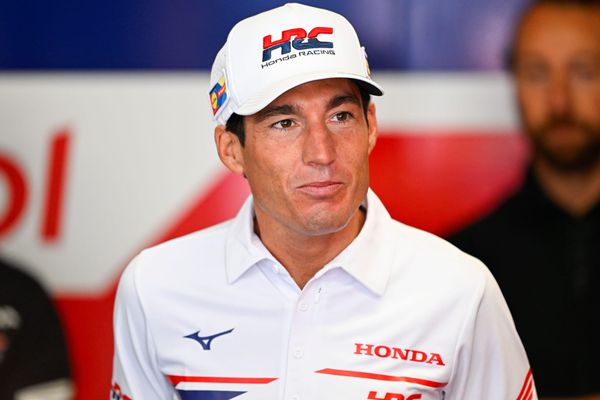
Veteran Aleix Espargaro, back in the field as Honda’s latest Joan Mir stand-in and having recovered from serious back injuries from a test crash, had a similar view.
“I was very critical of the sprint races at the beginning, I didn't like it at all,” Espargaro admitted.
“But then after some years you can see that the show is good, that people like it.
“Next year I think it's going to be not easy to do 15 minutes with 22 riders, time attack with the yellow flags is going to be tricky.
“But you will see a lot more drama for sure. Many top riders starting in P15, in P20.
“For the championship, for the show, it will be better. For the riders, it will be very stressful for sure.”
Quartararo reckons the potential for more yellow flag interruptions will even out over time.
“One time I will take the yellow flag, one time another rider. It’s part of the game,” he said.
“And I think they like to have a bit of drama and top people starting at the back. It’s the same for everyone.”
On the prospect of more competitive sessions increasing the chance of injuries, Espargaro argued that next year’s switch to 850cc engines and Pirelli tyres will reduce the amount of crashes anyway.
“The tyres are super, super easy to ride and the bikes are slower,” he said.
“So I think in this, the championship will improve. Even though I like a lot more the extra power of the 1000cc, if we speak about safety, this will be better.”
Farewell warm-ups
One of the most-criticised elements is the final demise of the already-shortened Sunday morning warm-up.
“I like it, I think it’s good, I think it’s an improvement,” said Pecco Bagnaia of the overall package of changes.
“Apart from: we need to have the warm-up.”
The majority of the grid argued losing this short session was a worrying backwards step, with that session felt essential for race morning acclimatisation and in particular for situations where a rider is back on a repaired bike for the first time since a sprint race crash.
The promise of more time to do sighting laps to the grid wasn’t seen as an adequate replacement - not just in the lack of chance for proper flying laps, but also because those laps will be just too close to the race start if a problem is found.
“Ten minutes before, if you go to the grid and it's something wrong, your Sunday is done already,” said Acosta.
But there were a few counterarguments over the demise of warm-ups too.
“I’m quite happy about not doing any more warm-ups, I don’t like it,” said Martin.
“That’s the only thing [in the 2027 changes] I like!”
And outgoing Yamaha rider Alex Rins was just jokingly annoyed that MotoGP was only binning warm-ups after he’d left the paddock.
“The unique regret that I have is that almost since I joined the world championship in 2012, I was complaining to my team ‘warm-up, warm-up…it’s for nothing’ and every year was even more demanding,” said Rins.
“In MotoGP one time I remember I was close to not doing the warm-up because it is useless, you just put your body in more stress for 10-20 minutes for nothing.
“And f***, when I leave, they change it!”