The Baku problem exposed by scary Hamilton and Lawson near-miss
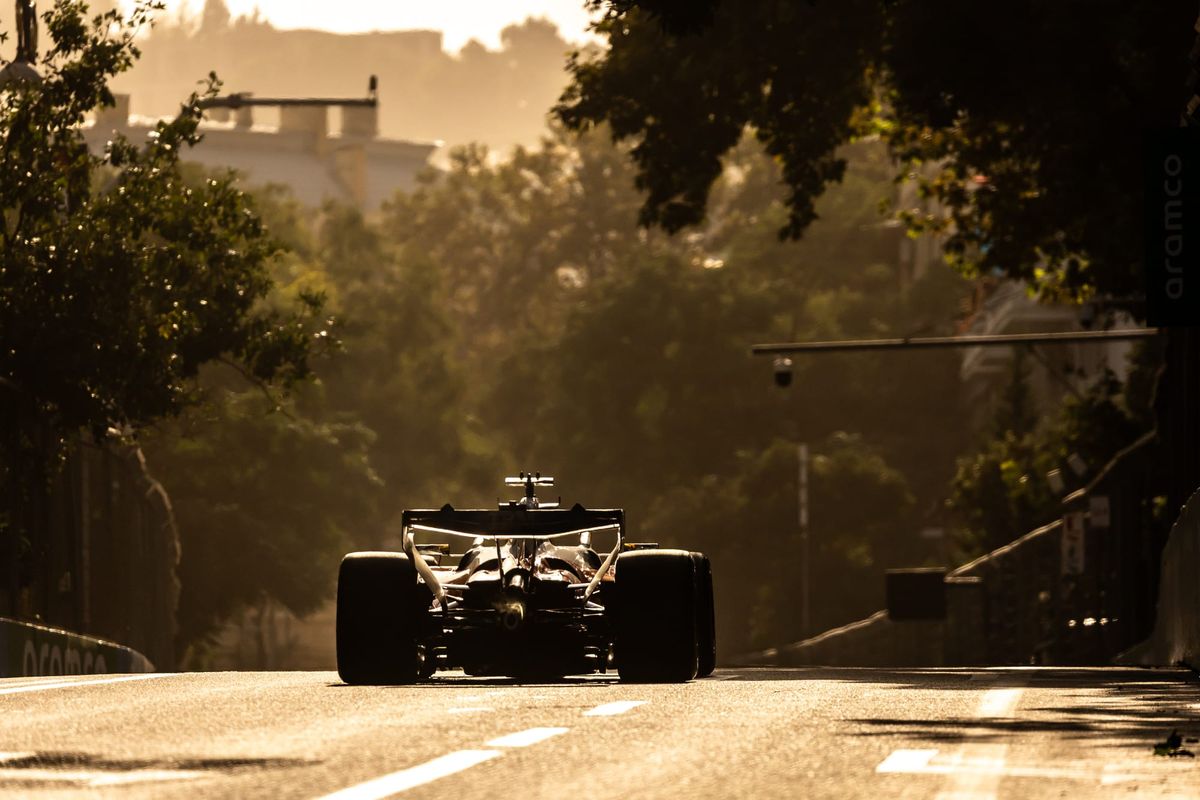
Lewis Hamilton's reprimand for impeding Liam Lawson during second practice at the Azerbaijan Grand Prix has exposed one of the big dangers with Formula 1's 2026 rules around the Baku track.
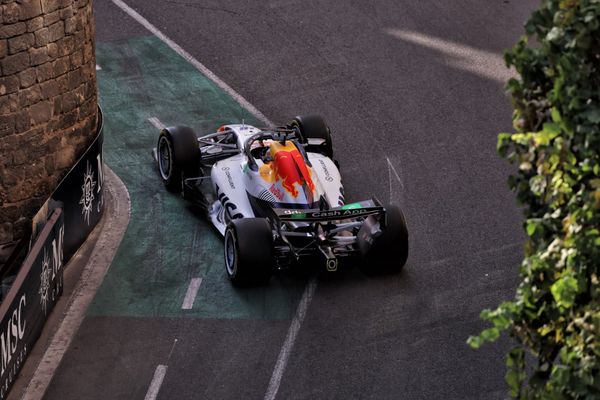
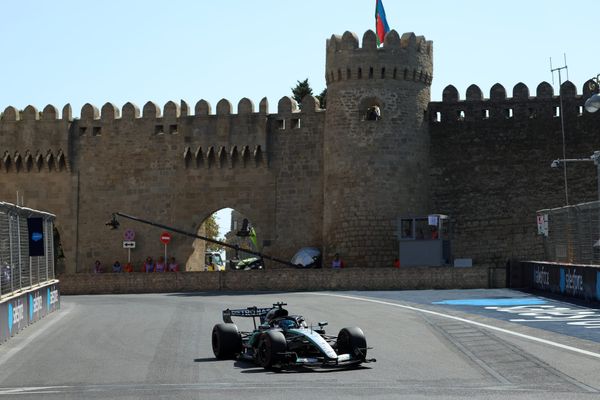
The Ferrari driver was deemed by the FIA stewards to have been guilty of "severe" impeding as he got in the way of his Racing Bulls rival through the high-speed Turn 18/19 sweeps in Baku.
Lawson had to hit the brakes and take avoiding action at 300km/h (186mph) to avoid the dawdling Hamilton. The New Zealander expressed his shock about things on the team radio straight after.
"Oh my God. That is so f**king dangerous," declared Lawson, prior to the incident being deemed serious enough to warrant the stewards' intervention later.
The situation is an unusual one though, because it was triggered not by the normal inattention to faster cars that happens frequently in practice.
Instead, it revolved around a fundamental risk point that teams and drivers were aware of ahead of this weekend thanks to the energy starved 2026 cars and the Baku layout.
The speed differential between the Ferrari and Racing Bulls was not because one of them was going flat out and the other was cruising around off the throttle. Both were flat out at that point.
However, Hamilton was only going 250km/h against Lawson's 300km/h because his power unit was in a mode known as 'auto-k', where the battery is not being deployed and he is only running on the internal combustion engine.
That happens in this area of the track because teams do not want to waste any more battery energy than is necessary before the timing line.
Instead, there is a set point on the straight after Turn 19 where the MGU-K will kick in and deliver the power boost for maximum power and perfect top speed when the lap starts.
Teams and drivers knew before they arrived in Baku that the speed offsets between cars on out-laps – so not using battery early – and those pushing on maximum deployment would exist.
That is why F1 race director Rui Marques on Thursday morning issued revised event notes to try to avoid a situation where the speed mismatch risked a collision through the Turn 18/19 sequence.
Marques had demanded that drivers on out or slow laps should keep to the extreme left from the exit of Turn 16 to Turn 18, and then manage the gaps to cars behind to avoid the risk of being caught in the middle of the turns.
In theory the idea was good, but in practice it proved hard to act upon as teams faced an uphill battle in learning the kind of gaps needed.
Hamilton thought that the buffer he and Ferrari had left Lawson was enough, but they were proved wrong.
"I was four seconds ahead basically and I went into the last corner pushing," he explained. "I could see him. I thought the gap was enough. I got into full throttle. And then literally, as we got into [Turn] 18, it's like the car just died, and he swamped up the gap massively. That could happen to anyone."
Lawson had some sympathy with the situation Hamilton had found himself in, as he reckoned that expecting drivers to back off before Turn 18 to avoid trouble was potentially even more dangerous.
"If you slow down before Turn 18 to let a car go, that's fine if you let that guy go," he said. "But if there is somebody else pushing behind like in my situation, you are going to be doing 100km/h and I'm going to be doing nearly 300km/h.
"If you're that car in front and you get on power and you have nothing, it's a really scary feeling because you can't even get out of the way."
During the stewards' hearing to investigate the incident, they noted that Hamilton had not kept off-line on the run between Turns 16 and 18. And while they felt that there had been no intent by Hamilton to block Lawson the situation had been "severe" so deserved something greater than a warning.
But because the energy management headaches in that area that both drivers raised were taken into account, Hamilton was given a reprimand rather than anything more serious.
Hamilton reckoned, however, that teams and drivers should be given better guidelines by the FIA about gaps needed to fast cars approaching – something he said he planned to bring up in Thursday night's drivers' briefing.
"When you come into the weekend, there's no data or simulations to say, OK, when you come to the last corner and you go to full throttle and you have 500bhp less than the car behind you on the lap, this is the gap you need to have before they get on you," he said.
"So I think it's having clearer guidelines from them [the FIA], because none of us drivers want to get in trouble."
Hamilton reckoned a better solution, which he had told the stewards, was that they should mandate maximum deployment through Turns 18/19, to prevent there being big speed differentials between cars.
"I said to them what they should do is on a single lap, when we're doing a push lap, we get max power out of the last corner," he said.
"Then, when you come through [Turn 19], it resets, and you have a little bit more power in here. There should just be nobody going slow ever through [Turns] 18/19."