What's behind Haas's uncomfortable engine upgrade split at Italian GP
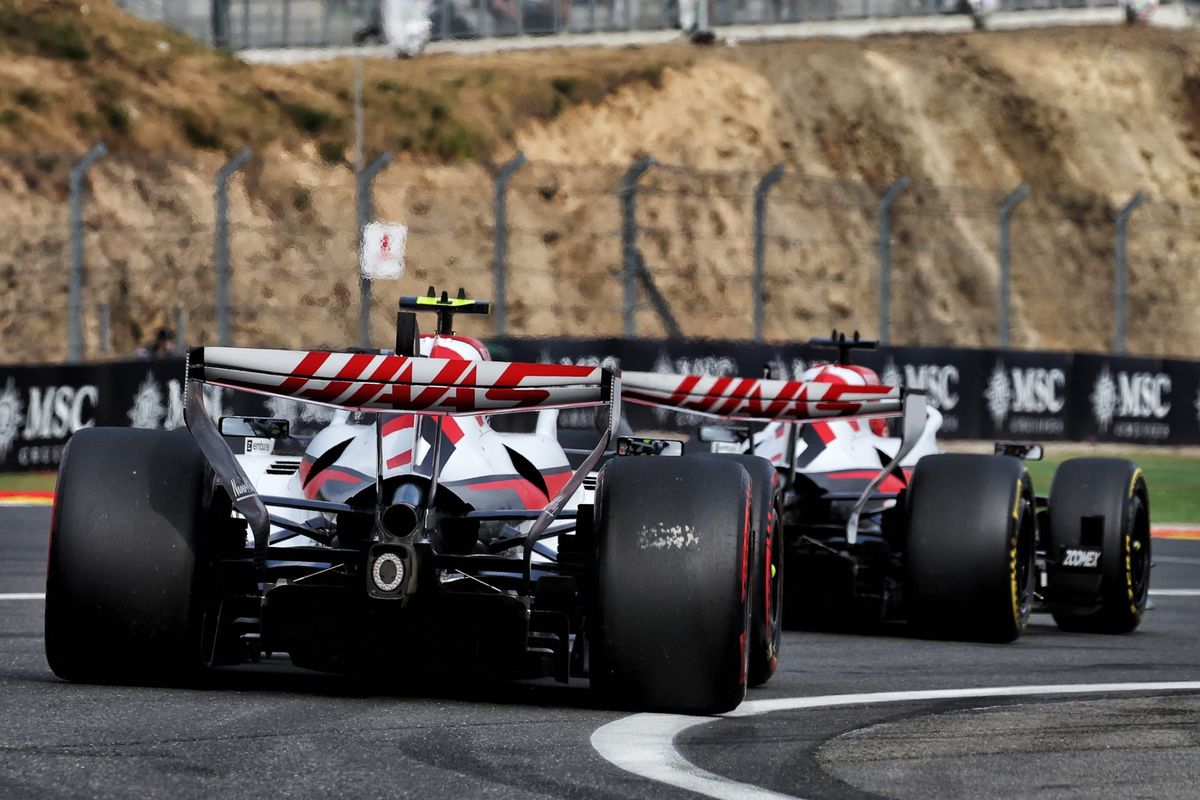
Haas faces an unusual situation at the Italian Grand Prix with only one of its drivers getting Ferrari's upgraded Formula 1 engine.
With Ferrari introducing its 'ADUO 2' step for both Lewis Hamilton and Charles Leclerc, available under F1's Additional Development and Upgrade Opportunities mechanism for engine manufacturers, its customer teams have been told that there is only one available for each of them right now.
Cadillac has elected to not run it on either of its cars in Italy, but Haas felt the opportunity of more power at the high-speed Monza circuit was too good a chance to pass up.
In going for the engine, Haas faced the unenviable task of having to pick which of its drivers would get it. In the end it was decided that it would go to Ollie Bearman.
Team principal Ayao Komatsu explained that the decision to give Bearman the nod was due to Ocon having had priority with recent developments.
Brake improvements and changes to the power steering made before the summer break were given to Ocon first, so Haas felt it was only fair to give Bearman the new power unit at Monza.
Komatsu admitted that the situation was not ideal and was actually something it avoided previously when Ferrari's first ADUO step came in Austria at the end of June.
Back then, Haas delayed introducing the engine upgrade until both cars could have it.
"Last time around we didn't do that, we waited until we had enough engines to introduce both drivers together," he said.
"But this time, obviously, Monza is a very power-sensitive circuit so it's a shame to have performance sitting in a garage, right? But, yeah, of course it makes it very challenging [having only one available].
"It would have been better if two engines are available at least. But, again, Ferrari is pushing like hell to get as much performance on the engine as possible.
"Of course, they want to introduce it at Monza for the reasons I just said to you. So that means they've got the minimum quantity just to satisfy the regulation."
Komatsu said that while it was not ideal for Haas having to pick a driver for the power unit, it was important that the reasoning behind it was explained clearly to both drivers.
"You just have to be transparent about it," he said. "We operate in as transparent and as fair a manner as possible.
"Now, of course, you can't please everyone every time, but we don't have any hidden agenda, we don't have any personal agenda for one driver or another.
"We've been building that relationship up, so of course, Esteban won't be happy not to get the PU number four straight away. But this is the best for the team and then this is the fairest way we can do it."
What the rules say
Haas has only ended up with one upgraded Ferrari power unit because manufacturers do not have to supply customer teams with more than that when they introduce a new specification.
F1's technical regulations state that if a new homologation step comes into play, then a manufacturer must make it "available to each F1 team supplied by the PU manufacturer at the competition at which it is first introduced with at least one power unit of the new homologation specification".
The requirement for at least one new spec to be available will be to ensure that customer teams get some parity with works squads when modifications are made.
If manufacturers were forced to supply two fresh engines to each partner team, then that would impose an extra burden on those that have a large number of customer outfits, which could delay the introduction of a new step in the first place.
How much is the new engine worth?
Ferrari has been eager to play down how big an impact its ADUO 2 engine will make on the pecking order.
Team principal Fred Vasseur said ahead of the Italian GP weekend: "It represents a step in the right direction and as we know this year is very much about marginal gains."
However, Ocon suggested that, based on what he has been told, he expected there to be a notable difference between the old and new power units.
"I'm going to be driving with the old engine, so that's going to be quite some loss," he said.
Ferrari's upgraded engine is understood to feature a larger turbo that features other key modifications to its design aimed at improving power.
It initially went for a smaller turbo at the start of this season because it felt a more responsive power unit would give it a big advantage at race starts.
However, the deficit rivals faced with turbo lag was reduced a lot by revisions made to the start procedure - so Ferrari's advantage here was wiped away.
A larger turbo should help boost overall power. And although the differences are unlikely to be a game-changer, Hamilton reckoned that it would help cover some of the deficit that has been faced this year.
"Every little helps," he said. "Up until this point of the year, even in the last race on such a short circuit, we were losing four tenths a lap through the race. So that's a huge deficit and we've carried that through the year to this point.
"This is a step forward. It's not the whole gap that we need, but we knew that would be the case. But to see bits coming each weekend, adding to the car, it's exciting to see that we are pushing and strongly still believe that we've got what it takes to win."