Gary Anderson: Why F1 needs a traffic light system
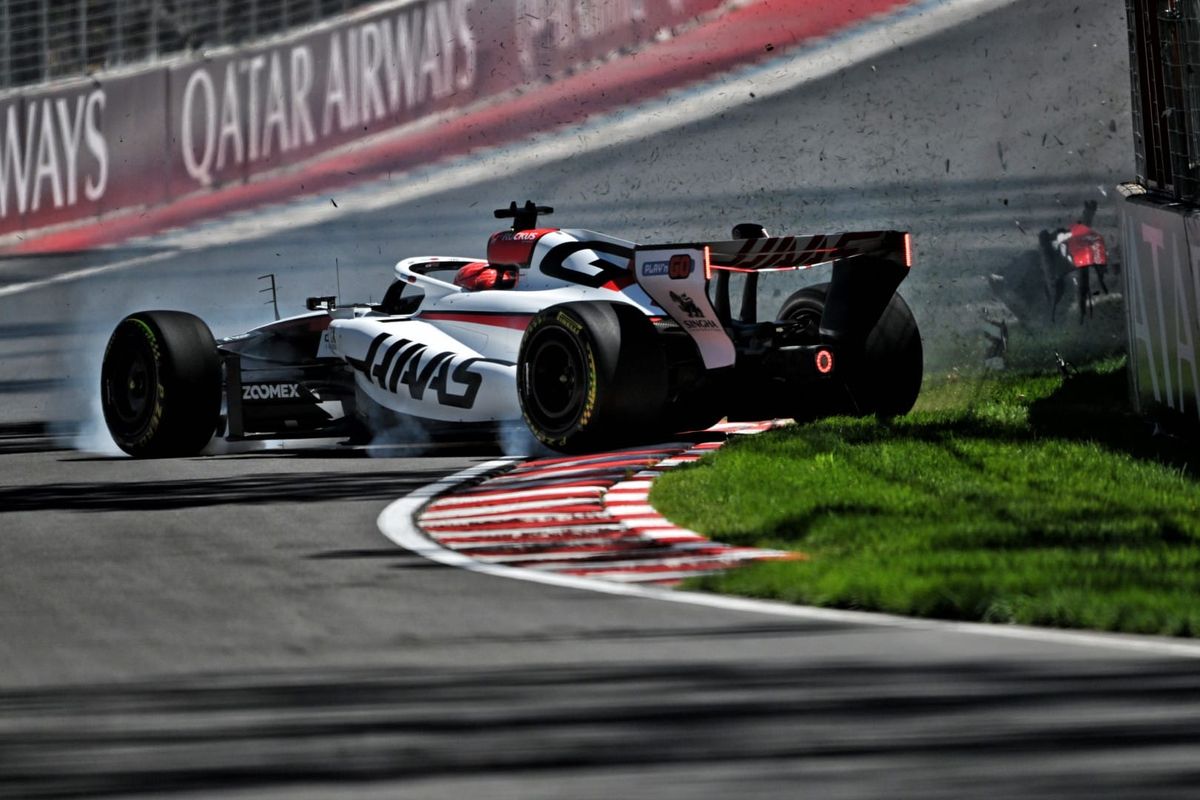
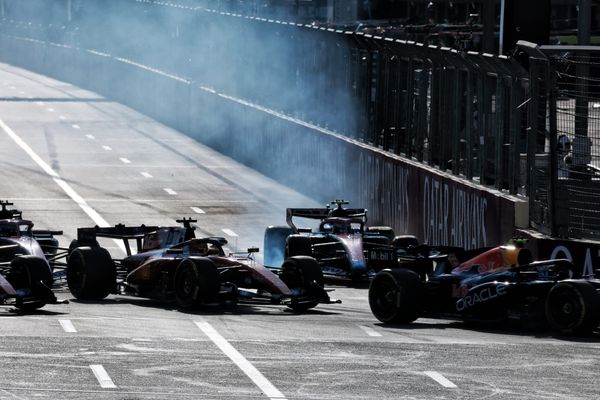
Whenever Sky Sports or any other Formula 1 broadcaster analyses controversial incidents involving trackside flags or the lightboard warning systems, it’s almost impossible for them to make out if it was stationary, waved or double yellow.
So just imagine what a driver goes through trying to work it out when traveling at 150mph or more.
Formula 1 is constantly trying to reinvent the wheel, but should more often simply look at solutions that already exist in the real world. Everyone is familiar with the red-yellow-green traffic light system - and this could be adopted as a warning system in F1 to improve safety across the board.
First, let’s take a look at how to use such a system to warn following cars about the state of deployment or harvesting a given car is running at. The rear wing and rear-impact structure lights already exist, but traffic light colours - green, green flashing, yellow, yellow flashing, red and red flashing - can improve their use dramatically. I would also add a blue light that would only appear on the rear-impact structure light.
This power mode warning system would apply to all cars at all times, and work as follows:
Rear wing lights green - car is running with power from both combustion engine and defined electrical power level for that circuit.
Rear wing lights green flashing - car is running with power from combustion engine and defined electrical power level for that circuit. However, the battery pack is at 10% or less of the 4MJ maximum useable capacity, so in other words there’s roughly one second of battery power left.
Rear wing lights yellow - car is running with power from combustion engine but nothing from electrical power.
Rear wing lights yellow flashing - car is in harvesting mode.
Rear wing lights red - car is running as a generator, meaning the engine is running against the electrical motor, so basically maximum super-clipping so no forward propulsion.
Rear wing lights red flashing - car has no propulsion, i.e. both the combustion engine and the electrical power have shut down.
Rear impact and dash blue light flashing - as an extra warning, as drivers seem to struggle to see much in the rear-view mirrors. This light comes on as a warning when you are about to be lapped that a car is within one second of you and could attempt an overtake.
This dash light could also be incorporated into the driver-facing camera or the halo as that might further improve its visibility. This is a warning light that a car is close (within one second) behind and could attempt an overtake.
Rear impact and dash blue light constant - this light comes on when you have had a flashing blue light for more than 10 seconds. At that point you must without fail allow the following car to overtake.
In wet conditions when vision is impaired, which we seldom run in currently, the complete rear light warning system can run as red flashing, changing only to the above colours when required.
Now for the track safety side of things. Recently, there has been uncertainty about how much of a lift is enough, with the non-penalty for George Russell in Austria and the grid drop for Kimi Antonelli in Hungary falling either side of this vague line.
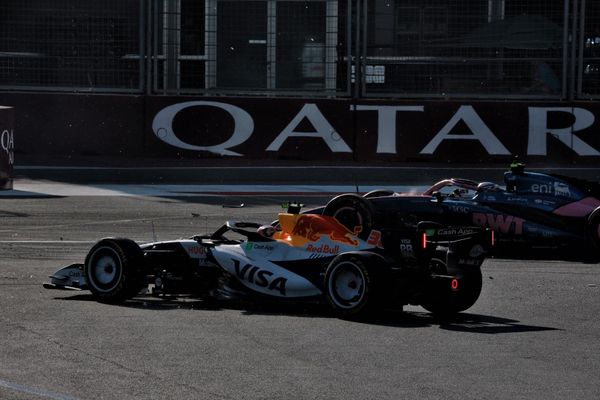
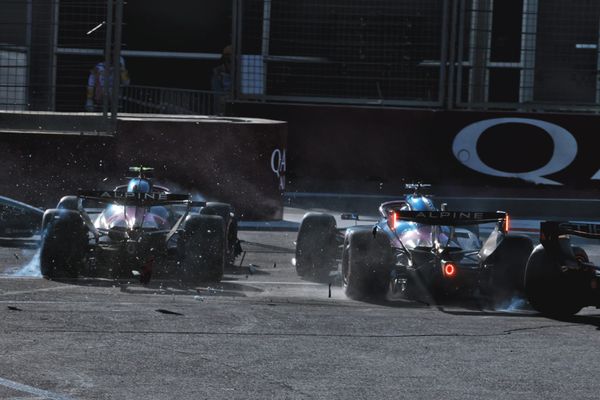
When it comes to safety, especially when a car has stopped on track or been involved in an accident, there’s a straightforward solution using the above traffic-light system on the car.
To facilitate this, add another light to the front of the car. Again, this could be part of the camera system all cameras must carry, or incorporated into the halo, which would ensure the warning systems are in a defined position.
All car lights front, rear and side, yellow flashing - if a car has gone off track but still moving.
Drivers are required to slow by a predetermined percentage, say, 10% of the speed at that point on the previous lap. It is the team’s responsibility to monitor the speed reduction and, if questioned, they need to show their compliance data to the FIA.
All car lights front, rear and side, yellow - if a car has stopped, on track or off track with minimal impact, say less than 10g.
Drivers are required to slow by a predetermined percentage, say, 25% of the speed at that point on the previous lap. It is the team’s responsibility to monitor the speed reduction, and, if questioned, they need to show their compliance data to the FIA.
All car lights, front, rear and side, red flashing - if a car has impact damage above 25g or so and requires a medical car. Track lights go red from start/finish line to that track position.
Drivers are required to return to the pits if they are in the red area of track, others past the scene of the incident can complete the lap.
All car lights, front, rear and side, red - if a car has impact damage above 25g or so and requires a medical car, and the car is still live, meaning the car is unsafe for anyone (marshals and safety crew) to touch. Track lights go red from start/finish line to that track position.
Drivers are required to return to the pits if they are in the red area of track, others past the scene of the incident can complete the lap.
These are not just cars with an engine, a gearbox and a fuel tank. They have high-voltage systems, batteries, control electronics, all sorts of things going on, and whenever one of them is sitting there just stopped or damaged after an impact, perhaps with the driver still in it, sometimes the marshals need saving from themselves in trying to get to it too quickly. You don’t want anybody guessing what state the car is in.
If the system fails, it should fail to red. You never want a safety system failing in a way that tells you everything is fine when it isn’t. If the car doesn’t know what state it is in, then the default position should be 'don’t touch it'.
This system or something very similar should be standard and stipulated in the regulations with the same lights, same colours, same meaning on every car. You don’t want one team doing it one way and another team doing it slightly differently, so it has to be an FIA-controlled system, with the same logic and the same failsafe philosophy for everybody.
This isn’t something complicated that requires a committee of people to sit in a room for three years to decide what shade of red it should be. Just a simple, understandable, idiot-proof system that tells the marshals, the medical crew, the driver and race control what state that car is in - red, yellow, green.
Currently, safety improvements are about huge crash tests, big structures, stronger chassis and all the engineering that goes into protecting the driver. That is all essential.
Without the marshals and safety crew we wouldn’t be racing, but safety for these people is simply about communication.
Formula 1 spends a fortune on technology, but sometimes the best solutions are the simple ones. A traffic light system is about as clear as communication gets.