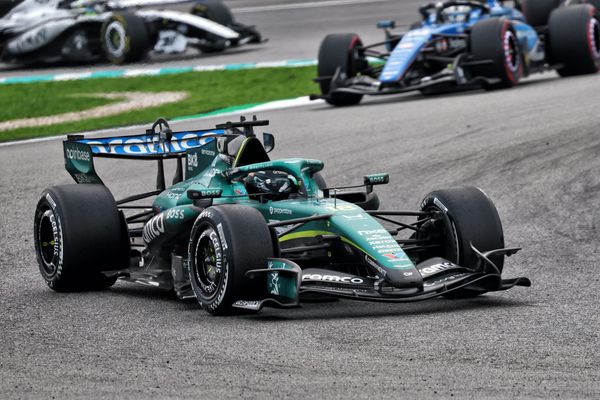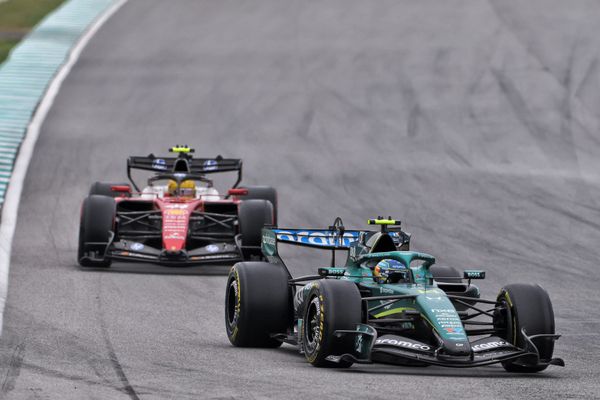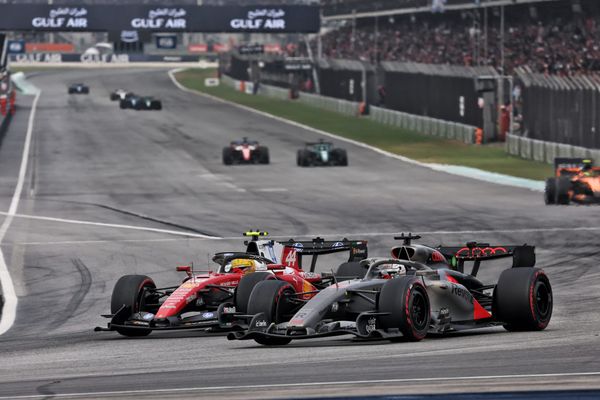
Gary Anderson: F1 got lucky Malaysia chaos wasn't worse
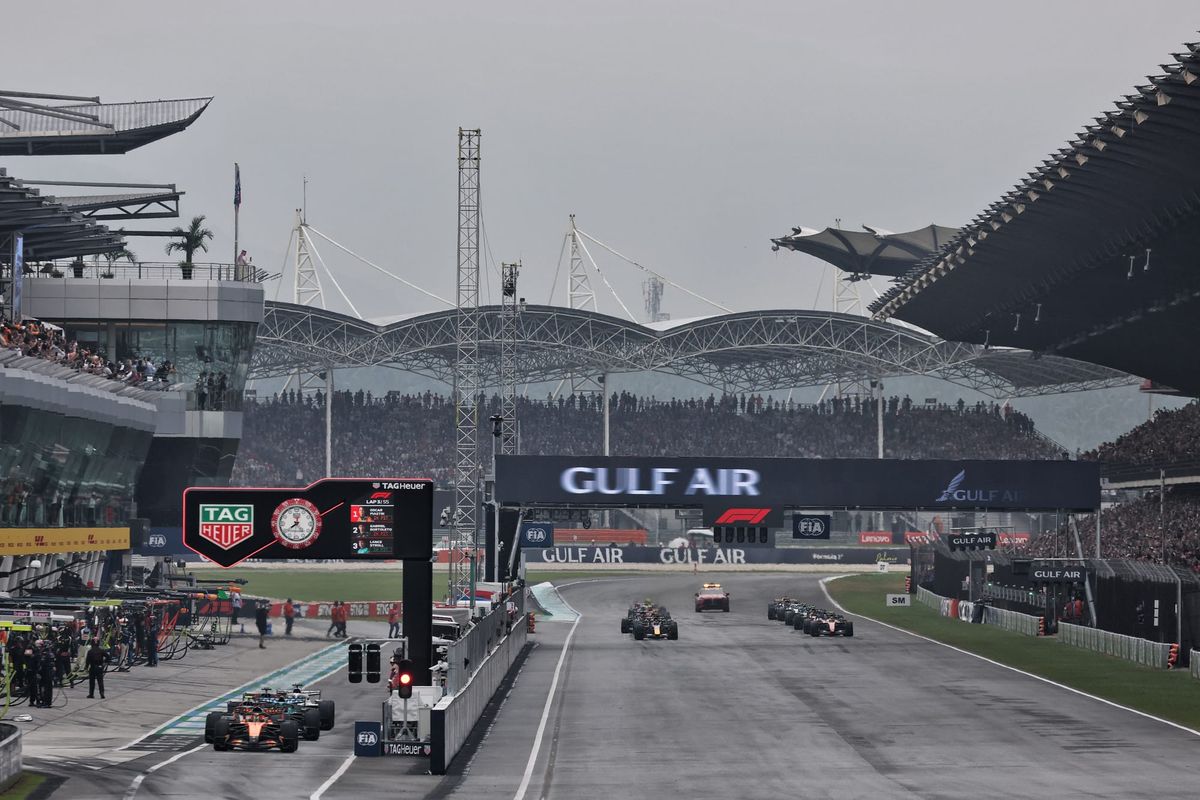
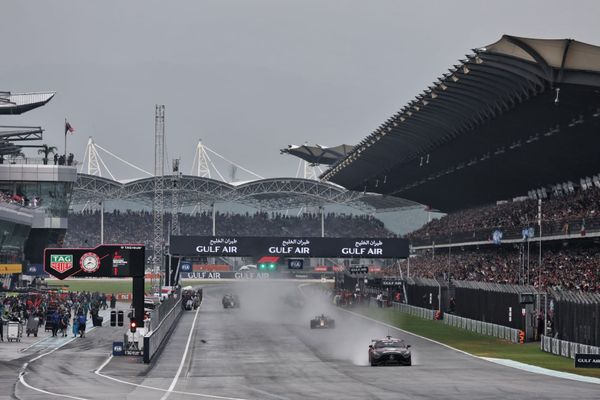
When the Formula 1 cars headed off on their formation lap for the Bahrain Grand Prix at Sepang, I didn't know whether to laugh or cry.
I simply couldn't believe what I was seeing and felt that a few million other people and I were just about to be robbed of what should have turned out to be a great race. Old sparring partners Max Verstappen and Lewis Hamilton sitting side by side on the front row was going to be epic.
The weather conditions changing at the last minute always spices things up, but cars were basically stopping everywhere.
It was all through no fault of the drivers or the teams; their hands are tied with these stupid 2026 regulations.
I'm just about fed up with complaining about them. They are so far away from what I would call racing or what a racing driver wants that it just makes a mockery of what is supposed to be the crème de la crème of motorsport.
I'm not going to go into the fact that these cars can't or aren't allowed even to venture out on the track in the wet - that's all for another day!
Today's gripe is simply about how these stupid power unit regulations and how they are implemented are basically dangerous.
How many times this year, after seeing a driver make what we thought was an error, does that driver come on the radio and say ‘I have no idea what just happened there'? We only have to go back to Baku when Valtteri Bottas went into the safety barrier on the final lap of the race. This happened because he went down the escape road at Turn 1, the car “got confused” about where it was on the track, so instead of slowing down when he pressed the brake pedal as he wanted to, it went straight on into the barriers.
If we look at the sporting regulations; Article B1.8.1 states: “The driver must drive the F1 car alone and unaided.”
Now I completely understand why the paddle-shift gear-change system complies with that requirement, as the driver has to instigate the gear change by operating the paddle. However, I am confused that if the driver is pressing the brake pedal and the car ‘decides' it doesn't want to slow down, how does that comply with Article B1.8.1?
Moving that onto what happened on the formation lap for the Bahrain GP, we have the following rules being severely tested;
Article B1.8.5 states: “At no time may an F1 car be driven unnecessarily slowly, erratically or in a manner which could be deemed potentially dangerous to other drivers or any other person.”
And Article B1.8.7 states ”Any driver whose car has a significant failure or fault which means it cannot reasonably return to the pitlane without unnecessarily impeding another competitor or otherwise hindering the competition must leave the track as soon as it is safe to do so.”
In the technical regulations, Article C1.4 states: “The stewards may prohibit the participation of a vehicle whose construction is deemed to be dangerous.
“Should the relevant information become apparent during a session, such a decision may apply with immediate effect.”
And Article C1.5 states: “F1 cars must comply with these regulations in their entirety at all times during a competition,” and Article C1.7 says “It is the duty of each competitor to satisfy the FIA and the stewards that its Formula 1 car complies with these regulations in their entirety at all times during a competition.
“With regard to power units used on a Formula 1 car, this duty and responsibility also extends to the PU manufacturer.”
If you sum those up, the driver, the teams and the power unit manufacturer's hands are tied by an inadequate understanding and, from that lack of understanding, an inadequate set of regulations.
If we just take the startline chaos we saw in pre-season testing, where the cars couldn't manage a practice start, the FIA changed the start procedure to incorporate a five-second turbo spool-up time prior to the lights coming on. This was because of the lack of understanding of how much the teams would struggle after the removal of the MGU-H.
Being the governing body, the FIA could change that and any regulation it wanted by deeming it as a safety change. Stranded cars on the grid are dangerous but it never needed to get to that point in the first place.
And back to these power units as they are now, how long do we have to wait before someone gets hurt? Just imagine the chaos that was just around the corner if the race at Sepang had actually started in dry conditions and that thunderstorm came in around lap five.
We would have had cars littered all around the track with the drivers playing with the steering wheel buttons a bit like Elton John on his piano keys; the only difference would be they would be hitting control-alt-delete.
While they were doing that, they wouldn't have been complying with either the no erratic driving rule of Article B1.8.5 or the don't unnecessarily impede others with an ailing car mentioned in Article B1.8.7.
I'm not going to go into the rights and wrongs of what happened at Sepang because, in reality, it doesn't really matter what the details of the reason it happened were. It shouldn't have happened.
However, what worries me more is that the regulation setter, the FIA, was able to come up with a software fix in a very short amount of time and install it in all cars without any depth of real-world testing. Then what other software gremlins are lurking in there, waiting to rear their ugly head?.
Now's the time to act with maturity and responsibility and react to the situation we saw at Sepang. Yes the FIA say it covered that problem with a software fix, but did it fully eradicate it or is the next problem lurking just around the corner?
This was race 16 of this season. Yes, it was the first wet event, but even still, the problems we have should not be happening.
I have been saying for a long time that the driver needs to be given control of the car through their two pedals and the steering wheel. Pull or push the upshift paddle for an upshift, pull or push the downshift paddle for a downshift, turn it to the left if you want to go left, turn it to the right if you want to go right, press the brake pedal if you want to slow down; the harder you press, the more you slow; press the torque (throttle) pedal if you want to go faster; the further you press it, the more torque you get.
As far as the harvesting and deployment is concerned it is very easy to fix. You need to put the cart before the horse instead of someone inventing this 50/50% internal combustion engine to electrical torque usage. And that 50/50 split is - other than for a very short snapshot in time per lap - basically impossible when you have cars that over an average lap are requesting positive torque from say 20% through to 100% (with this the driver is basically saying ‘I want to go faster') for roughly 60% of the lap with a negative torque request (I.e. less than 10% positive torque and brake pressure) from say 20% to 100% of the maximum brake pressure seen on a lap (the driver is basically saying ‘I want to go slower') of the brake pressure for only 20% of a lap.
If you simply take those numbers you get 80% of the lap either accelerating or braking significantly, the other 20% is down to part throttle usage. If they are anywhere near correct then you either need three times the harvesting capability you have relative to deployment, or you go to a 75% internal combustion engine and a 25% electrical torque balance.
Yes, it will mean that this mythical 1000bhp and speeds in excess of 350km/h (218mph) on the straights that F1 seems to be chasing will be reduced to probably 850bhp and 320km/h (199mph), but do we really care? I remember when that 200mph in old money was seen as a great threshold to shoot at. This ratio could be optimised pre-event for each circuit by simply averaging out the balance request from the five power unit manufacturers.
After everything settled down, we still had a very good race, but we need to remember that one of the cars that stopped on that initial formation lap was Hamilton, before his Ferrari eventually restarted. After a dubious tyre choice of slicks for the restart, which basically left him over a minute behind the leader, with a little help from the VSC and then the safety car, he ended up on the podium. However, through no fault of his own or his team, his Ferrari could have ended up not even starting.