Gary Anderson: Breaking down Audi's colossal F1 upgrade
Audi should get the prize for the most comprehensive car update this season given how many new parts it has brought to Azerbaijan.
However, it’s all about how it works together - and not just about a jumble of parts.
Starting as always with the front wing, it looks like a completely new package. The mainplane now has a more defined upsweep going outboard, still integrated into the footplate of the front wing endplate, while the flap assembly appears to be loaded further inboard.
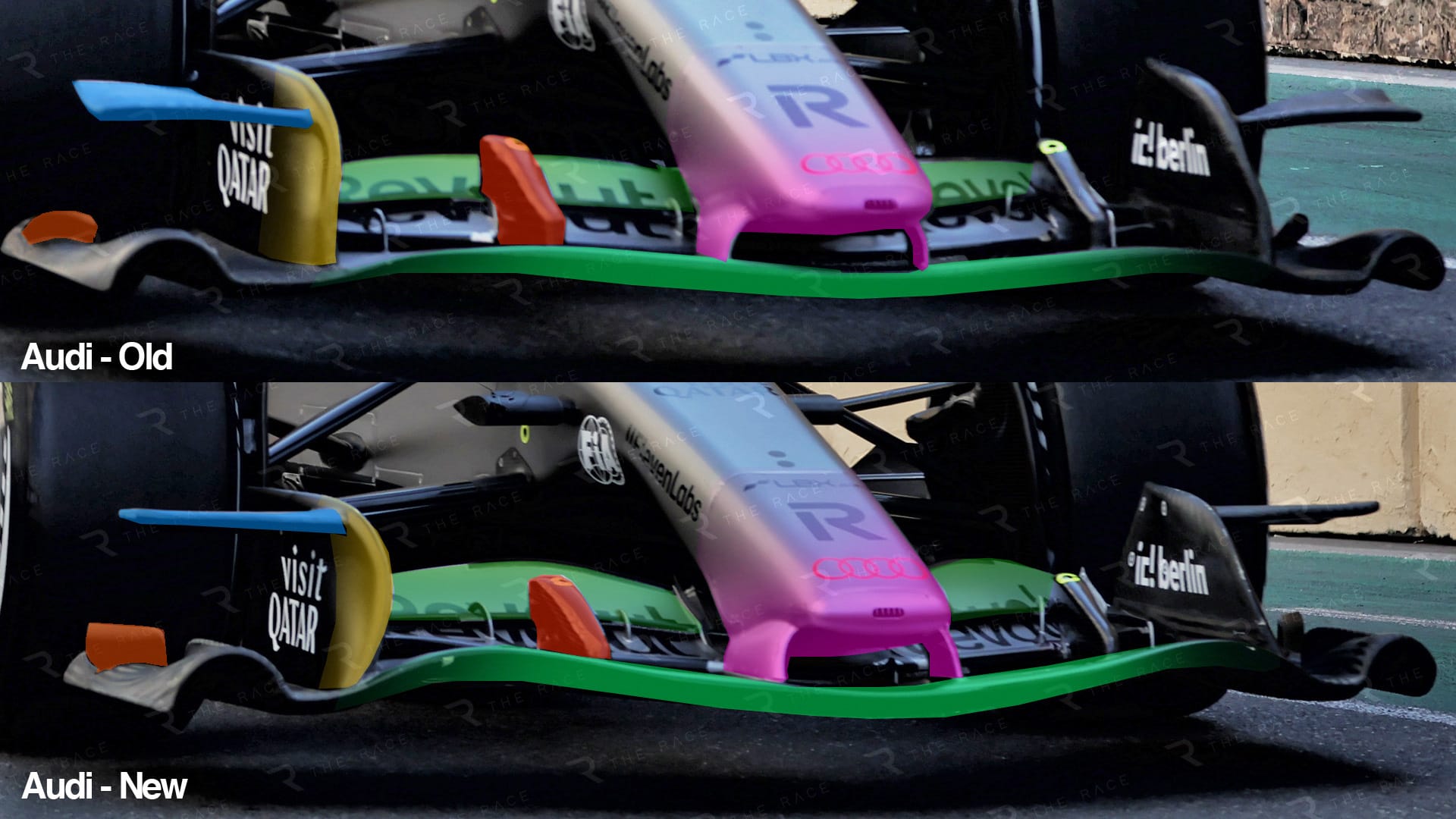
Both of these changes will improve the consistency of the airflow going around the inside of the front tyre, especially when varying degrees of steering lock are applied.
The increase in the three-dimensional effect on the leading edge of the front wing endplate will increase the outwash, as will the reduction in the camber of the blue-highlighted horizontal vane coming out of that endplate and the increase in size and detail of the small orange vane just in front of the tyre.
Audi is more or less alone in that its front wing actuator is mounted on the wing’s upper surface. As opposed to hiding it, Audi has decreased its size.
All of these developments could be grouped together as one development to better manage the airflow going around the inside and outside of the front tyre and wheel assembly.
F1 being an open-wheel formula, the tyres are one of the most obtrusive blockages that F1 teams have to aerodynamically deal with. Changes in this area can have consequences further downstream, so these changes have led Audi into a very comprehensive update package.
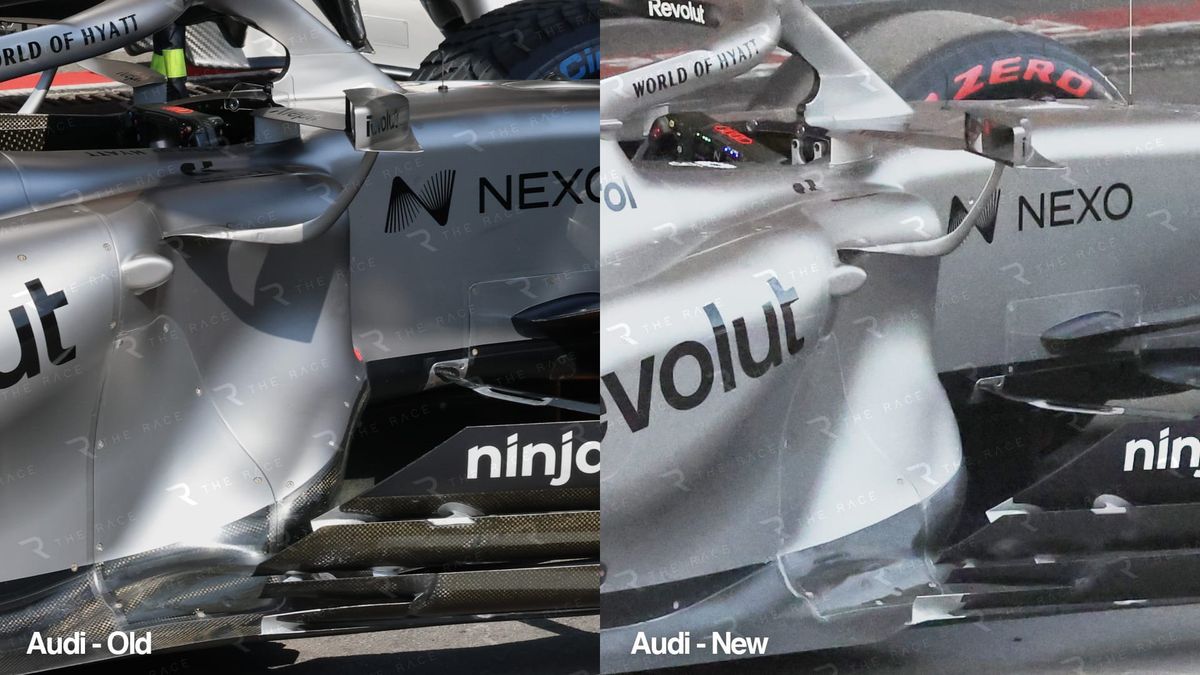
Audi's unique (until McLaren introduced its new sidepod package) sidepod leading edge and radiator inlet have also been modified in that there is now a slightly more bulbous section at the floor leading edge. This is probably to be more sympathetic to the airflow as it separates to go under the floor’s leading edge and/or around the side of the floor.
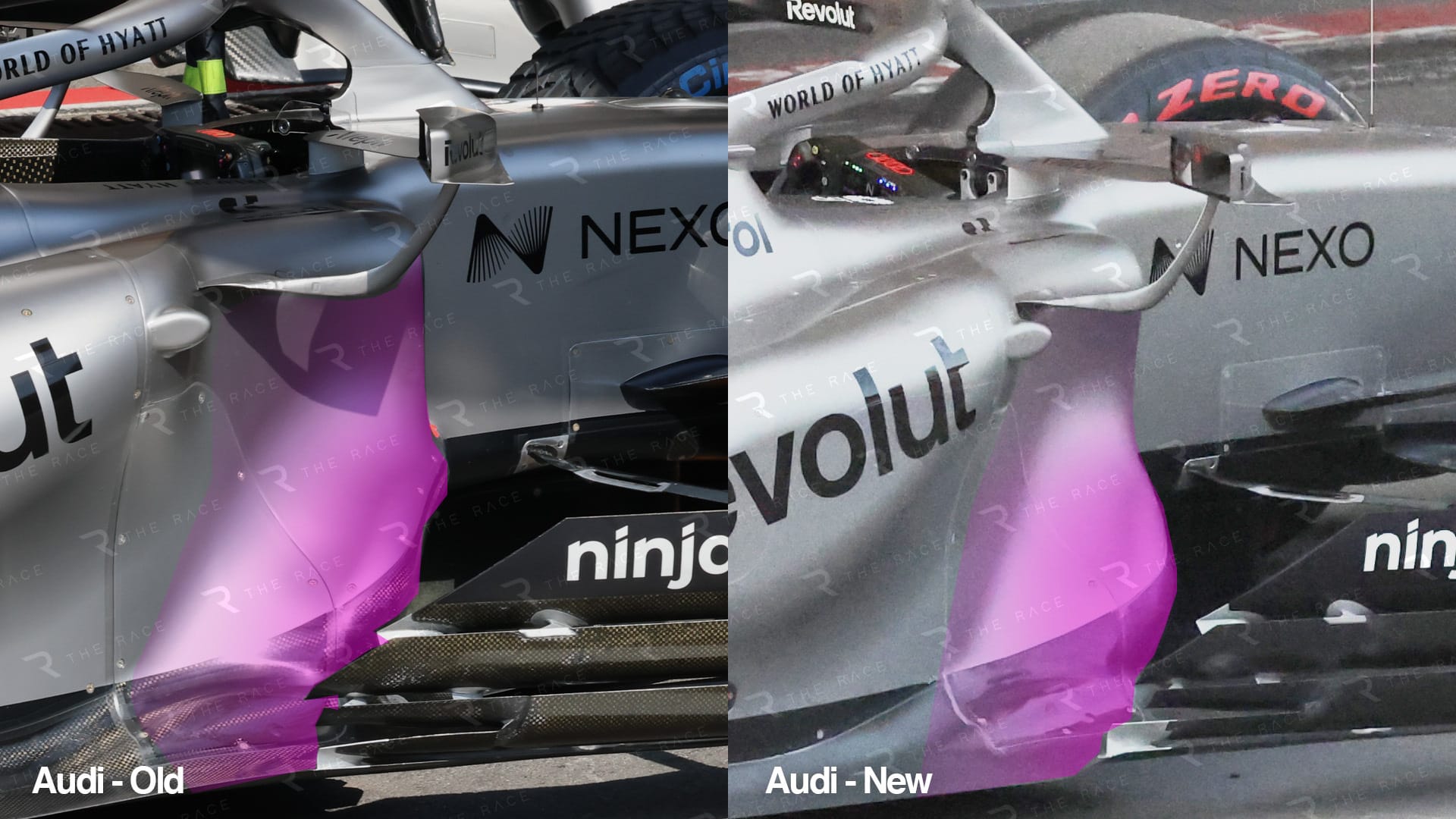
The actual sidepods have also changed, with the upper surface now allowing more downwash and, with that, a change to the cooling exit system.
Audi has gone from an array of louvres to a more common opening. This has required the magenta-highlighted section to be made into two sections: the front part with an opening at the rear and the rear section’s leading edge blocked off, which looks very bulbous.
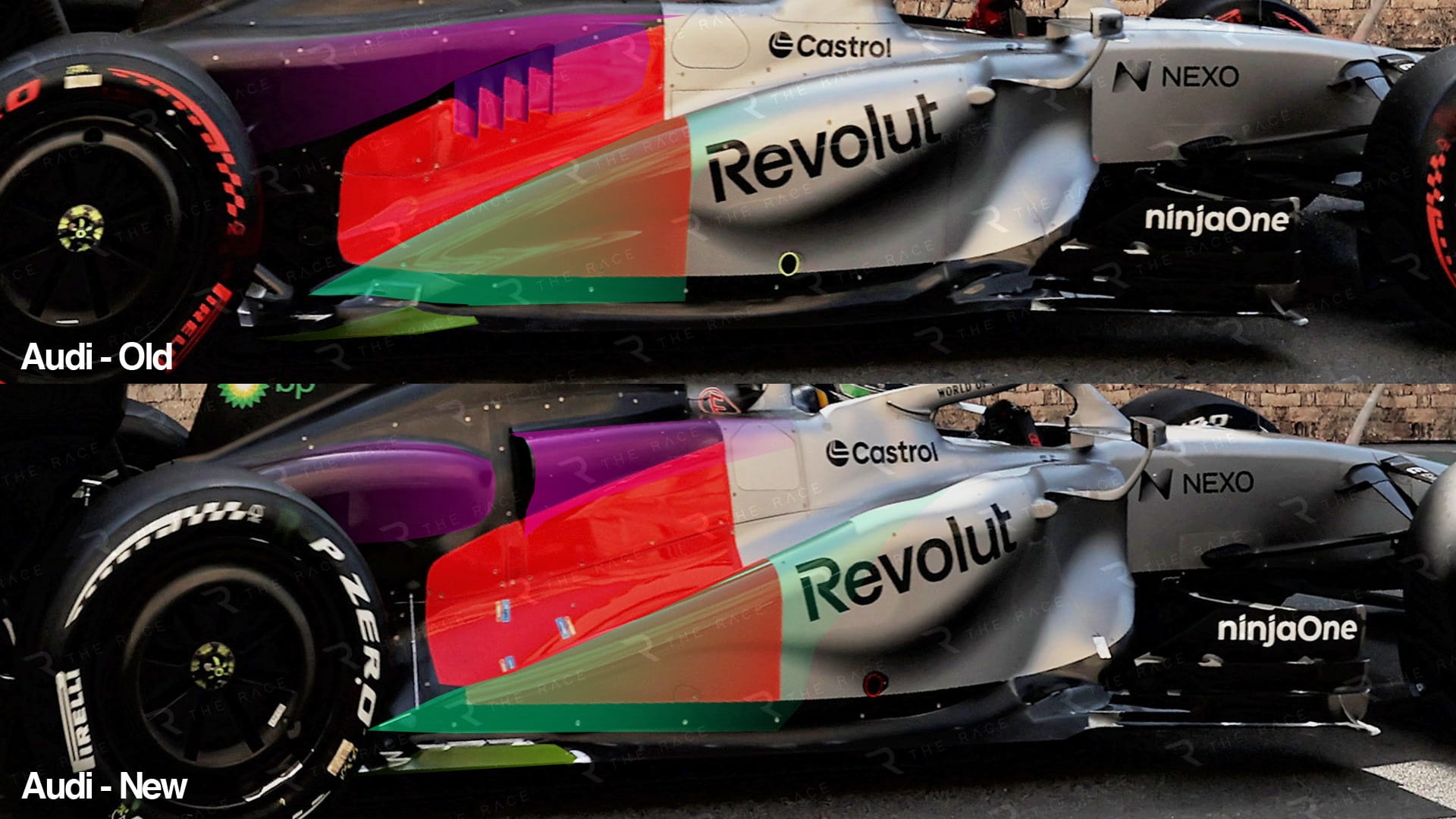
Continuing that theme of managing the airflow around the front tyres, the next question is - how can you optimise that new and revised flow structure?
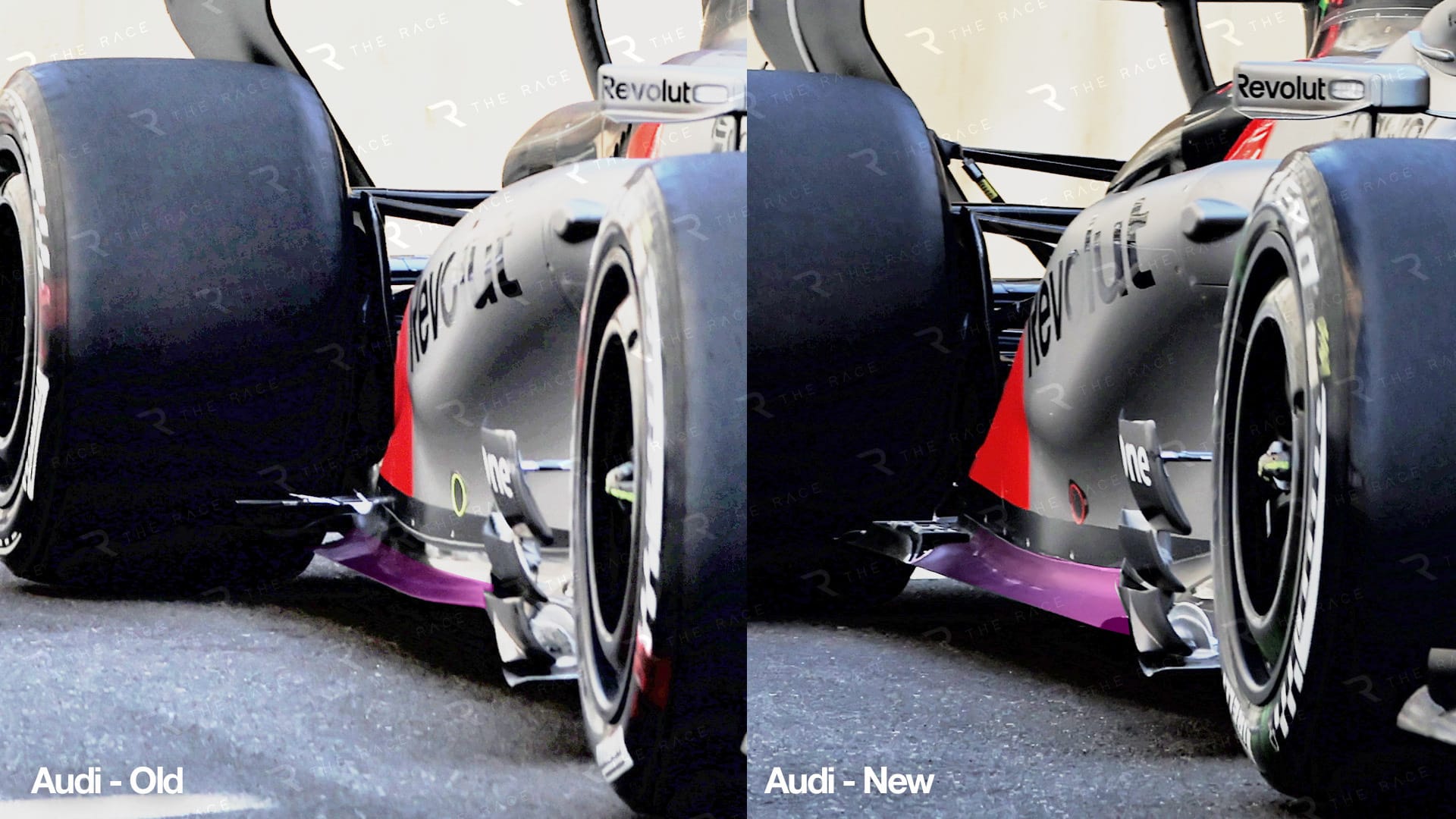
This magenta-highlighted outer floor edge doesn’t look very different. There seems to be a small more aggressive turned-up section just behind the bargeboard area; it’s simply a knife edge which should, because of the difference in pressure on the top and bottom surfaces, produce a vortex along its length, helping to seal that area of the floor.
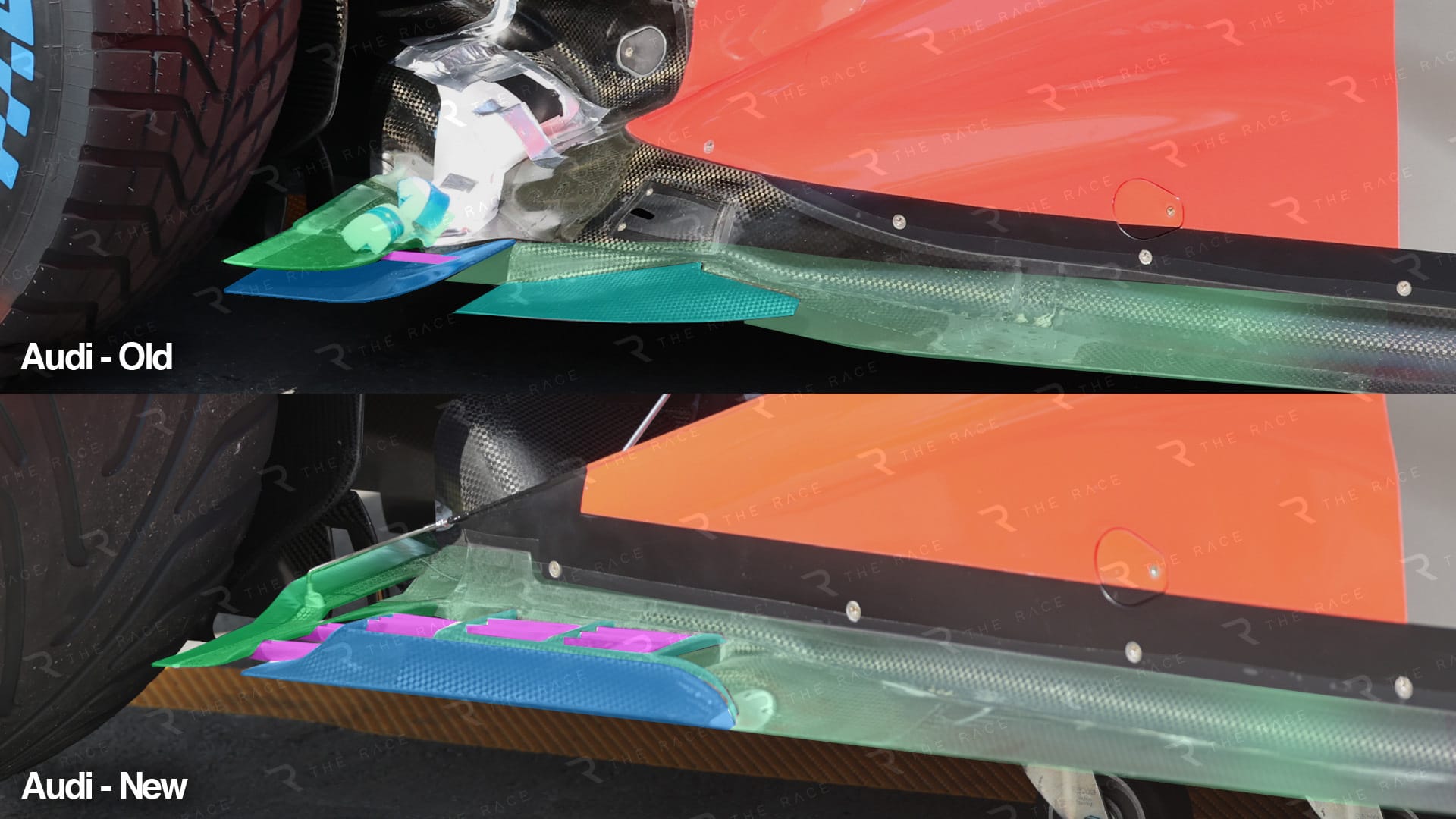
To complete this floor detail, Audi has also revisited the vanes in front of the rear tyre contact patch. This is in line with what I said earlier about managing the airflow around the blockage created by the tyres.
Maximising the outwash in this area means there is less inwash, which disrupts the airflow structure to the diffuser, reducing its efficiency.
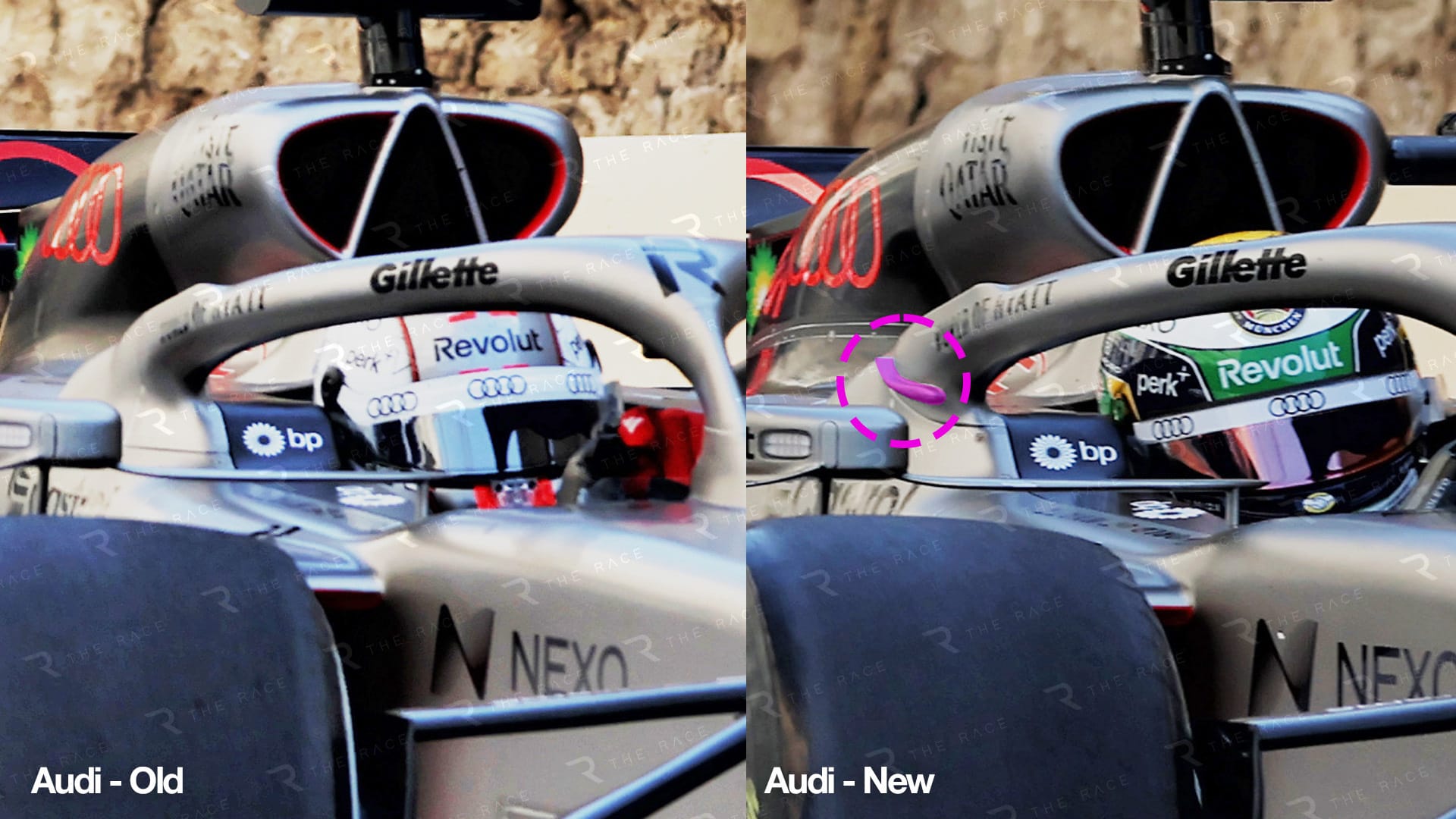
Small details also count, as they all add up. This area of the intersection between the halo and the leading edge of the headrest can very easily create turbulence that affects the stability of the driver’s head. This small vane will help to consistently manage some of that turbulence.
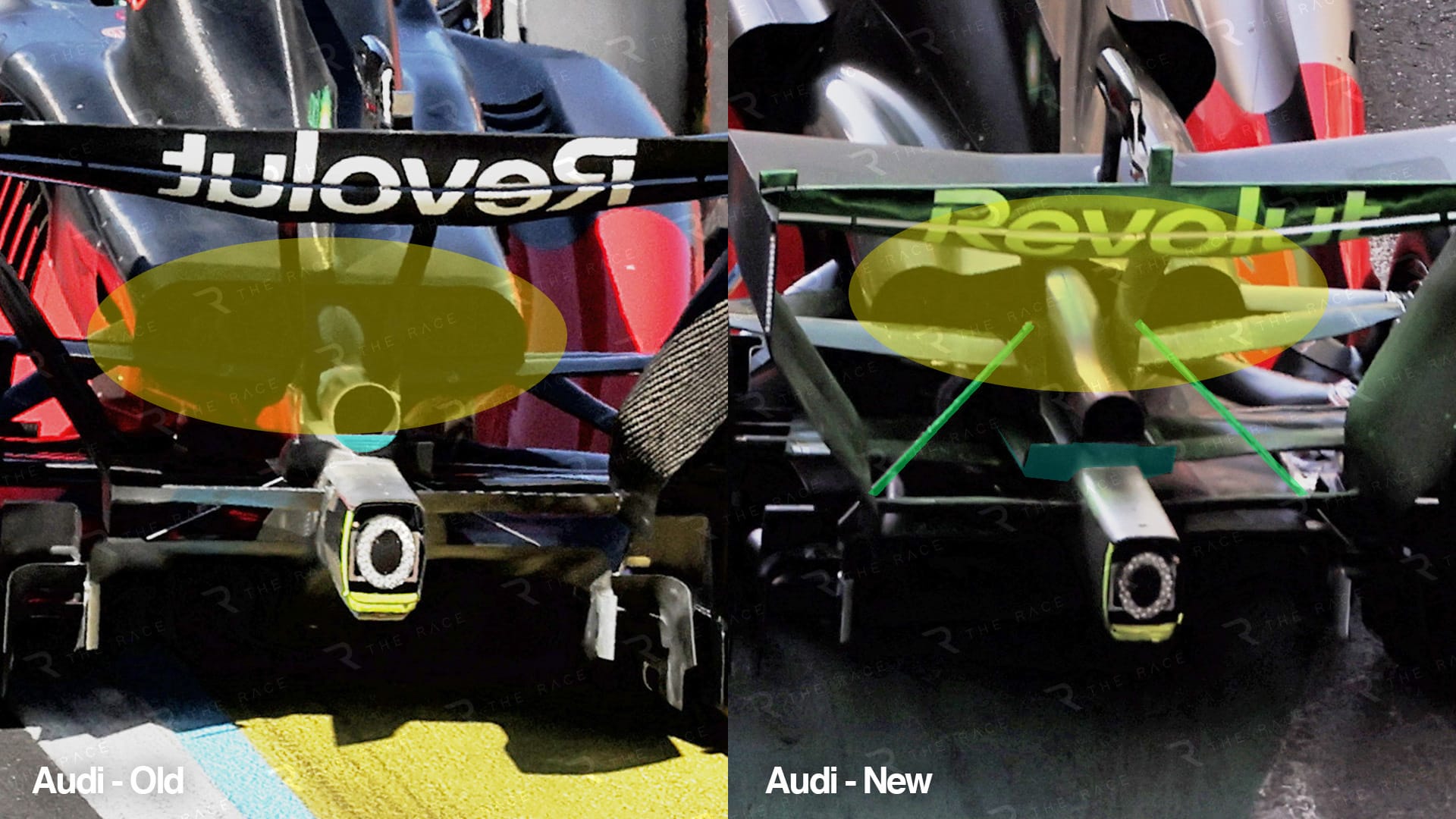
There are now four fairly large cooling exit openings. The cooling system works because of the pressure drop across the radiator cores: positive pressure on the inlet, negative pressure on the outlet. It’s very difficult to increase the positive pressure as that is generated by car speed, but a larger, better-positioned opening can fairly easily increase the negative pressure at the exit. The important thing is to minimise the downforce losses that any of these openings induce.
Audi has also changed the angle of support that the diffuser sides are getting from these longer and repositioned floor stays that are highlighted in green.
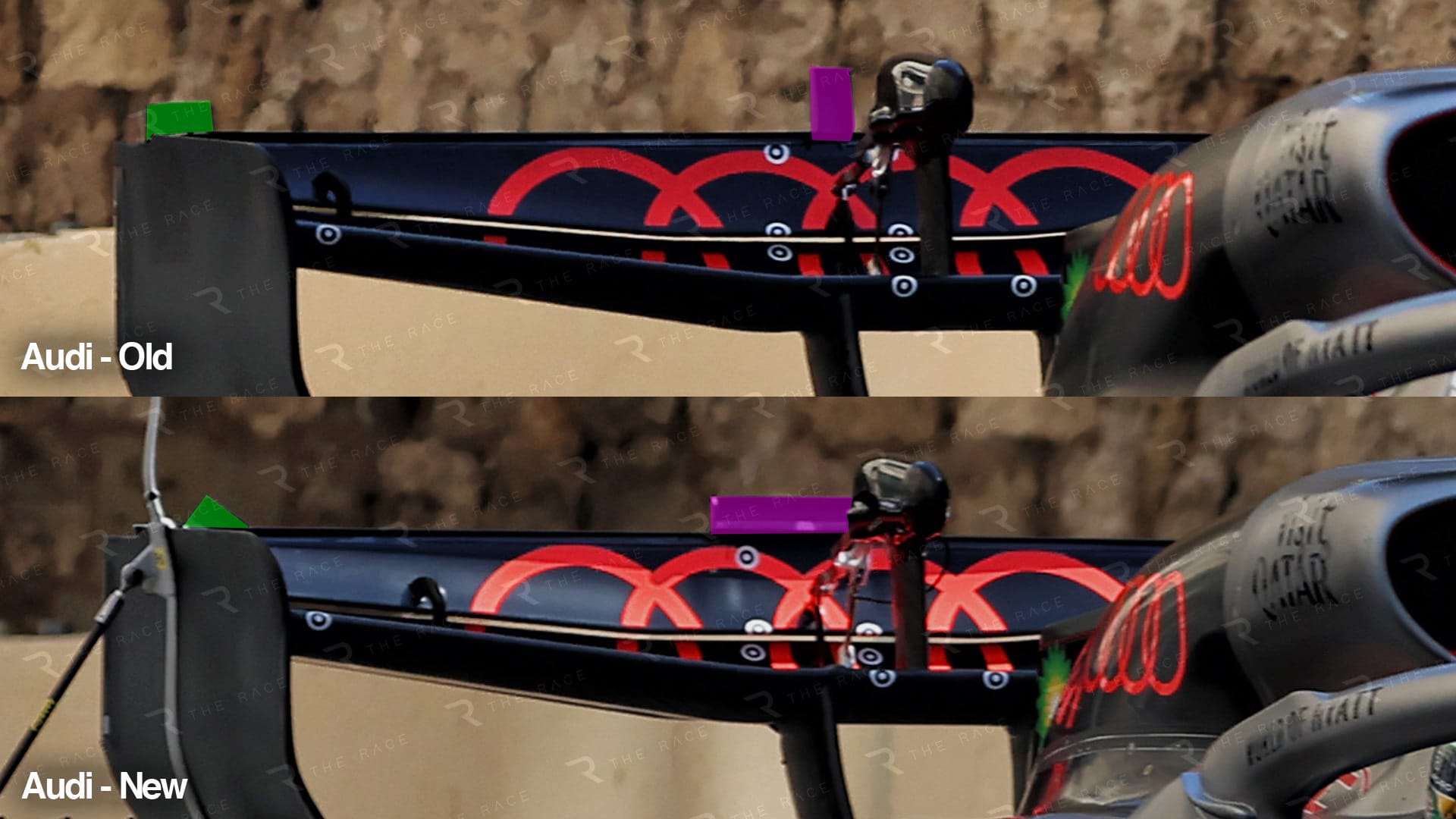
Nothing has been left unaddressed. The rear wing trailing edge trim details have also come under review.
The aero, as with the cooling exits, is in reality circuit-dependent, so depending on the circuit requirements it can be altered as the race weekend progresses.
The battle in that midfield is just as intense, if not more so, than the battle up front. Every single point has potential $ signs in front of it.
Alpine introduced its big upgrade a few races ago, Williams came to Baku with a big upgrade, mainly a weight reduction - and now it’s Audi’s turn to air its developments. Who has taken the biggest step?
Hopefully we will get an indication this weekend. Audi has not fared well so far - but Baku is a strange circuit.