F1 drivers braced for 'super unnatural' challenge in Baku


Formula 1 drivers are braced for Baku to expose the requirement for more "super unnatural" driving of the 2026 cars during the Azerbaijan Grand Prix this weekend.
Baku provides a unique challenge as it possesses the longest flat-out run on the calendar (over two kilometres long), but that creates major problems for F1's energy-starved 2026 cars.
It means drivers will need to deploy most of their battery on the start/finish straight in qualifying, leaving them with very little power around the rest of the lap and some huge power disparities on corner exits.
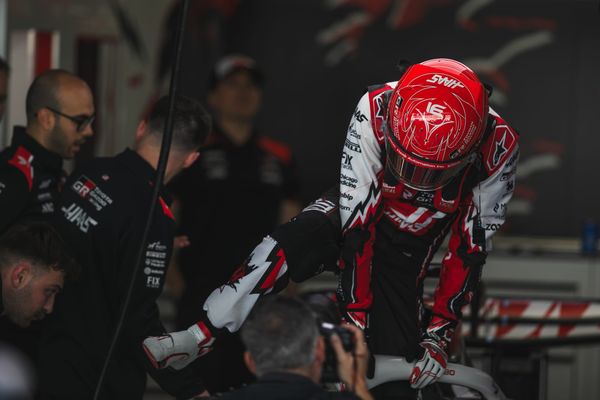
"‘It's going to be interesting because you have two or three distinctive straights where you have to deploy a lot of power and then you spend a lot of the middle sector running with really, really low power because it's very inefficient to deploy any energy in those super short straights," Haas driver Ollie Bearman explained.
"You tend to save it for the longer ones into Turn 1, into Turn 3. It means that you have a massive disparity in power delivery. You come out of Turn 2 heading into Turn 3 and you have a thousand horsepower or however much, maximum horsepower and then you have like two-thirds of that coming out of Turn 3 because it's a really short straight, so suddenly your throttle pedal is half as powerful as it was in the previous corner.
"So it's a really strange thing. It happens in some circuits, especially the energy-starved ones, but it's only in specific areas where there's short straights.
"We had it in Monza out of the second chicane [towards the Lesmos], here between every short straight you have really low power.
"It means that it's really strange because you can imagine you spend the middle sector doing one thing and then suddenly you come out of another corner and you have twice as much power.
"It's super unnatural for us; we've never had that before ever until February this year."
Drivers have no control over this, as Bearman says, "you just press the throttle pedal and brake and steer, and it all takes care of itself. There's nothing we actually do whilst driving that can necessarily affect it".
It's going to be crucial for drivers to arrive at the start/finish straight with as close to 100% battery as possible - or it will be very costly in both qualifying and the race.
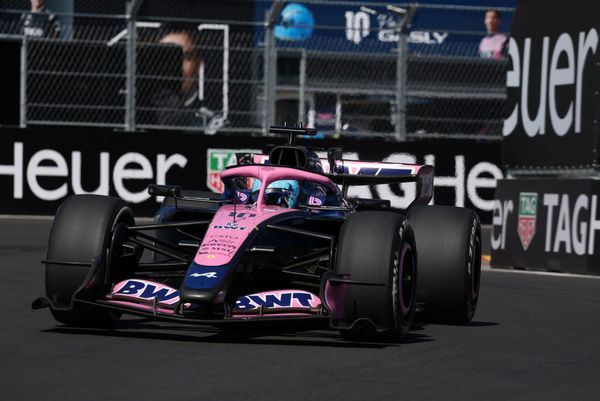
As Pierre Gasly explained, "if you don't have 100%, "You're just going to start clipping earlier, but earlier here is not 200 metres [and] when you're down a couple of km/h for that long, then it starts to be quite costly.
"Racing-wise, it's the type of straight where sometimes you don't only see one car passing by, so I would definitely recommend to be top of the pack, especially when it comes to race day.
"But the reality is we don't have control of all of that side. It's software, it's whatever, incidents, conditions, etc that sometimes leads us to being on the right side of it or the wrong side of it, so we'll have to see, but for sure, it's important to be fine."
Intense closing speeds
The start/finish line being located less than 200 metres from Turn 1 means drivers on a preparation lap will be relying solely on internal combustion engine power for the majority of the run out of the Turn 16 left-hander.
There's a 1250 metre period beginning at the exit of the Turn 16 left-hander where drivers can avoid a ramp-down rate and drop 350kw of power, meaning they'll just be on internal combustion engine power. And a similar period where they can do the same and run purely on ICE power from Turn 3 all the way to Turn 12 if they wish to do so.
In contrast, those drivers on a lap will be deploying most of their energy once on the main straight, so there's the potential for some extreme closing speeds as drivers have already warned.
"People opening the lap are very slow until the battery comes in just before the line," Fernando Alonso said.
"There are like 20 seconds that you will be at 200km/h, and people are coming at 350[km/h].
"There is no way to move, especially in Turn 18-19 [flat-out kinked corners]. So that will be one of the challenges of the weekend: to make sure that we are safe, on the drivers' briefing, and we choose the places where to move."
Audi's Gabriel Bortoleto predicted, "it's going to be a bit of a mess, especially as we are leaving the last corner in a push lap so quickly, and then people opening the laps are going to be so slow.
"So hopefully that's not going to be dangerous. Hopefully there is going to be something that we can do in that Turn 18 and Turn 19 corners, because I guess it can be dangerous if you are coming at I don't know 300km/h and something, and another car is at 250km/h because there is no MGU-K being deployed."
Asked if it will be discussed at the drivers' briefing on Thursday, Bortoleto said: "Yeah, but what are they going to do about it?"
‘Sketchy' wind interference
One of Baku's staple challenges is the wind that flows between the buildings that surround the circuit and changes lap after lap and corner after corner. There are also 39km/h winds forecast for qualifying on Friday.
Franco Colapinto said "I think the wind is going to be tricky; last year we saw a lot of red flags because of the wind. It was changing like crazy - the gusts, because of the buildings.
"You'd get it for five seconds and the five seconds after, no gust, and then again. It was so inconsistent that it would be very difficult for us, especially on a street track.
"It makes it much more tricky and much more sketchy."
Racing Bulls driver Arvid Lindblad wasn't so sure: "I think that's less of a thing in this year's cars because they're less sensitive with the aero". I'm sure it's still a thing, though."