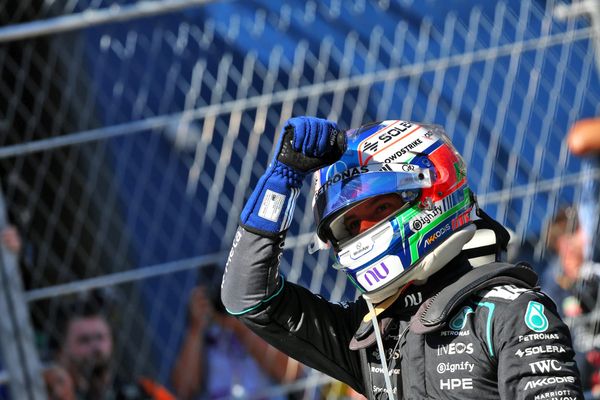
Gary Anderson: What Leclerc's new brake discs will give him
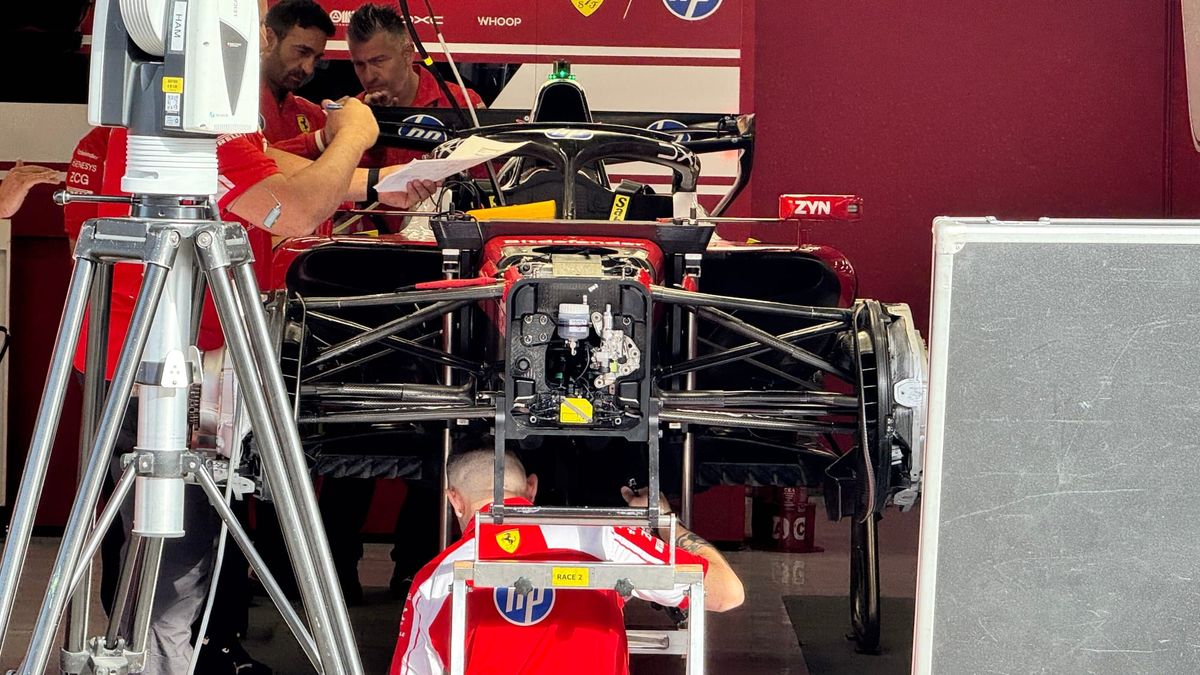
Plenty of column inches have been dedicated to Ferrari’s Formula 1 brake problems both this year and in 2025.
Charles Leclerc was extra vocal about his problems in both Montreal and Monaco, with the result that he’s changing his brake discs from Brembo to Carbon Industrie this weekend.
Lewis Hamilton has used the CI discs since the Japanese Grand Prix weekend in March. There, Leclerc also tried them but opted to continue with Brembo discs - until now.
It’s not unusual for teams to do this, as although Brembo remains a Ferrari partner and supplies the rest of the braking system, the feel required by the brake discs is very particular for different drivers.
From my past experience, Brembo and CI have fairly different characteristics. In the intervening time, the differences have got smaller, but I can put some numbers on it as an example of how they behave.
In the past, I have had drivers who, like Hamilton and Leclerc, found it difficult to come to terms with these different characteristics. Also, from circuit to circuit, one spec or another can be advantageous.
Whatever the supplier, there is the challenge of the contribution to braking from harvesting energy from the rear axle. Achieving that balance is difficult, especially when you are trying to optimise the battery pack level during a safety car period or after a warm-up lap.
Low-pressure braking episodes will all be managed by front brake pad and disc pressure, generating heat into the disc and pad assembly. However, the regen on the rear axle will manage rear axle retardation, so not generate heat into the disc and pad assembly.
So first of all, here’s what I expect from Brembo...
1 Efficient working temperature around 200C to 900C.
2 Higher than that, and the disc and pad wear rate goes out of control and/or you need more cooling, which can be detrimental to overall downforce.
3 Better and more consistent into the first corner, or when cool after a safety car.
4 Better for drivers who are gentle or at least more progressive on the brake pedal.
5 Better for circuits where lower overall braking energy is required, e.g. Monaco, Singapore.
The problem with these types of circuit is that there are lots of small braking episodes per lap and not much cooling time so it is not uncommon for the brake temperatures to slowly keep increasing.
Now onto Carbon Industrie...
1 Efficient working temperature around 350C to 1200C.
2 Allows a team to reduce brake cooling without the risk of brake wear getting out of control.
3 Driver needs to make sure they concentrate on getting disc and pad temperature at a reasonable level on out laps and formation laps.
4 Better for drivers who initially jump on the brakes hard.
5 Better for circuits where higher overall braking energy is required, e.g. Monza, Montreal.
However with these circuits - which have long straights and big braking episodes - the brakes can be too cold when you first hit the brake pedal and too hot at the end of the braking, leading to a balance change through each braking episode.
Choosing a brake material supplier can also be a bit like visiting the pick and mix counter in a sweet shop. In the past we have done just that: used one supplier's discs and another supplier's pads. That way you can close the gap between the two suppliers and also reduce the problems from increased wear rate on at least one of the components, pads and or discs.
From my point of view, Brembo should suit Leclerc’s driving style and CI should suit Hamilton's. I would be looking closely at how they use the brakes coming out of a safety car period and during the warm-up lap before a qualifying lap or on the way to the grid.
What you have under your right or left foot is critical to driver confidence. For the right foot, it’s about the torque delivery, which, with these new regulations, is something to talk about on another day.
For your left foot, it’s about initial brake response and consistency through the braking phase, especially from a slowish lap leading into that critical initial braking episode.
Now for a way out wacky section. Did you know that roughly 90% of the population are right handed, leaving 10% left handed, less than 1% are ambidextrous. In sports such as tennis, darts, golf and boxing we can visually see who is right or left handed. But my question is does that also mean that there is such a thing as right or left footed and are the two related? AI says there is a strong relationship but it isn’t absolute. Does a left handed footballer take penalty kicks with their left foot, or does a left handed kick boxer lead with their left foot? So many questions and so few answers.
When we had cars where you had to let go of the steering wheel to change gear the gear change was ‘normally’ on the right. When the paddle shift was introduced the up shift was then placed predominantly on the right hand side of the steering wheel. Some drivers tested and raced with it the other way around and even some wanted the same paddle as a push to go down the gears and a pull to go up the gears, even vice versa.
However I believe what we currently have is right handed upshift, left handed downshift. How many left handed drivers do we have and would a left handed driver potentially benefit from having the shift paddles the other way around? That’s fairly easy to test within the control system set-up.
However, more importantly to this column, how many might benefit from the throttle pedal being on the left and the brake pedal on the right? Would they have more control over the throttle application, or in Leclerc’s case and perhaps a few others that we see frequently locking brakes, more control over the brake application?
Now there’s a question for the next technical meeting which includes the driver regarding cockpit ergonomics, and with the current level of driver in the loop simulators it would be a fairly easy thing to put to bed. Watch this space and remember where it came from.