Everything we learned on day one at F1's Italian GP
No circuit is more synonymous with Formula 1 engine performance than Italian Grand Prix host Monza.
So is it any wonder talk of slipstreams (and associated tactics), engine upgrades, and even the raceability of these 2026 F1 cars dominated conversations in the paddock on Thursday?
Here are the biggest takeaways ahead of the on-track action kicking off on Friday:
Antonelli's willing to tow Russell
Kimi Antonelli will start from the back of the Monza grid whatever happens in qualifying thanks to a power unit penalty.
That means he's got nothing tangible to fight for in terms of starting position in qualifying, and on a weekend where slipstreaming is expected to be beneficial he's willing to help out team-mate, and title rival, George Russell if asked. (Something that the non-engine-penalised Charles Leclerc will also do for Ferrari team-mate Lewis Hamilton.)
"It has been discussed with the team, and yes we have agreed on a few things," said Antonelli, when asked by The Race if he's willing to tow Russell. "So let's see how the session develops.
"If the team will ask me to do so, I will do it. Because obviously I'm not fighting for...Of course, I will still be happy to do pole, but I'm starting at the back so if I could do anything to to help the team, I will do."
Starting from the back gives Antonelli an unusual challenge in a season where he's usually started at or near the front, but he argued that "in some ways it helps to release pressure" and that he's "very free mentally".
Of course, that's easy to say, and limiting the damage will be a test of his mental strength. - Edd Straw
Monza will be truer test of Honda's latest engine
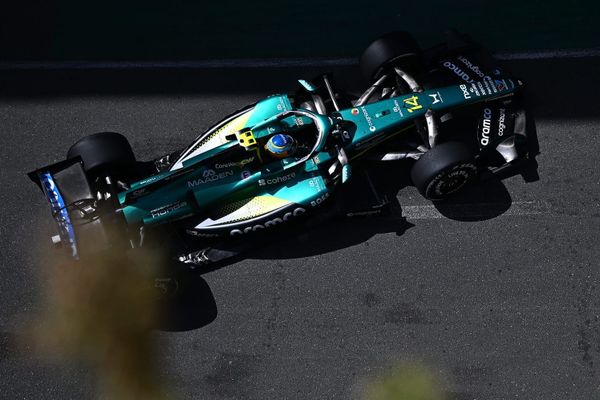
Fernando Alonso remains coy on his own F1 future, but he thinks Monza will provide a much clearer picture as regards the step Honda's taken with its latest F1 engine upgrade.
Alonso called his ninth-place finish at Zandvoort a "nice boost" for Aston Martin, helping validate the development direction taken with the B-spec chassis and suggesting "eventually we will be one of the fastest in the corners", but he said the new engine fitted for Zandvoort "was not a big improvement, to be honest".
"The driveability was a problem and the extra power was difficult to feel in Zandvoort," Alonso added.
"Maybe Monza is going to be a more true test for the engine, but still a long way to go - and we need to improve in both ends, in chassis and on engine for next year, it's a must."
Honda accepts it has work to do to improve the driveability of its latest engine and allow the drivers to properly exploit the extra power derived from the update.
Alonso felt the return to the standard weekend format of three practice sessions at Monza will further aid that process and he said he has "100% trust" Honda will eventually crack the code.
"We just need to shortcut somehow that process," he added.
"Unfortunately, we started with the wrong foot and we started with this set of regulations not at the level that we wanted, but I have no doubts that they will get there.
"As I said many times we don't want to wait five years like they did last time, or six years. We want to do it in two years or three years maximum." - Ben Anderson
Audi plays gear-ratio joker that McLaren's declined
Audi has taken its one permitted opportunity to change its gear ratios during the 2026 season, a move McLaren revealed it declined to make earlier this year.
Teams only get one joker, but there's a cost involved in reconfiguring them that put McLaren off doing so - despite knowing it had erroneously picked gear ratios that were too short compared to engine supplier Mercedes before the season began.
Audi has taken its joker, though, as it looks to improve a weakness with its first F1 engine.
"This change we have made, it was something we spotted quite early in the year, and I think it's just, again, for overall driveability, that's the main thing we have been working with our engine through the whole year now," Gabriel Bortoleto explained.
"I don't think it's going to improve our starts massively, if I'm very honest, but I think it's going to help us overall to be a bit more consistent on the performance of the starts, maybe.
"Also in wet conditions, in dry conditions, the way the gears are going to work is probably going to help us a little bit on keeping the car a little bit more stable."
For Audi, it wasn't a case of having too short or too long a gear ratio, but was more about adjusting the steps between them to try and improve driveability. - Josh Suttill
Haas's uncomfortable engine situation
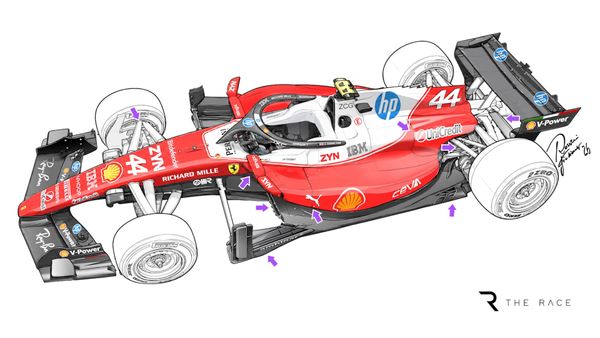
While Ferrari is introducing its upgraded 'ADUO 2' specification engine at Monza, courtesy of the ruling of F1's Additional Development and Upgrade Opportunities ranking, Ollie Bearman's Haas is the only customer car that will run it.
That's because Ferrari could only supply enough of its upgraded power units for Haas and Cadillac to have one each, putting both teams in an uncomfortable position.
Cadillac elected not to run it, but Haas, also debuting a sizeable aerodynamic upgrade at Monza, will do so with Bearman.
So why Bearman?
"Yeah, of course that's part of the consideration," team principal Ayao Komatsu said when asked if championship position (Bearman has 18 points to Ocon's three) played a role.
"But, again, the last two, let's say, not aerodynamic upgrades, but items we had, like CI [Carbon Industrie] brakes test, Esteban was actually struggling more on the brake locking etc so considering that Montreal upgrade, we got it on Ollie first.
"We decided to give the brake upgrade to Esteban first. Also, in terms of power steering, we had another upgrade on the power steering before shutdown in Budapest. We decided to give that to Esteban because, again, he was more vocal about it and he was struggling more [with] the power steering feel.
"The last two upgrades we gave it to Esteban, so this time around, it's back to Ollie."
Komatsu said "we don't have any hidden agenda" because there's "no point bulls***ting" when telling the drivers about it. - JS
Early-race phase will be critical for Cadillac
Cadillac's battle with its brakes continues after myriad overheating problems this year.
Valtteri Bottas has previously characterised this as a mixture of airflow and component problems, and on Thursday referred to "even more robust material than before in the brake ducts" available here as a key area of improvement. Monza should not pose a brake-cooling challenge in normal running, but he highlighted the early laps of the Italian GP as the critical phase for this.
"In our numbers, we should be OK but what is quite hard to simulate is the traffic effect, especially if there's multiple cars in a train," said Botas. "That's when you get the lack of airflow on the straights. So I would say the first part of the race is going to be the most critical for us."
There are still "further steps to make in terms of the pure airflow", but Cadillac has made significant progress in improving this weakness.
However, it was only two races ago, in Hungary, that Bottas retired with cooked brakes early on the 14th lap, having spent the early stages of the race in the queue behind Alex Albon's Williams. - ES
Slipstreams and power games to come
Virtually everyone quizzed about it has acknowledged that the slipstream effect will be supercharged here - which will no doubt influence qualifying, but will also intensify the nature of the "yo-yo race" that's widely expected to play out here.
The expectation is one of deployment strategies converging in terms of the optimal lap - but that the actual race situation can create some crazy offsets.
"I don't actually know how it will play out. It's going to be massive yo-yo racing, really," reckoned Alex Albon.
"The thing is, you don't want to be in a situation where you come out of sync with everyone else and then you are kind of exposed to falling down the grid pretty quickly.
"I think the race pace side of things, what you'll see in FP1, FP2, will be drivers using overtake buttons, anti-buttons, playing around with creating almost fake racing scenarios, just to get some rhythm and experience on how to do it."
"We started to look at it now since quite a few days and trying to understand," said Charles Leclerc. "It's also very, very difficult to predict because the thing is that once you are in the car, it always looks nice from outside - but the difference is sometimes is that much that it's very difficult to then react to the car in front."
"I think the race is going to be chaos, especially at the beginning," said Oscar Piastri.
There have also been some outlandish figures cited in terms of the benefit of a slipstream on a single laptime - but no real fear of a 2019-like Q1 farce. - Val Khorounzhiy